Technology Equipment Shipping: Smarter Ways to Move Valuable Gear
Author : Anu Walia | Published On : 26 Aug 2026
Technology has become part of almost every modern workplace. Data centers rely on servers, businesses depend on networking hardware, laboratories use sophisticated electronic instruments, and manufacturers operate automated systems controlled by computers. When this equipment has to move, transportation is not something that can be treated as an ordinary delivery.
Technology equipment shipping requires a thoughtful approach because electronic and computer-based equipment can be sensitive to impacts, vibration, moisture, static electricity, temperature changes, and improper handling. A device can look perfectly fine on the outside and still have a problem with an internal component after a rough journey.
Whether technology is being relocated to another office, delivered to a customer, transferred between facilities, sent for repair, or transported for installation, preparation plays a major role in protecting the investment.
The good news is that shipping technology safely does not have to be mysterious. Once businesses understand the main risks and plan around them, moving valuable equipment becomes much more manageable.
Start by Understanding What Is Being Shipped
Technology equipment covers a huge range of products. A shipment could contain a few network switches or an entire collection of server racks. It might involve telecommunications hardware, laboratory electronics, point-of-sale systems, industrial computers, monitors, control equipment, or specialized testing devices.
Because these products are so different, there is no single packing method that works for everything.
Begin by creating an inventory of the equipment. Record model numbers, serial numbers, dimensions, approximate weight, accessories, and visible condition. If equipment contains removable components, note those separately.
Photographs are also useful. Take clear pictures before the equipment is packed, particularly if the shipment involves expensive or difficult-to-replace technology.
This process is similar to making an inventory before moving house. You want to know what you have before anything disappears into a box. For business technology, however, the record can also help with identification, installation, and damage assessment.
Why Electronics Need More Than Basic Protection
Electronic equipment can be surprisingly vulnerable.
A metal cabinet may look tough, but inside it could contain circuit boards, storage devices, connectors, cooling components, displays, or other parts that do not respond well to hard impacts.
A useful comparison is a wristwatch. The outside may be made from durable material, yet the tiny mechanism inside still needs protection. Technology equipment works on a much larger scale, but the basic idea is similar.
During transportation, equipment may experience:
- Road vibration
- Sudden braking
- Acceleration and turning
- Accidental impacts
- Repeated handling
- Dust and debris
- Moisture
- Temperature changes
- Static-related risks
Packaging needs to account for the equipment itself and the environment in which it will travel.
Prepare Technology Before Packing It
Good packaging cannot compensate for poor preparation.
Before equipment is placed inside a protective container, it should be made ready for transportation. Loose cables, removable trays, accessories, and other detachable items should be handled appropriately.
Screens, doors, drawers, covers, and movable sections may need to be secured so they do not swing or slide during transit.
If equipment is being removed from an active installation, qualified personnel should disconnect it according to the manufacturer's instructions. Certain systems may also require specific shutdown procedures before they can be moved.
For computers and servers, businesses should pay particular attention to important data. Shipping equipment is not the same as backing up information. Critical data should be protected through an appropriate backup process before hardware is disconnected and transported.
That separation is important: the shipping team protects the physical equipment, while the organization's IT process protects the information stored on it.
Packaging Should Match the Equipment
A common mistake is choosing packaging based solely on size.
A container may be large enough to hold a piece of technology but still provide poor protection if the equipment can move around inside it.
Imagine carrying a glass bottle inside a large empty suitcase. The suitcase may be strong, but the bottle could bounce around whenever the suitcase moves. Adding appropriate support changes the situation completely.
The same concept applies to technology.
The equipment should be positioned and supported so unnecessary movement is minimized. Fragile surfaces should be protected from contact with surrounding materials, while heavier sections need appropriate support.
This is one reason custom packaging and shipping services can be valuable for technology companies. Custom packaging allows the protection to be planned around the actual dimensions and characteristics of the equipment instead of relying on a generic container.
Custom Crating for High-Value Technology
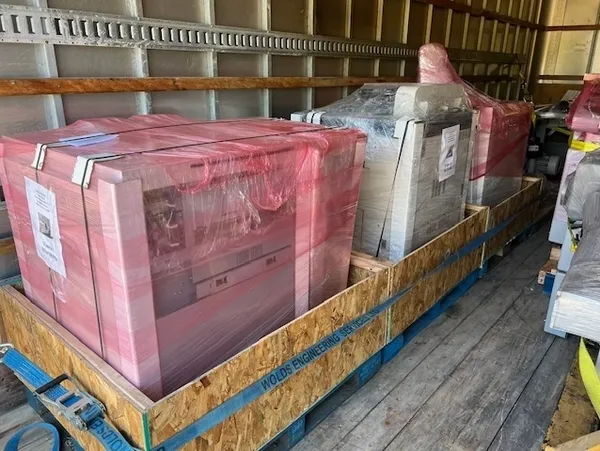
For larger systems or valuable equipment, a custom crate may provide a practical protective solution.
A properly planned crate can create a sturdy outer structure while allowing room for suitable internal support. The design can also account for how the package will be lifted, moved, and positioned during transportation.
This matters because packaging is going to be handled by people and equipment throughout the journey. A crate that is difficult to move safely can create problems even if it protects the contents well.
AA&D Crating can be a useful partner for organizations that need specialized crating for technology and other valuable equipment.
The objective is not simply to build a wooden container. Effective crating considers the equipment, its weak points, its weight, its shape, and the way it will travel.
Give Screens and Controls Extra Attention
Displays, touchscreens, control panels, and other exposed surfaces deserve special consideration.
A scratch may affect usability or appearance, while a stronger impact could damage the component itself. Buttons, switches, connectors, and ports can also be vulnerable if something presses against them during transportation.
Before packaging, identify areas that protrude from the main body of the equipment. These sections may be more likely to encounter an impact.
Protective material should be used appropriately, but packing should not create pressure that could itself damage a delicate screen or control.
It is helpful to think of these components as the "face" of the equipment. They are often among the first areas a person interacts with, so keeping them protected during shipping is important.
Keep Cables and Accessories Under Control
Technology shipments often involve numerous small pieces.
Power cables, adapters, mounting hardware, keyboards, remote controls, connectors, manuals, brackets, and other accessories can easily become separated from the main equipment.
Loose accessories should be organized and identified clearly. When possible, keep components associated with the equipment they belong to.
Labels can make unpacking much easier. If a business receives several similar machines at once, clear identification can prevent workers from spending hours trying to determine which accessories belong to which unit.
Organization also helps during installation. The receiving team should be able to understand what arrived without opening every package simply to locate one missing cable.
Consider Static Electricity
Some electronic components can be affected by electrostatic discharge.
Static electricity is the small electrical charge that can build up when materials rub against each other. Most people have experienced a tiny static shock after walking across a carpet and touching a metal object.
Sensitive electronic components can require protection from this type of event during handling and packaging.
The exact precautions depend on the equipment and manufacturer recommendations. Businesses should follow applicable handling instructions and use suitable protective materials when the equipment calls for them.
This is another reason not to assume that ordinary household packing supplies are appropriate for sensitive electronics.
Vibration Deserves Serious Attention
A shipment does not need to experience a major crash to encounter mechanical stress.
Vehicles vibrate continuously while traveling. Roads are not perfectly smooth, and equipment can experience repeated small movements over hours or days.
For some technology, repeated vibration may be more concerning than one obvious bump.
Proper internal support can help reduce unwanted movement. Heavy components should be supported appropriately, and packaging should prevent the equipment from shifting excessively.
The longer the journey, the more important it becomes to think about the cumulative effect of ordinary transportation conditions.
Protect Against Moisture and Environmental Changes
Technology generally does not mix well with unwanted moisture.
Rain, humidity, condensation, and improper storage can create risks for electronic equipment. Temperature changes can also contribute to condensation in certain circumstances.
Not every shipment requires the same environmental protection. The equipment's construction, transportation route, duration, and manufacturer instructions all matter.
For particularly sensitive equipment, packaging may need to include appropriate moisture protection or other environmental safeguards.
Businesses should also think beyond the truck itself. Equipment may spend time in loading areas, warehouses, terminals, or temporary storage locations. Protection needs to make sense for the complete journey rather than only the time spent on the road.
Select Transportation Based on the Shipment
Choosing transportation should involve more than finding the lowest price.
Consider the size and weight of the equipment, packaging dimensions, delivery schedule, handling requirements, environmental concerns, and destination.
Some technology can travel through conventional freight networks. Larger or unusually shaped equipment may require a different transportation arrangement. Enclosed transportation may be desirable when additional protection from outdoor exposure is important.
For large technology installations, transportation planning may also need to account for access at the receiving facility.
The best option is the one that fits the complete movement from origin to destination.
Plan the Route Into the Building
The journey does not end when the truck reaches the address.
Large technology equipment may have to travel through loading docks, corridors, elevators, doorways, ramps, or restricted areas before reaching its final position.
Measure access points in advance. Consider ceiling height, doorway width, turning space, elevator capacity, and the equipment's packaged dimensions.
This is especially important when custom crating increases the overall size of the shipment.
A machine or technology system that fits inside a crate is not necessarily a package that will fit through the customer's entrance. Checking the route ahead of time can prevent an expensive delivery-day surprise.
Loading and Unloading Require a Plan
Technology equipment should be moved with suitable handling equipment and procedures.
The correct method depends on the size, weight, shape, and packaging of the shipment. Heavy crates may require forklifts or other appropriate lifting equipment, while smaller packages may be moved differently.
Workers should know where the package can safely be lifted and how it should be positioned.
Rushing this stage can defeat the purpose of careful packaging. A perfectly protected device can still be damaged if it is dropped or struck while being moved.
Planning the loading sequence in advance makes the operation more controlled.
Label Packages Clearly
Clear labels can help prevent unnecessary handling mistakes.
Depending on the shipment, labels may identify the contents, destination, orientation, handling requirements, package number, or other useful information.
When multiple crates or containers are involved, numbering them can simplify receiving and inventory checks.
Labels should communicate useful information without replacing safe handling procedures. A label alone cannot make a fragile package safe, but it can help people recognize that the contents deserve appropriate attention.
Keep Detailed Shipping Records
Documentation becomes particularly valuable when expensive technology changes locations.
Maintain records of equipment identification, condition, packaging, accessories, and shipment details. Depending on the situation, organizations may also need commercial documents, insurance information, or other transportation records.
Before shipment, photographs can document the equipment's appearance. After delivery, the receiving team can inspect the equipment and packaging for signs of damage.
If something appears wrong, documenting the issue promptly can provide useful evidence for resolving the matter.
Special Considerations for Data Center Equipment
Data center equipment deserves careful coordination because a physical move can affect business operations.
Servers, network equipment, storage systems, and related hardware may be supporting important services. Before anything is disconnected, the organization should have an appropriate operational plan.
This may include confirming backups, documenting cable connections, identifying equipment, coordinating shutdowns, and scheduling the move during an appropriate maintenance window.
The shipping portion is only one part of the project. The technology must eventually be reconnected correctly at its destination.
Clear labeling and organized documentation can make that transition much easier.
Shipping Laboratory and Testing Technology
Laboratories may use sophisticated instruments that combine electronics, mechanical components, optics, sensors, and other sensitive parts.
Such equipment can require special preparation based on the manufacturer's instructions.
Before transportation, identify components that may need to be secured or removed. Any required preparation should be completed by personnel who understand the equipment.
The receiving laboratory should also know when the shipment is expected and have the appropriate space ready.
Some instruments may require additional time or procedures before they can be used after transportation. Those requirements should be understood before scheduling the move.
Moving Technology for Installation
When equipment is being shipped for a new installation, transportation should be coordinated with the installation schedule.
The destination should be ready before the shipment arrives. The appropriate personnel, tools, access routes, and installation area should be available.
If the equipment arrives days before the installation team is ready, storage conditions may become another consideration.
Coordinating shipping and installation can reduce the amount of time the equipment spends waiting in an unsuitable location.
Mistakes That Can Turn a Simple Shipment Into a Problem
Several avoidable errors can create unnecessary complications.
Using packaging that is too large
Extra space can allow equipment to move during transportation.
Ignoring the equipment's center of weight
A poorly balanced package can be difficult to move and may become unstable.
Leaving removable parts unsecured
Loose components can strike other surfaces or become separated.
Forgetting about static-sensitive components
Certain electronics require specific handling and packaging precautions.
Measuring only the equipment
The packaged dimensions matter too, especially when the shipment must pass through doors or elevators.
Focusing only on pickup
The receiving location needs just as much preparation as the shipping location.
Treating every technology shipment identically
A server, laboratory analyzer, and industrial control system may have completely different transportation needs.
A careful assessment before packing can prevent many of these issues.
Why Specialized Packaging Support Can Be Valuable
A company may understand its technology extremely well without having experience preparing that equipment for transportation.
Packaging professionals approach the problem from a different perspective. They consider how the equipment will be supported, protected, lifted, loaded, and delivered.
For unusual, fragile, oversized, or expensive technology, this expertise can be useful.
Custom packaging and shipping services provide an opportunity to build the shipping solution around the equipment instead of trying to make the equipment conform to a standard package.
That approach can be especially helpful when replacing damaged equipment would be expensive or cause significant operational disruption.
Build a Shipping Plan Around the Entire Journey
The safest way to approach technology equipment shipping is to think beyond the box.
Ask what happens before the equipment is packed. Consider how it will be loaded. Think about what it may experience while traveling. Then look at how it will be unloaded and moved into its final location.
Every stage has a purpose.
Preparation reduces loose components and avoidable risks. Packaging creates physical protection. Transportation planning addresses the journey. Clear documentation supports communication. Delivery planning ensures the destination is ready.
When those pieces work together, the shipment becomes far easier to manage.
Conclusion
Technology equipment can represent a major investment, and its value is not limited to its purchase price. A damaged server can interrupt operations. A broken laboratory instrument can delay research. A damaged control system can interfere with production. Even cosmetic damage can be costly when equipment must meet strict presentation or operational standards.
That is why technology equipment shipping deserves careful preparation.
Businesses can improve the shipping process by documenting equipment, following manufacturer guidance, securing loose components, protecting sensitive electronics, considering vibration and moisture, selecting suitable transportation, and planning both ends of the journey.
For specialized shipments, custom packaging and shipping services can provide protection designed specifically around the equipment. Companies such as AA&D Crating can support the crating side of that process when technology requires a more tailored solution.
The most useful mindset is simple: do not treat valuable technology like an ordinary parcel. Understand what makes the equipment vulnerable, plan for the conditions it will encounter, and build the shipment around those realities. With that approach, businesses can move critical technology with greater confidence and fewer avoidable surprises.
