Taylor Retractor in Spinal and Orthopedic Surgery
Author : Grey Med | Published On : 09 May 2026
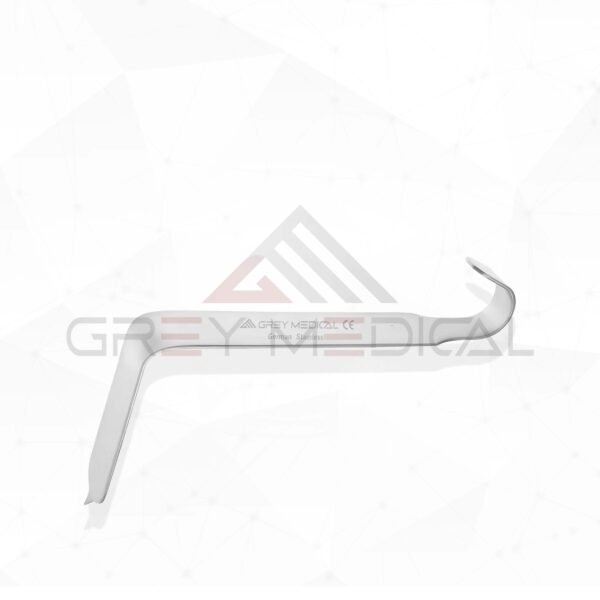
The Taylor Retractor remains one of the most practical and recognizable orthopedic instruments used in open spinal and musculoskeletal procedures. While many modern operations now involve advanced imaging, powered devices, and less invasive techniques, core hand-held and self-retaining tools still play a vital role in the operating room. Among these, the Taylor Retractor stands out for its simple form, firm grip, and reliable tissue retraction. In spinal and orthopedic surgery, clear visualization matters at every stage. Surgeons need safe, stable access to deep structures without causing needless trauma to surrounding tissue. That is where the Taylor Retractor offers value. Its design supports controlled retraction of muscle and soft tissue, helping create the surgical exposure needed for precise work around the spine and other bony anatomy.
What Is a Taylor Retractor?
A Taylor Retractor is a hand-held surgical retractor commonly used in orthopedic and spinal procedures. It is designed to pull back soft tissue, especially muscle and fascia, so the surgeon can see and reach the target anatomy more clearly.
This instrument is often associated with procedures involving the posterior spine, where thick paraspinal muscles can limit visibility. By retracting these tissues in a stable and controlled way, the Taylor Retractor helps the surgical team maintain a clean working field.
Although it is not the only retractor used in these retractor taylor operations, it is widely valued because it is easy to handle, quick to position, and effective in smaller open exposures. In many operating rooms, it is considered a standard part of the tray for spinal and orthopedic cases.
Key Design Features of the Taylor Retractor
The usefulness of the Taylor Retractor comes from a design that is both simple and highly functional. Each feature has a clear purpose in improving control and exposure.
Spiked Blade
One of the most notable features of the Taylor Retractor is its spiked blade. This blade is shaped to engage tissue securely during retraction. The spike helps prevent slipping, which is especially useful when working with dense muscle or fibrous tissue.
In spinal surgery, tissue movement can reduce visibility and slow the procedure. A spiked blade provides a more dependable hold, helping the assistant or surgeon maintain retraction with less repeated repositioning. This can improve efficiency and support a steadier operative field.
At the same time, the spike must be used with care. Proper placement is important to avoid unnecessary tissue trauma. In experienced hands, however, this feature offers a strong balance between grip and control.
Handle Hook
Another defining element is the handle hook. This elevator boies nasal fracture curved portion of the instrument allows for a firm, ergonomic grip during use. It helps the user apply traction in a controlled direction and maintain retraction over time.
In long procedures, instrument handling affects fatigue and precision. The hooked handle gives the assistant or surgeon leverage, making it easier to retract tissue without awkward wrist positioning. That matters in spinal operations, where steady exposure is often needed for careful bone removal or disc work.
The handle hook also makes the instrument easy to pass, position, and adjust during surgery, which adds to its practical value in fast-moving operative settings.
Strong, Compact Build
The Taylor Retractor is usually made from surgical-grade stainless steel, allowing it to withstand repeated sterilization and daily operating room use. Its compact yet sturdy shape makes it well suited for focused retraction in relatively small operative windows.
This matters in orthopedic and spinal surgery, where broad exposure is not always the goal. Often, the surgeon wants enough space to work safely while minimizing disruption to surrounding tissue. The Taylor Retractor supports that approach.
Why Surgical Exposure Matters
Good surgical exposure is one of the foundations of safe surgery. Before a surgeon can remove bone, decompress a nerve root, or access a herniated disc, the relevant anatomy must be visible and reachable.
Poor exposure can increase operative difficulty. It may lead to longer procedure times, more frequent instrument changes, or greater soft tissue handling. In contrast, stable exposure helps the surgeon identify landmarks, protect surrounding structures, and perform each step with greater accuracy.
This is why retractors remain central among spinal surgery tools. The Taylor Retractor, in particular, is useful because it offers focused soft tissue retraction without excessive bulk. In operations where precision matters within a limited field, that is a real advantage.
Primary Applications in Spinal Surgery
The Taylor Retractor is especially associated with posterior spinal procedures. It is often used to retract paraspinal muscles after incision and dissection, allowing the surgeon to reach vertebral elements such as the lamina, spinous processes, and facet joints.
Two common examples are lumbar discectomies and laminectomies.
Taylor Retractor in Lumbar Discectomy
A lumbar discectomy is performed to remove part of a herniated disc that is compressing a nerve root. In open or micro-open approaches, the surgeon must first gain access through layers of muscle and fascia in the lower back.
The Taylor Retractor helps retract these tissues so the operative field remains visible. Once the posterior elements are exposed, the surgeon can continue with bone work or ligament removal as needed to reach the affected disc space.
In this setting, the instrument supports:
- Better visualization of posterior spinal anatomy
- Stable retraction of paraspinal muscles
- More efficient access to the disc level
- Reduced need for constant manual readjustment
Because lumbar discectomy often involves working in a narrow corridor, a retractor that provides firm but targeted exposure is especially useful.
Taylor Retractor in Laminectomy
A laminectomy involves removal of part or all of the lamina to decompress the spinal canal or nerve roots. This procedure also requires reliable retraction of overlying soft tissue.
The Taylor Retractor is commonly used after the initial exposure has begun, helping maintain access to the lamina and adjacent structures. Its design allows for effective lateral retraction of muscle, which can improve the surgeon’s view of the bony landmarks.
During laminectomy, the benefits include:
- Clearer access to the lamina and spinous process
- Improved line of sight for bone removal
- Better support for careful decompression work
- Consistent exposure during multiple procedural steps
This contributes to smoother workflow and can support safer instrument use near delicate neural structures.
Role in Orthopedic Surgery Beyond the Spine
Although the Taylor Retractor is strongly linked to spinal procedures, it also has value in broader orthopedic practice. It may be used in operations where dense soft tissue must be pulled back to expose bone, joints, or deeper structures.
As one of many reliable orthopedic instruments, it can assist in:
- Exposure of bony surfaces
- Retraction of muscle during open approaches
- Small to moderate orthopedic incisions
- Cases that require hand-held, directed tissue control
Its shape makes it especially helpful when the surgeon needs focused retraction rather than wide self-retaining exposure. This flexibility is one reason the instrument remains relevant even as surgical techniques continue to evolve.
Benefits of Using the Taylor Retractor
The ongoing use of the Taylor Retractor in modern operating rooms is not based on tradition alone. It offers practical advantages that still matter in daily surgical care.
Reliable Tissue Retraction
The spiked blade helps maintain a secure hold on tissue. This can reduce slipping and minimize interruptions caused by repeated repositioning.
Improved Surgical Exposure
Better exposure allows the surgeon to identify anatomy more clearly and work with greater confidence. In spine surgery, where millimeters can matter, this is especially important.
Efficient Workflow
A well-designed hand-held retractor can make procedures more efficient. When the operative field stays open and visible, each step becomes easier to perform.
Ergonomic Handling
The hooked handle supports grip and leverage. This can improve comfort for the assistant or surgeon, especially during procedures that require sustained retraction.
Durable Construction
Like many standard spinal surgery tools, the Taylor Retractor is built for repeated use. Its durable steel construction supports long-term reliability in sterile environments.
Where the Taylor Retractor Fits Among Spinal Surgery Tools
Spinal procedures often require a range of retractors, from simple hand-held models to advanced self-retaining systems. The Taylor Retractor fills an important niche in that spectrum.
It is not meant to replace every other exposure device. Instead, it serves as a dependable option for targeted soft tissue retraction, especially during smaller open posterior approaches. Surgeons may use it alongside other spinal surgery tools depending on the case, anatomy, and preferred technique.
Its value lies in its balance of simplicity and performance. In many cases, a straightforward instrument that works well is exactly what the surgical team needs.
Considerations for Proper Use
As with all orthopedic instruments, correct use is essential. The Taylor Retractor should be positioned carefully to achieve exposure without excessive force. Over-retraction can contribute to tissue injury, muscle trauma, or post-operative pain.
Users should pay attention to:
- Blade placement
- Direction of traction
- Duration of retraction
- Tissue condition and resistance
- Coordination with the rest of the surgical team
For students and trainees, learning how and when to use the Taylor Retractor is part of building sound operative technique. The instrument may look simple, but proper retraction is a skilled task that affects both visibility and tissue safety.
Conclusion
The Taylor Retractor continues to earn its place among essential spinal surgery tools and orthopedic instruments. Its spiked blade provides secure tissue engagement, while its hooked handle improves control and leverage during retraction. These features make it especially useful in spinal procedures such as lumbar discectomies and laminectomies, where precise surgical exposure is critical.
For surgeons, residents, and medical students, understanding the role of the Taylor Retractor helps build a stronger grasp of operative fundamentals. Even in an era of highly specialized systems and evolving techniques, dependable hand-held instruments still shape surgical success. The Taylor Retractor is a clear example of how thoughtful design can support safer exposure, smoother workflow, and better access to the anatomy that matters most.
