Sustainable Waste Management: Turning By-products into New Revenue Streams
Author : Alyssa Miller | Published On : 31 Jul 2026
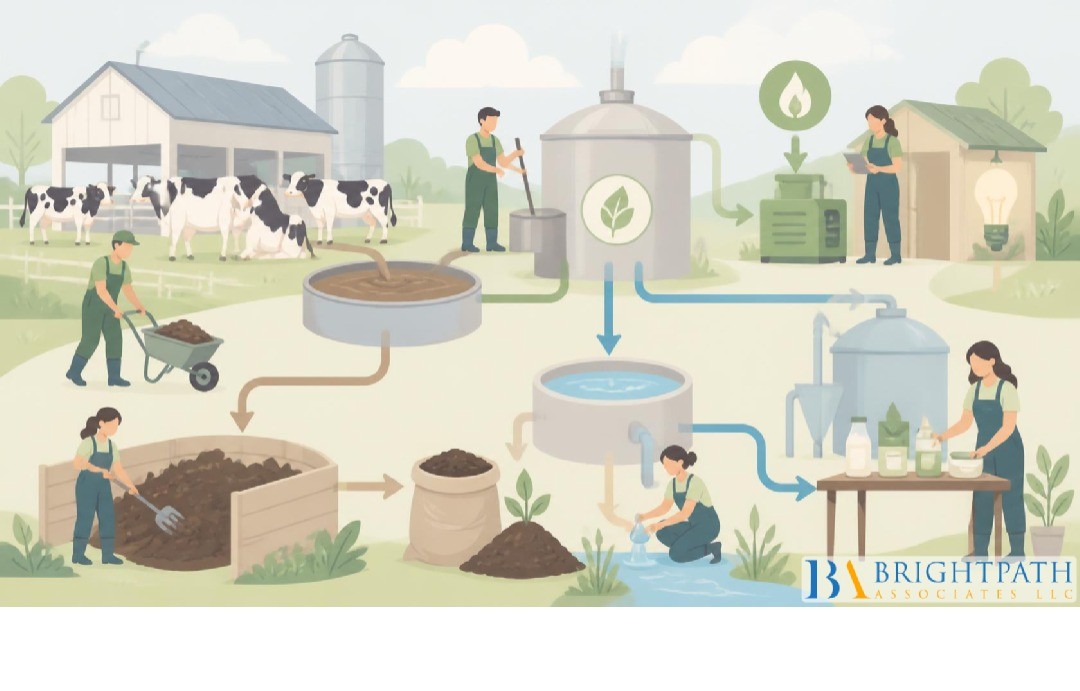
The dairy industry has always played a vital role in feeding communities and supporting agricultural economies. However, alongside the production of milk, cheese, butter, yogurt, and other dairy products comes a significant responsibility: managing waste efficiently. Rising disposal costs, stricter environmental regulations, and increasing consumer demand for sustainable business practices have encouraged dairy processors to rethink how they handle production by-products. Today, forward-thinking organizations are discovering that what was once considered waste can become a valuable business asset. By implementing sustainable waste management strategies, dairy manufacturers can reduce operating costs, create additional revenue streams, strengthen environmental performance, and improve long-term competitiveness.
Traditionally, dairy waste management focused primarily on disposal. Wastewater, whey, sludge, packaging materials, and organic by-products were often treated as unavoidable operational expenses. While proper disposal remains essential for regulatory compliance, modern manufacturers are shifting toward circular economy principles that emphasize resource recovery, recycling, and value creation. Instead of asking how to eliminate waste, successful organizations now ask how those materials can be reused, repurposed, or converted into profitable products.
One of the most significant opportunities lies in whey utilization. Once viewed as a low-value by-product of cheese production, whey has become an important ingredient in numerous industries. Rich in proteins, lactose, and essential nutrients, whey is widely used in nutritional supplements, sports beverages, infant formula, bakery products, and animal feed. Advances in processing technologies have enabled dairy companies to extract valuable components that generate significantly higher returns than simple disposal. For many processors, whey has evolved from an operational challenge into a profitable business opportunity.
Wastewater management presents another area where sustainability and profitability intersect. Dairy processing requires substantial volumes of water for cleaning, cooling, production, and sanitation. Effective treatment and recycling systems allow facilities to reduce freshwater consumption while lowering wastewater treatment expenses. Advanced filtration, membrane technologies, and biological treatment systems enable manufacturers to recover water suitable for non-product applications such as equipment cleaning, cooling towers, and irrigation. These improvements support both environmental stewardship and operational efficiency.
Organic waste generated throughout dairy production can also contribute to renewable energy initiatives. Anaerobic digestion systems convert organic materials into biogas, which can be used to generate electricity, produce heat, or supplement facility energy requirements. Instead of paying to dispose of organic waste, manufacturers create renewable energy that reduces utility costs while lowering greenhouse gas emissions. Digestate produced during the process may also serve as nutrient-rich fertilizer, creating additional value for agricultural operations.
Packaging waste has become another important focus area for sustainability programs. Consumers increasingly expect environmentally responsible packaging solutions, prompting dairy manufacturers to explore recyclable materials, lightweight packaging designs, biodegradable alternatives, and closed-loop recycling systems. Reducing packaging waste lowers material costs while supporting corporate sustainability objectives and strengthening brand reputation among environmentally conscious consumers.
Technology is playing an increasingly important role in sustainable waste management. Modern manufacturing facilities utilize Industrial Internet of Things (IIoT) sensors, automated monitoring systems, artificial intelligence, and advanced analytics to track resource consumption, identify inefficiencies, and optimize waste reduction efforts. Real-time monitoring provides valuable insights into water usage, energy consumption, production yields, and material losses. Data-driven decision-making allows manufacturers to identify improvement opportunities that might otherwise remain hidden within daily operations.
Automation also enhances consistency across production processes, minimizing unnecessary waste before it occurs. Automated ingredient dispensing, precision filling systems, digital quality inspection, and predictive maintenance reduce production variability while preventing equipment failures that contribute to material losses. Rather than managing waste after production, automation helps prevent waste generation throughout manufacturing operations.
Supply chain collaboration further strengthens sustainability initiatives. Dairy processors increasingly work closely with farmers, transportation providers, ingredient suppliers, packaging manufacturers, and recycling partners to improve resource efficiency across the entire value chain. Collaborative planning reduces transportation emissions, improves inventory management, minimizes spoilage, and creates opportunities for by-product utilization beyond individual facilities. Strong partnerships enable organizations to maximize resource value while reducing environmental impact.
Regulatory compliance remains an important consideration. Environmental regulations governing wastewater discharge, emissions, waste disposal, and food safety continue evolving as governments emphasize sustainable manufacturing practices. Organizations implementing comprehensive waste management strategies are often better positioned to meet compliance requirements while reducing long-term operational risks. Proactive sustainability initiatives also strengthen relationships with regulators, customers, investors, and local communities.
Financial benefits extend well beyond waste disposal savings. Resource optimization lowers production costs, renewable energy reduces utility expenses, recovered materials create additional revenue streams, and improved operational efficiency strengthens overall profitability. Many sustainability investments also qualify for government incentives, tax credits, or environmental funding programs that further improve return on investment. Companies embracing sustainable manufacturing frequently discover that environmental responsibility and financial performance reinforce one another rather than compete.
Consumer expectations continue driving sustainability throughout the food industry. Modern customers increasingly evaluate brands based not only on product quality but also on environmental responsibility, ethical sourcing, and corporate transparency. Dairy manufacturers capable of demonstrating measurable sustainability achievements often strengthen customer loyalty while differentiating themselves within competitive markets. Sustainability has evolved from a marketing initiative into a core business strategy influencing purchasing decisions across both retail and commercial customers.
People remain essential to successful sustainability initiatives. Engineers, environmental specialists, production managers, maintenance professionals, quality leaders, supply chain experts, and executive decision-makers all contribute to identifying opportunities, implementing improvements, and maintaining continuous progress. Technology provides valuable tools, but experienced professionals transform operational data into practical solutions that improve both environmental and financial performance.
As sustainability becomes increasingly integrated into business strategy, dairy manufacturers require leaders capable of balancing operational excellence with innovation. Professionals experienced in food manufacturing, environmental compliance, process engineering, automation, supply chain management, quality assurance, and executive leadership are helping organizations navigate rapidly evolving industry expectations. Recruiting individuals with multidisciplinary expertise has become a strategic priority for businesses pursuing long-term growth and operational resilience.
BrightPath Associates partners with small and mid-sized dairy businesses to identify exceptional engineering, operations, manufacturing, quality, supply chain, and executive professionals who support innovation and sustainable business performance. Organizations seeking specialized recruitment expertise within the dairy sector.
Companies interested in exploring additional perspectives on sustainable manufacturing, resource optimization, and value creation through by-product utilization can also review BrightPath Associates' related industry resource at Sustainable Waste Management Turning By-products.
The future of dairy manufacturing will be shaped not only by product innovation but also by how effectively organizations manage resources throughout the production lifecycle. Businesses that embrace circular economy principles, invest in smart technologies, optimize resource utilization, and develop sustainable waste management strategies will be better positioned to reduce costs, create new revenue opportunities, strengthen environmental performance, and enhance long-term competitiveness. What was once viewed as waste is increasingly becoming a valuable source of innovation and business growth.
