Sustainable Cement: Balancing Profitability and Environmental Responsibility
Author : Victor Lang | Published On : 23 Jul 2026
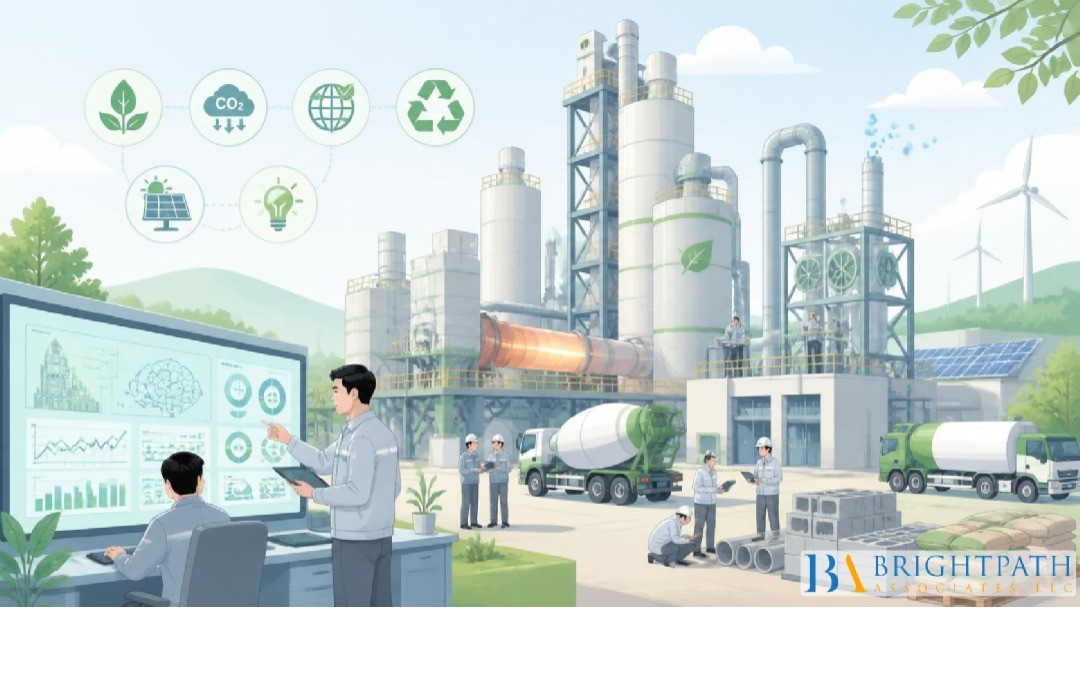
The global construction industry is evolving rapidly, and sustainability has become one of its most important priorities. Governments, investors, customers, and developers are placing greater emphasis on environmentally responsible building materials without compromising quality or profitability. Cement, as one of the most widely used construction materials in the world, sits at the center of this transformation. While cement remains essential for infrastructure development, residential housing, commercial projects, and industrial facilities, its production is also responsible for approximately 7–8% of global carbon dioxide emissions. This reality presents both a challenge and an opportunity for small and mid-sized companies operating within the Glass, Ceramics & Concrete industry. Organizations that successfully balance profitability with environmental responsibility will be better positioned to meet evolving regulations, strengthen customer relationships, and secure long-term competitive advantages.
Traditional cement manufacturing is highly energy-intensive, requiring significant amounts of limestone, fuel, electricity, and high-temperature kiln operations. Rising energy costs, stricter environmental regulations, and increasing customer demand for sustainable construction materials have made operational efficiency more important than ever. Rather than viewing sustainability as an additional expense, progressive manufacturers are recognizing it as a strategic investment that improves operational performance while reducing long-term business risks. Companies that optimize production processes, reduce waste, improve energy efficiency, and adopt innovative materials are discovering that environmental responsibility and profitability can successfully coexist.
One of the most significant developments in sustainable cement production is the increased use of supplementary cementitious materials (SCMs). Materials such as fly ash, slag, calcined clay, and other industrial by-products can partially replace traditional clinker, which is the most carbon-intensive component of cement manufacturing. Reducing clinker content lowers carbon emissions while maintaining the structural performance required for modern construction projects. Research continues to demonstrate that combining SCMs with advanced production technologies can significantly reduce environmental impact without sacrificing product quality or commercial viability.
Technology is also transforming how cement manufacturers improve sustainability. Artificial intelligence, predictive analytics, industrial automation, and digital monitoring systems enable companies to optimize kiln performance, reduce fuel consumption, improve quality control, and minimize production waste. Real-time operational data helps plant managers identify inefficiencies before they become costly problems, allowing continuous improvement throughout the manufacturing process. Digital transformation is enabling manufacturers to increase productivity while simultaneously reducing emissions and operating costs. These improvements demonstrate that sustainability initiatives often generate measurable financial returns alongside environmental benefits.
Energy management has become another critical factor in balancing profitability with environmental responsibility. Many cement manufacturers are investing in alternative fuels, waste-derived energy sources, renewable electricity, and waste heat recovery systems to reduce dependence on traditional fossil fuels. These initiatives not only lower greenhouse gas emissions but also help organizations manage rising energy costs and improve operational resilience. As fuel price volatility continues affecting industrial manufacturers worldwide, companies capable of improving energy efficiency gain a meaningful competitive advantage through lower production costs and greater cost predictability.
Carbon capture and utilization technologies are emerging as another promising solution for reducing emissions from cement production. Although large-scale implementation remains in its early stages, ongoing investments in carbon capture systems demonstrate the industry's commitment to long-term decarbonization. By capturing carbon dioxide before it enters the atmosphere and either storing it or converting it into valuable industrial products, manufacturers can significantly reduce their environmental footprint. Combined with innovations in low-carbon cement formulations and alternative raw materials, these technologies represent an important step toward achieving net-zero manufacturing goals.
Sustainability is no longer driven solely by environmental regulations. Customers, investors, architects, engineers, and construction firms increasingly evaluate suppliers based on Environmental, Social, and Governance (ESG) performance. Green building certifications and sustainable procurement practices encourage the selection of manufacturers capable of demonstrating measurable reductions in carbon emissions, responsible sourcing, and efficient resource utilization. Businesses that proactively embrace sustainability often strengthen their market reputation while creating new opportunities to participate in infrastructure and commercial development projects that prioritize environmentally responsible construction materials.
Small and mid-sized companies within the Glass, Ceramics & Concrete industry are particularly well positioned to benefit from sustainable manufacturing initiatives. Unlike larger organizations that may require lengthy implementation processes, smaller businesses often possess greater operational flexibility, enabling them to adopt innovative technologies, optimize production workflows, and implement continuous improvement initiatives more quickly. Incremental investments in energy efficiency, automation, waste reduction, and digital monitoring frequently produce measurable improvements in both operational performance and financial results. Sustainability therefore becomes a practical business strategy rather than simply a regulatory requirement.
People remain central to every successful sustainability initiative. While technology provides valuable tools for improving manufacturing efficiency, experienced leaders and technical specialists are essential for driving innovation, implementing operational improvements, and maintaining regulatory compliance. Organizations increasingly require professionals with expertise in materials science, process engineering, environmental management, manufacturing operations, quality assurance, automation, and continuous improvement. Building high-performing teams capable of balancing operational excellence with environmental responsibility has become a strategic priority for manufacturers seeking long-term growth. Companies looking to strengthen their workforce and access specialized industry talent can explore BrightPath Associates' Glass, Ceramics & Concrete Industry.
The future of cement manufacturing will be shaped by organizations that successfully integrate profitability, innovation, and sustainability into a single business strategy. As governments continue introducing stricter emissions standards and customers increasingly demand environmentally responsible building materials, manufacturers must continually adapt to remain competitive. Businesses that invest in cleaner technologies, digital transformation, operational efficiency, and skilled leadership will be better positioned to navigate market changes while delivering long-term value to customers and stakeholders alike.
For a deeper exploration of practical strategies that help manufacturers achieve both financial success and environmental responsibility, explore BrightPath Associates' blog, Balancing Profitability and Environmental Responsibility.
Ultimately, sustainable cement production is no longer a future aspiration—it is becoming a business necessity. Organizations that embrace innovation, improve operational efficiency, reduce emissions, and invest in skilled talent will be better equipped to succeed in an increasingly competitive and environmentally conscious marketplace.
