Sustainable Ag-Tech: Why ESG Compliance is New Requirement for Loans
Author : Alex Turner | Published On : 17 Sep 2026
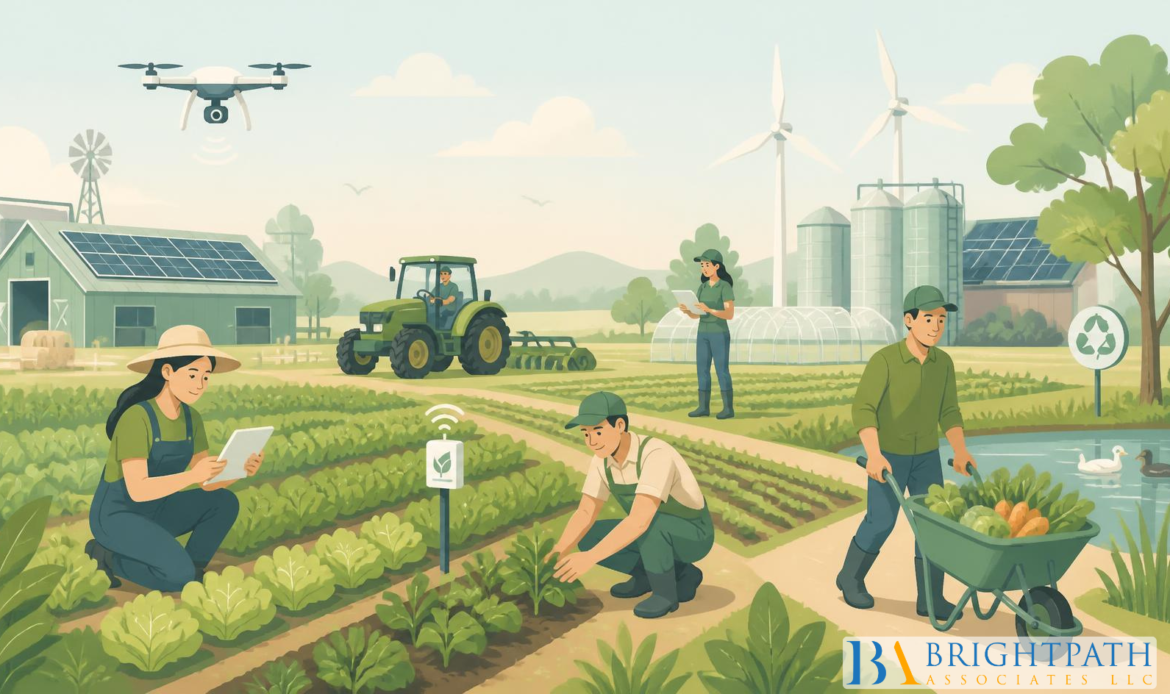
For generations, agricultural financing has largely revolved around familiar measures: land, production capacity, revenue, assets, cash flow, and repayment history. Those fundamentals remain important. But the financial conversation around agriculture is becoming broader.
Environmental performance, resource efficiency, operational resilience, and sustainability practices are increasingly relevant to how agricultural businesses communicate risk and long-term viability. That evidence can become valuable when agricultural businesses approach lenders, investors, customers, and other stakeholders.
This shift is particularly important for small and mid-sized farms and agribusinesses. As technology transforms agriculture, investments in precision farming, smart irrigation, sensors, automation, renewable energy, and digital farm-management systems can serve two purposes at once: improving operations and creating measurable evidence of responsible resource management.
ESG Is Becoming Part of the Agricultural Business Case
ESG—environmental, social, and governance—has often been discussed as a reporting or compliance issue. For farming businesses, however, it increasingly intersects with everyday operational decisions. Technology can help businesses measure these issues more precisely.
Agriculture is inherently exposed to environmental variables. Water availability, soil health, extreme weather, energy prices, input efficiency, biodiversity, and supply-chain disruptions can all influence financial performance.
For example, inefficient irrigation may increase water consumption and operating expenses while creating greater exposure to water availability. Poor nutrient management can affect input costs and soil productivity. Inefficient machinery can increase fuel consumption and reduce margins.
Technology Turns Sustainability Into Measurable Data
One of the biggest challenges in ESG management is evidence. A business cannot effectively demonstrate progress if it does not have reliable information about what is happening across its operations. This is where agricultural technology becomes increasingly valuable.
Connected sensors can monitor soil conditions, moisture, temperature, and other variables. Farm-management platforms can consolidate field records and production information. Precision equipment can track applications and operational activity. Digital systems can help management compare resource consumption against production outcomes.
That information can be useful beyond the farm itself. When approaching financial institutions, management can potentially demonstrate how technology investments are improving resource efficiency, controlling operating risks, or supporting long-term productivity.
The source article similarly highlights how agricultural technology can connect measurements of water, fertilizer, energy, crop performance, and equipment utilization with broader ESG objectives.
Precision Agriculture Connects Productivity With Sustainability
Precision agriculture illustrates why ESG and business performance do not necessarily have to compete with each other. Traditional farming practices may apply inputs relatively uniformly across large areas. Precision systems can use information about soil conditions, crop health, moisture, and field variability to support more targeted decisions.
Variable-rate technology, GPS-enabled equipment, field sensors, and digital monitoring can potentially help reduce unnecessary applications while maintaining production objectives. This creates a useful connection.
Using fewer resources can potentially support environmental goals while also reducing input costs. Better field visibility can improve operational decision-making while generating information that supports sustainability reporting.
Sustainable Ag-Tech Requires New Leadership Capabilities
Technology can collect information, but people must determine what that information means. This is creating a growing need for agricultural leaders who can operate across traditional farming expertise and newer capabilities such as data analytics, technology implementation, sustainability, finance, supply-chain management, and risk management.
A farm may have experienced agronomists and production managers but lack leadership capable of integrating digital systems into a broader business strategy. Conversely, an organization may have technology professionals who understand software and analytics but lack practical knowledge of agricultural operations.
BrightPath Associates' Farming Industry executive recruitment expertise reflects this changing requirement, with its agriculture-focused recruitment covering areas such as farm operations, agronomy, supply chain, irrigation, technology and innovation, quality, finance, and sustainability leadership.
Building the Farm of the Future
Modern agriculture is becoming increasingly data-driven. Precision agriculture, automated machinery, connected sensors, farm-management software, renewable energy, and analytics are changing how agricultural businesses measure and manage their operations.
The next stage will likely involve connecting these technologies more closely with financial planning and strategic decision-making. That means sustainability can no longer be treated as an isolated initiative handled by one department or individual. It increasingly touches operations, finance, technology, production, supply chains, and executive leadership.
For agricultural companies exploring this transition, BrightPath's Farming Industry recruitment and executive search services can help organizations identify leadership capable of navigating technology adoption, sustainability goals, operational growth, and changing agricultural economics.
For a deeper look at the relationship between sustainable technology and agricultural financing, explore BrightPath's original analysis, Sustainable Ag-Tech: Why ESG Compliance Is the New Requirement for Loans.
The Strategic Question for Agricultural Leaders
Not simply evidence of revenue or production, but evidence that the business understands its environmental exposure, manages its resources efficiently, invests intelligently in technology, and has the leadership capabilities required to adapt.
For companies preparing for their next stage of growth, the right technology is only one part of the equation. The right leadership is what turns that technology, data, and sustainability strategy into measurable business performance.
If your farm or agribusiness is investing in sustainable technology, expanding operations, or preparing for more sophisticated financing and reporting expectations, BrightPath Associates can help identify the executive and specialized talent needed to lead that transformation.
