Supply Chain Visibility: Tracking Sustainability Metrics for Retail Partners
Author : Alex Turner | Published On : 21 Aug 2026
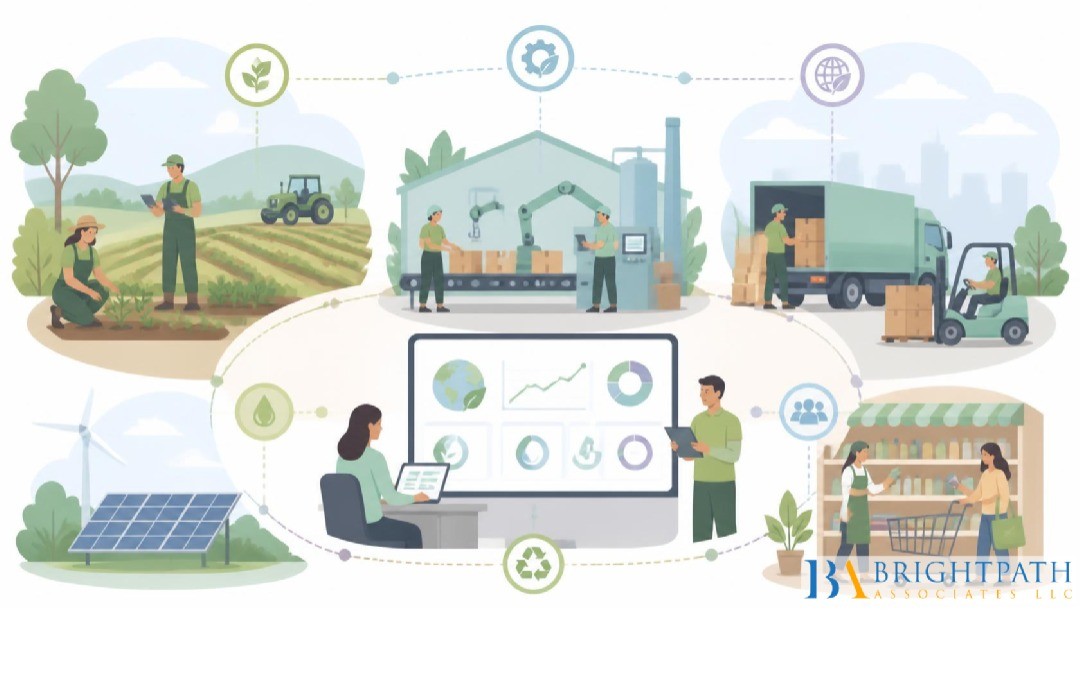
Agricultural supply chains are undergoing a significant transformation. Retailers and consumers increasingly want to know not only where agricultural products come from, but also how they were produced, transported, processed, and delivered. For farming businesses supplying retail partners, this shift is turning supply chain visibility from an operational consideration into a strategic business capability.
Sustainability is no longer confined to individual farm practices. Water consumption, fertilizer application, soil health, energy use, waste, emissions, packaging, transportation, and supplier compliance can all influence how a product is perceived and evaluated further down the supply chain. The challenge for agricultural companies is determining which metrics matter, how to collect reliable information, and how to turn that information into decisions.
Why Supply Chain Visibility Matters in Modern Agriculture
Traditional agricultural supply chains can involve numerous independent participants, including growers, input suppliers, processors, distributors, logistics providers, and retailers. Each participant may maintain information differently, creating gaps between farm-level activities and retail-level reporting.
Digital farming technologies are helping close those gaps. Sensors, satellite monitoring, farm management platforms, automated equipment, and analytics can capture information closer to its source and make it available throughout the supply chain.
The objective, however, should not be to collect unlimited amounts of data. Businesses need information that answers specific commercial and sustainability questions. Retail partners may want to understand water efficiency, input usage, production practices, emissions, waste, or traceability. When those measurements are standardized, suppliers can demonstrate performance more effectively and retailers can make more informed sourcing decisions.
Turning Sustainability Metrics Into Business Intelligence
A sustainability metric becomes more valuable when it supports an operational or commercial decision. For example, tracking irrigation data can reveal opportunities to reduce water consumption. Monitoring fertilizer application can identify inefficient input use. Soil data can help producers understand long-term productivity risks. Crop monitoring can provide early indications of potential yield problems.
These measurements can also become valuable to retail partners. Instead of receiving broad sustainability statements, retailers can evaluate measurable performance across their supplier networks. This creates an important shift from sustainability as a claim to sustainability as evidence.
The most relevant metrics will vary according to geography, crop type, production method, customer requirements, and environmental conditions. Consequently, farming businesses should avoid adopting measurement systems simply because a particular metric is popular. The better approach is to identify the information customers and leadership teams genuinely need and then develop systems capable of producing it consistently.
Technology Is Connecting Farm-Level Activity With Retail Expectations
Precision agriculture provides one example of how technology can connect operational efficiency with sustainability reporting. Farmers can use data to determine where fields require more or less water, fertilizer, or crop-protection products rather than treating every area identically.
The immediate benefit may be reduced input costs or improved productivity. The longer-term value is the ability to document how resources are being used. Digital traceability can provide similar advantages. Records covering field activities, inputs, harvests, suppliers, inventory, and product movement can create a more complete history of agricultural products.
For businesses operating in the Farming Industry, this level of visibility can strengthen relationships with retail customers while helping leadership teams identify inefficiencies and supply chain risks. The same principle applies to organic and other specialized farming models. Digital records can make it easier to document production practices and provide evidence supporting product claims without fundamentally changing the underlying farming approach.
The Real Challenge: Integrating Data Across the Supply Chain
Technology alone does not guarantee visibility. A farming operation may use one software platform, a processor another, and a retail partner an entirely different system. If these platforms cannot communicate effectively, organizations may end up with multiple isolated data environments.
Interoperability should therefore be a major consideration when agricultural companies invest in digital systems. Data quality is equally important. Incomplete, inconsistent, or inaccurate information can undermine the value of sophisticated analytics. Leadership teams need clear ownership of data collection, reporting standards, verification, and communication.
This is where organizational strategy becomes just as important as technology. Executives must determine which information matters, establish accountability, and ensure that sustainability data becomes part of everyday decision-making rather than an annual reporting exercise.
Building a More Transparent Agricultural Future
Supply chain visibility is rapidly becoming more than a reporting requirement. It can influence supplier relationships, sourcing decisions, operational efficiency, risk management, customer confidence, and competitive positioning.
Agricultural companies that invest in measurable sustainability practices and reliable data infrastructure can potentially demonstrate value that extends beyond the farm. Retail partners gain better information, producers gain greater visibility into their operations, and both sides can work toward shared objectives.
The larger opportunity is to create a connected supply chain in which information moves alongside the physical product—from field to processor, from processor to distributor, and ultimately from distributor to retail shelf.
That distinction can determine whether supply chain visibility becomes another administrative responsibility or a genuine competitive advantage. For a deeper examination of how agricultural organizations can track and communicate sustainability performance across retail supply networks, explore Supply Chain Visibility for Retail Partners.
