Streamlining Farm-to-Shelf Journey with Integrated ERPs
Author : Jimmy Patel | Published On : 01 Oct 2026
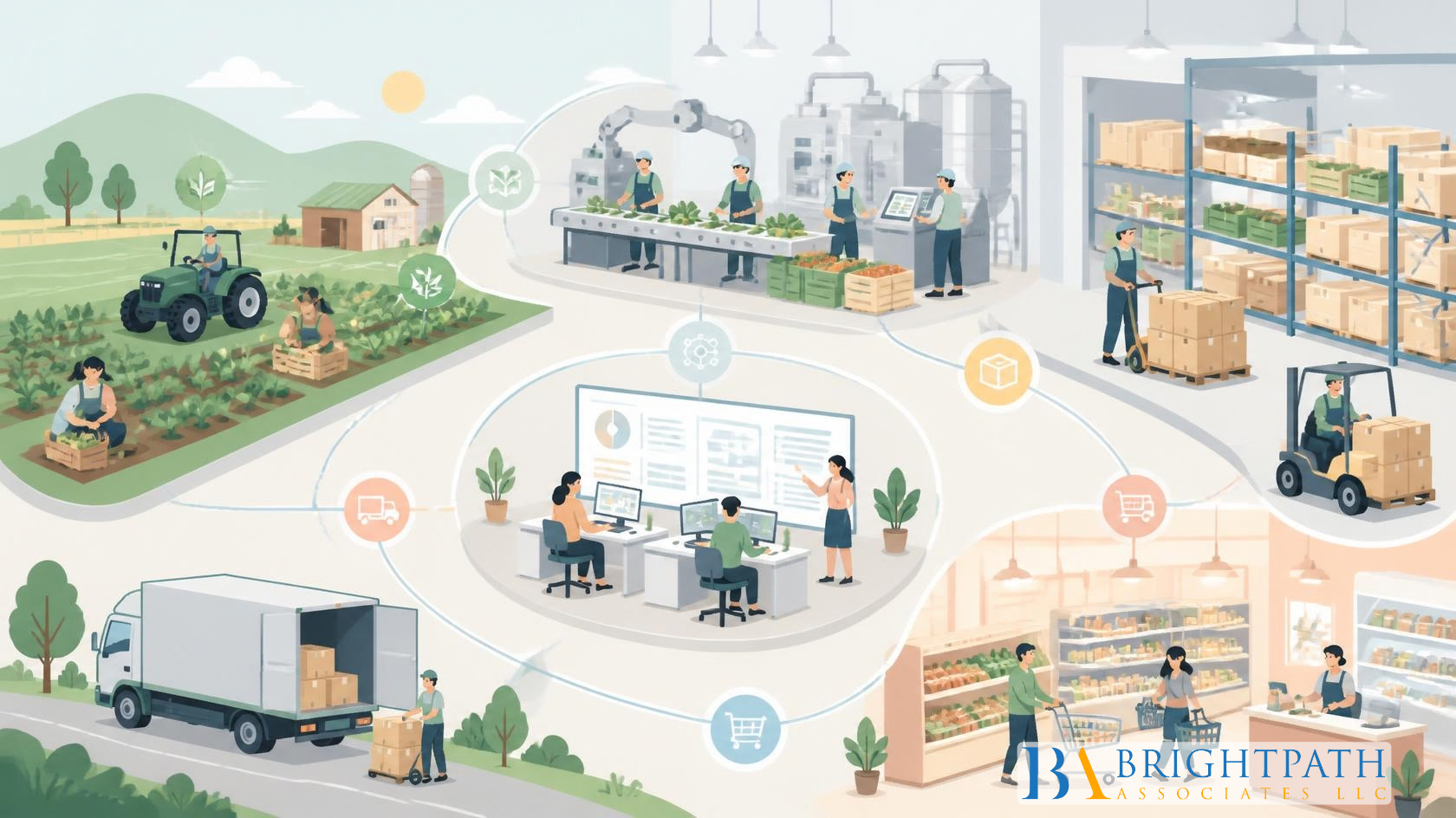
The journey from a farm to a consumer’s shopping cart looks simple from the outside. A crop is harvested, processed, packaged, transported, and eventually placed on a retail shelf. Behind that seemingly straightforward journey, however, exists a complex network of producers, processing facilities, warehouses, logistics providers, suppliers, retailers, equipment, employees, and technology platforms.
For small and mid-sized food and agricultural businesses, managing this network efficiently is becoming increasingly difficult. Seasonal demand, perishable inventory, labor constraints, production variability, and growing expectations for traceability are forcing companies to rethink how their operations are connected.
One technology trend gaining importance is the integration of Enterprise Resource Planning (ERP) systems with industrial automation. Rather than treating business software and factory-floor technology as separate investments, companies are increasingly looking at them as components of a connected operational ecosystem.
Why Traditional Supply Chain Systems Are Becoming a Problem
Many growing businesses still rely on spreadsheets, disconnected databases, manual production reports, and separate inventory systems. These tools may be manageable when an organization operates one facility or serves a limited customer base. As operations expand, however, fragmented information can become a significant obstacle.
Consider a food processor receiving raw materials from multiple agricultural suppliers. Procurement may maintain one set of records, production another, and the warehouse may use an entirely different inventory platform. Meanwhile, sales teams may have limited visibility into what is actually available for shipment.
An integrated ERP can provide a centralized information environment connecting procurement, production, inventory, logistics, financial management, and sales. Instead of viewing each stage independently, management can gain a more comprehensive picture of how decisions in one part of the operation affect another.
Connecting Factory-Floor Automation With Business Decisions
ERP integration becomes even more powerful when connected to industrial automation technologies. The goal is not simply to automate more machines. It is to make the organization more responsive to what those machines are actually doing.
Modern processing facilities can use automated conveyors, sorting systems, packaging equipment, robotics, sensors, programmable logic controllers, and supervisory systems to monitor and control production. These technologies generate valuable operational information, including production quantities, equipment status, cycle times, downtime, and process conditions.
Without integration, much of that information can remain isolated on the factory floor. When automation data flows into enterprise systems, production information can become relevant to procurement, inventory management, maintenance planning, financial analysis, and fulfillment.
For example, if an automated production line reports lower-than-expected output, management can potentially identify the impact on inventory and customer orders much earlier. Procurement teams may adjust material requirements, logistics teams can reconsider delivery schedules, and sales teams can receive more accurate information about product availability.
Companies exploring these interconnected technologies can gain additional perspective by examining the broader Industrial Automation Industry and the technologies shaping modern industrial operations.
Automation Can Improve More Than Production Speed
Automation is often associated with productivity, but its strategic value can extend much further. When these technologies operate alongside ERP platforms, companies can connect physical production activity with business processes.
Automated inspection and machine vision can help identify defects or inconsistencies during high-volume production. Robotics can support repetitive material handling, palletizing, picking, packaging, and warehouse movement. SCADA systems can provide visibility into equipment performance and operating conditions.
That connection can improve traceability as well. If a quality issue affects a particular production batch, integrated information can help organizations determine where the raw materials originated, when they were processed, which equipment was involved, and where finished products were distributed.
Why Leadership Matters in Automation Strategy
ERP and automation projects are often viewed as technology initiatives, but their success can depend heavily on leadership. Leadership teams therefore need professionals who understand both operational requirements and emerging industrial technologies.
Executives must determine which processes should be automated, how systems should communicate, what data should be measured, and how employees will adapt to new workflows. They also need to consider the long-term implications of technology investments rather than treating automation as a collection of isolated projects.
Specialized executive recruitment can become particularly relevant when companies are searching for leaders capable of managing automation programs, digital transformation, manufacturing technology, and supply chain modernization.
The original BrightPath Associates analysis, Streamlining Farm-to-Shelf Journey With Integrated ERPs, explores how ERP platforms can connect agricultural production, processing, automation, inventory, logistics, and business decision-making.
Building a More Connected Farm-to-Shelf Ecosystem
The future of agricultural and food processing will not be defined by ERP software or automation equipment individually. The greater opportunity lies in connecting these technologies. The organizations that understand how these pieces interact can create more responsive operating models.
An ERP can coordinate business requirements. Automation systems can execute physical processes. Sensors and SCADA platforms can provide operational visibility. Machine vision can support quality control. Robotics can handle repetitive physical tasks. Data integration can bring these information streams together.
For small and mid-sized companies, the transition does not necessarily mean transforming every process simultaneously. A more practical approach may involve identifying the areas where disconnected information creates the greatest operational cost or risk and then developing an integration strategy around those priorities.
