Storing Up Success: What 500,000 Units Tell Us About Modern France
Author : shariq abbasi | Published On : 27 Apr 2026
Numbers rarely tell stories on their own. But occasionally a single statistic carries so much weight that it reframes an entire conversation. For France's self-storage industry, that number is 496,179. That is the count of individual storage units now available across the country, recorded by Location-gardemeuble.fr in its 2025 national study presented to the Chambre Interprofessionnelle du Self-Stockage. Nearly half a million lockable rooms, spread across 2,129 facilities, waiting to hold the overflow of French life.
What makes this number interesting is not its size alone, but what it implies about the society that has produced it. Storage space does not accumulate by accident. It is built in response to demand, and demand is shaped by the way people live, work, move and consume. To understand why France now needs half a million storage units, you need to understand something about the pressures bearing down on French households and businesses in the 2020s.
"Nearly half a million lockable rooms, waiting to hold the overflow of French life."
Reading Society Through Its Storage Habits
The space squeeze
The most immediate driver of self-storage demand is the most obvious one: homes are getting smaller relative to the volume of possessions people accumulate over a lifetime. This is not a uniquely French phenomenon, but it is particularly acute in the country's largest cities, where apartment sizes have been shrinking for decades while the average household's stock of furniture, electronics, clothing and leisure equipment has grown substantially.
The result is a structural mismatch between the space people have and the space their lives require. For many urban households, a storage unit is not a luxury but a practical necessity, a pressure valve that allows them to live comfortably in a city-centre apartment without having to choose between the kayak and the guest bedroom furniture.
Remote work and the reconfigured home
The mass adoption of remote and hybrid working since 2020 has added a new layer of complexity to domestic space management. Home offices require dedicated furniture and equipment. Spare rooms that once served as informal storage have been repurposed as workspaces. The dining table, previously available as an occasional dumping ground, is now a daily desk. All of this has accelerated the logic of externalising storage: what cannot fit neatly into the reorganised home flows outward into a box somewhere accessible but out of the way.
The micro-entrepreneur economy
France has seen a steady rise in self-employment, freelance work and micro-entrepreneurship over the past decade. Many of these individuals operate from home and need somewhere to store stock, equipment, samples and archives that cannot practically share space with family life. A self-storage unit functions as a low-cost, no-commitment extension of the home office, bridging the gap between working from the kitchen table and signing a commercial lease.
The CISS data reflects this trend directly. The diversification of the customer base, away from the traditional image of the family between moves and toward the solo trader, the small online retailer and the freelance artisan, is one of the defining shifts of the past five years in French self-storage.
A Map of Supply: Who Has Access and Who Does Not
One of the most valuable contributions of the 2025 study is its granular geographic breakdown of storage supply across France. The national average of seven units per 1,000 inhabitants is a useful benchmark, but the variance around that average tells a more nuanced and commercially significant story.
|
Region |
Units per 1,000 inhabitants |
|
Occitanie |
9.5 |
|
Nouvelle-Aquitaine |
9.1 |
|
Pays de la Loire |
9.0 |
|
Île-de-France |
8.9 |
|
PACA |
8.8 |
|
Grand Est |
~5.0 |
|
Bourgogne-Franche-Comté |
~5.0 |
|
Hauts-de-France |
~5.0 |
The South-West corridor from Occitanie through Nouvelle-Aquitaine stands out as the most storage-rich part of the country. This is a region undergoing sustained demographic growth, fuelled in part by migration from Paris and other northern cities as remote work has freed workers from the need to live close to their employers. New residents arriving in Bordeaux, Toulouse or Montpellier frequently find themselves navigating the gap between a previous home and a new one, generating storage demand at both ends of the move.
Pays de la Loire's strong showing reflects a thriving regional economy centred on Nantes, combined with a tradition of individual home ownership that paradoxically correlates with higher storage use: homeowners tend to accumulate more possessions than renters and often need external space during renovation projects.
The picture is starkly different in the three lagging regions. Grand Est, Bourgogne-Franche-Comté and Hauts-de-France each record densities close to five units per 1,000 inhabitants, roughly half the rate of the leading regions. These areas share a legacy of industrial decline, slower population growth and a lower density of urban centres capable of sustaining commercially viable storage facilities. For investors, they represent an underserved market. For residents, they represent a gap in the service infrastructure that their counterparts in Occitanie take for granted.
At the departmental level, the concentration effect is even more pronounced. Three departments alone, Haute-Garonne, Gironde and Paris, each contain upwards of 17,000 units, collectively accounting for a disproportionate share of national supply. This reflects both the size of these metropolitan economies and the specific pressures of urban density, where the trade-off between living space and storage costs is resolved differently than in rural settings.
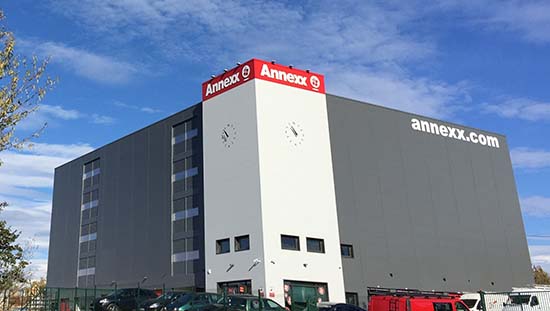
What France Is Actually Building: A Look at Facility Types
The 2,129 centres in the national study are not a homogeneous collection of identical facilities. They range from purpose-built, fully managed urban storage towers to converted agricultural buildings fitted with padlocked containers. Understanding this diversity is essential to assessing the true quality and professionalism of the market.
|
Facility Type |
Number of Centres |
Approx. Unit Share |
|
Metal-wall purpose-built |
1,088 |
~70% |
|
Container-based |
639 |
~23% |
|
Timber-frame buildings |
236 |
~5% |
|
Garage-style units |
123 |
~2% |
|
Other |
43 |
<1% |
The dominance of metal-wall purpose-built facilities is encouraging news for the sector's credibility. These structures, accounting for roughly 346,000 of the units surveyed, are the format most likely to meet the European Self-Storage standard, the industry benchmark covering fire protection, access security, structural integrity and insurance frameworks. Operators running compliant facilities can offer meaningful guarantees to customers and position themselves as genuinely professional service providers.
The container segment, which encompasses approximately 115,000 units, presents a more complicated picture. Containers offer low entry costs and rapid deployment, making them attractive to first-time operators or those testing demand in new locations. However, a meaningful proportion of container sites fall short of European standards on security, weatherproofing or fire safety. This creates a two-tier perception problem for the sector as a whole: a customer who has a poor experience at a substandard container site may form a lasting negative impression of self-storage in general, depressing demand for the quality operators who have invested heavily in their facilities.
The timber-frame and garage-style categories together account for a relatively small share of units but remain relevant in rural and peri-urban markets where purpose-built facilities are not yet economically viable. These formats serve genuine local needs and should not be dismissed, but they reinforce the case for clear industry-wide quality standards that help customers distinguish between options.
The Ten Networks That Shape the Market
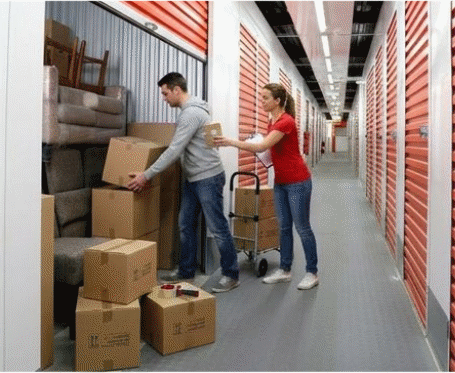
France's self-storage market is competitive, fragmented at the margins and concentrated at the core. The ten leading national networks, Homebox, Shurgard, Une Pièce en Plus, Annexx, Locabox, Locakase, À Chacun son Box, Stocker Seul, Lockall and Okbox, collectively manage 226,300 units, representing about 65.5% of the country's professionally compliant stock.
This figure invites comparison. In the United Kingdom, the closest European parallel, the top operators command an even larger share of a larger total market. In the United States, the world's reference point for self-storage maturity, the top five publicly listed real estate investment trusts own approximately 38% of total floor space, while the hundred largest operators account for around 65% of the market. By these benchmarks, France's concentration level looks broadly appropriate for a market at its current stage of development.
"Two thirds of France's professional storage stock is in the hands of ten operators. One third remains with the independents who know their communities best."
What matters as much as the concentration ratio is the nature of competition within the concentrated segment. The ten leading networks compete actively on price, location, digital capabilities and service quality. None has achieved the kind of dominant market position that would allow it to reduce investment or raise prices without competitive consequences. This keeps the market dynamic and customer-focused in ways that more consolidated markets sometimes lose.
The remaining 34.5% of professional stock held by independent and regional operators is not a residual category to be gradually absorbed by the nationals. These operators provide genuine value: intimate knowledge of local markets, ability to adapt quickly to neighbourhood-level demand shifts, and a customer relationship built on personal service rather than brand recognition. A healthy self-storage market needs both types of operator, and France currently has a reasonable balance of the two.
Size Matters: The Economics of Scale in a Polarised Market
The distribution of centres by size reveals a market pulled simultaneously in two directions: toward the intimacy and flexibility of small independent operations, and toward the operational efficiency and financial returns of large-format sites.
|
Centre Size |
Number of Centres |
Share of Total |
|
Under 50 units |
226 |
10.6% |
|
51 to 99 units |
448 |
21.0% |
|
100 to 199 units |
622 |
29.2% |
|
200 to 299 units |
282 |
13.2% |
|
300 units or more |
586 |
27.5% |
The modal category, centres of 100 to 199 units, represents a sweet spot that many operators have identified as the optimal format for mid-sized urban and suburban markets. Large enough to justify professional management, automated access systems and dedicated customer service, but not so large as to require a high-traffic urban location or a major capital investment to fill.
The near-equal share held by small centres under 100 units and large centres over 300 units is the most revealing aspect of this distribution. It reflects a bifurcating market where scale economies increasingly favour large-format development in metropolitan areas, while small-format sites remain viable in smaller towns and secondary markets where demand is real but not sufficient to sustain a larger facility.
For the major networks, the strategic logic points toward the 300-plus category: these sites deliver the operating leverage and brand visibility that justify the capital expenditure. For independent operators, the under-100-unit format remains accessible without external financing and can be profitable when positioned carefully in markets the nationals have yet to enter. The middle ground, the 100 to 299 unit range, is where competition is most intense and where the choice between remaining independent and affiliating with a national brand is most consequential.
Going Digital: The Race to Meet Customer Expectations
Of all the trends identified in the CISS 2025 study, the acceleration of digital adoption may have the most far-reaching long-term implications. The self-storage sector has historically lagged behind comparable service industries in its embrace of online customer journeys, a gap that has become increasingly costly as consumer expectations have risen.
The study records that approximately 40% of French centres now display their prices online. While this proportion may seem modest in an era when price transparency is taken for granted in sectors from hotel bookings to grocery delivery, it represents a substantial improvement on where the industry stood just five years ago, and it marks a meaningful shift in the competitive landscape. When prices are visible, informed decision-making becomes possible, and operators who have invested in service quality and security have a concrete way of communicating their value proposition beyond word of mouth.
From browsing to booking
The more significant metric is the 12% of centres that have implemented full online reservation systems. This figure, while still representing a minority of the market, has risen sharply and is concentrated disproportionately among the national networks and the larger independent operators who have the technical resources to build and maintain digital booking infrastructure.
The gap between 40% publishing prices and 12% enabling bookings points to the next frontier for the sector. Many operators have taken the first step of digital transparency without completing the journey to frictionless online conversion. For a customer who has compared prices across several facilities, the inability to confirm a booking without making a phone call during business hours is a meaningful barrier. Reducing that friction is one of the clearest opportunities available to mid-sized operators seeking to grow market share without large capital investment.
The technology stack of the modern storage centre
Beyond booking systems, the digitisation of self-storage operations encompasses a widening range of tools: smartphone-enabled access control that eliminates physical keys and allows operators to manage entry remotely; automated billing and payment systems that reduce administrative overhead; customer relationship management platforms that support targeted communications and loyalty programmes; and real-time occupancy dashboards that enable dynamic pricing aligned with demand.
These technologies are not futuristic aspirations. They are already deployed at scale by the leading networks and are becoming increasingly accessible to smaller operators through software-as-a-service models that require no significant upfront investment. The operators who integrate this technology stack most effectively over the next three to five years will establish structural advantages in customer acquisition and retention that will be difficult for less-digitalised competitors to overcome.
The Investment Case: Gaps, Risks and Long-Term Potential
For property investors and capital allocators, the CISS 2025 study offers a nuanced but broadly optimistic picture. France's self-storage density of approximately seven units per 1,000 inhabitants represents roughly one twelfth of the penetration rate seen in the United States, the global benchmark for a mature market. Even accounting for structural differences in housing culture, home size and consumer behaviour between the two countries, this gap implies decades of potential demand growth.
The most immediately attractive opportunity lies in the under-served regions. Grand Est, Bourgogne-Franche-Comté and Hauts-de-France collectively contain millions of potential customers who currently have limited access to professional-grade storage facilities. Developing supply in these regions carries execution risk, as demonstrated unit economics are weaker than in the Paris metropolitan area or the major southern cities, but the absence of established competition provides a window of opportunity that will not remain open indefinitely.
Secondary cities across France represent a second tier of opportunity. Many urban centres with populations between 50,000 and 200,000 inhabitants remain under-served relative to their demographic and economic weight. As national networks concentrate their development capital on the largest metropolitan markets, these cities offer independent operators and regional chains a defensible position that can generate attractive risk-adjusted returns.
The risk side of the equation is not negligible. The container segment's ongoing quality challenges expose the sector to potential reputational damage and, in a more active regulatory environment, to compliance-related disruption. Rising construction costs and planning constraints in urban areas increase the capital intensity of new development. And the accelerating pace of digital change means that operators who defer investment in technology face growing competitive disadvantage.
None of these risks is disqualifying. They are the normal conditions of a growth market moving through its maturity phase, familiar to anyone who has tracked the evolution of self-storage in the United Kingdom, Germany or the Netherlands over the past two decades. The French market is following a well-documented development trajectory, and the 2025 CISS study confirms that it remains firmly on course.
Conclusion: Five Hundred Thousand Rooms and What They Mean
There is something quietly revealing about a society that requires half a million storage units to function comfortably. It speaks to lives that are full, sometimes too full; to homes that are smaller than the dreams and accumulations they are asked to contain; to an economy in which flexibility has become a cardinal virtue and fixed commitments a source of anxiety.
The French self-storage sector did not create these conditions. It responded to them, and in doing so it built an industry that now employs thousands of people, serves millions of customers and generates the kind of steady, recurring revenue that attracts long-term institutional investment. The 2025 CISS study is not just a census of storage units. It is a portrait of a country navigating the pressures of modern urban life, and of the industry that has quietly, efficiently, made itself indispensable to that navigation.
The next chapter of this story will be written in the under-served regions of the North and East, in the secondary cities that have yet to see their first purpose-built facility, in the online booking systems that will convert browsers into customers without a single phone call, and in the sustainability investments that will make the industry's growth compatible with the decarbonisation commitments France has made to itself and to Europe. The foundations are solid. The direction is clear. The opportunity is large.
