Standardizing Sustainability Data for B2B Paper Procurement
Author : Kabir Pathan | Published On : 07 Oct 2026
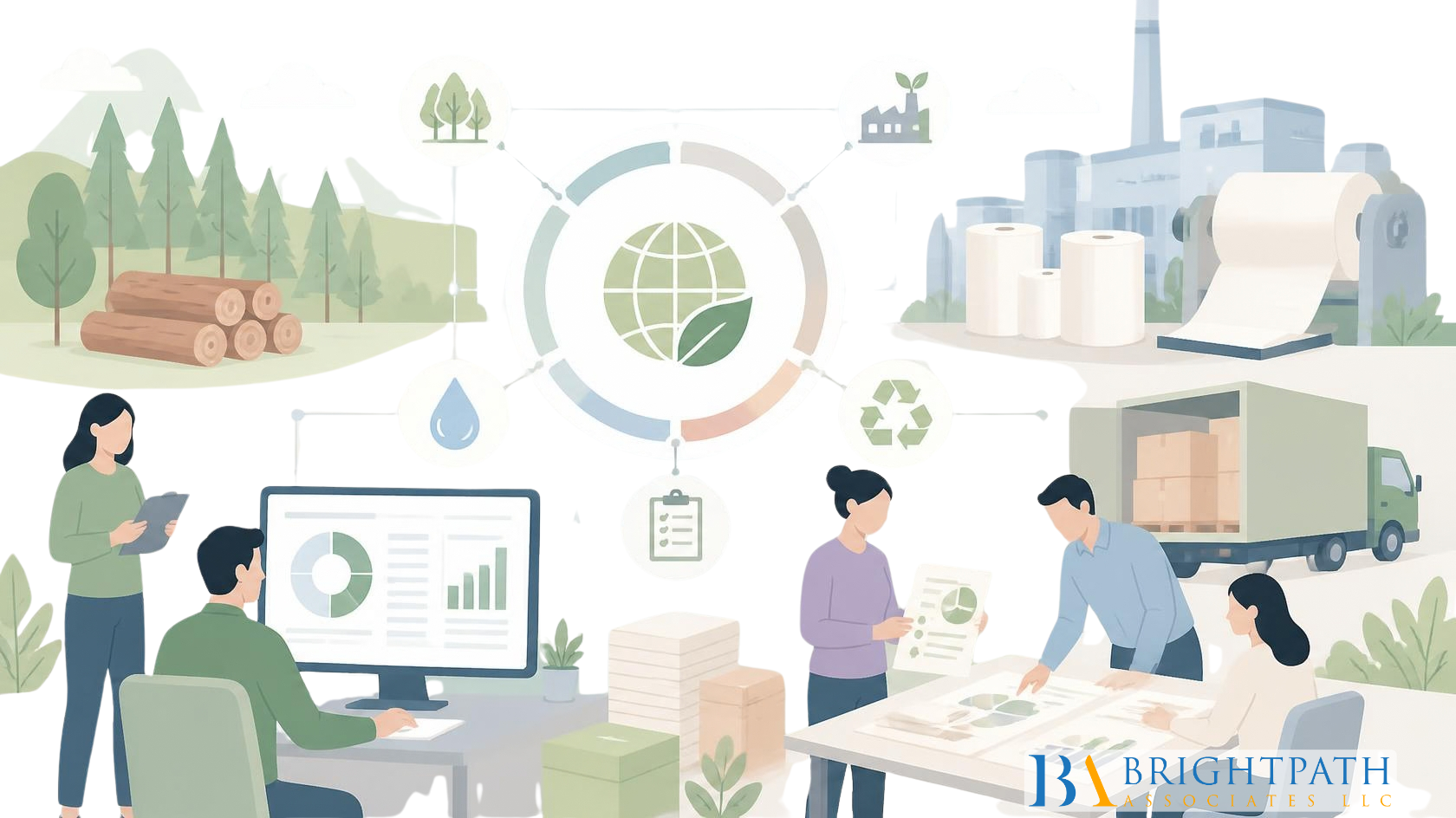
Sustainability is no longer a secondary consideration in business procurement. Across the United States, companies purchasing paper and forest products are increasingly asking difficult questions about where materials originate, how they are manufactured, how resources are consumed, and whether environmental claims can be supported with reliable evidence. For paper manufacturers and suppliers, this shift is creating both a challenge and an opportunity.
The issue is not necessarily a lack of sustainability information. In many cases, companies already collect substantial amounts of data related to energy consumption, water use, recycled content, emissions, waste, fiber sourcing, and production efficiency. The bigger problem is that this information is often measured and reported differently from one organization to another.
For procurement leaders, inconsistent sustainability data can make supplier comparisons difficult. A manufacturer may report emissions per ton of finished paper, while another reports facility-wide emissions. One supplier may provide detailed recycled-content information, while another offers only a broad environmental claim. Without consistent measurement practices, buyers may struggle to determine which supplier actually delivers stronger environmental performance. This is why standardized sustainability data is becoming increasingly important across the Paper and Forest Industry.
Turning Sustainability Claims Into Comparable Information
Traditional procurement decisions have generally centered on price, quality, capacity, delivery reliability, and supplier relationships. Sustainability is now becoming another important dimension of supplier evaluation.
However, sustainability cannot become a meaningful procurement criterion if companies cannot compare the underlying information. These questions move sustainability discussions away from broad statements and to measurable performance.
A standardized framework can establish common definitions for metrics such as greenhouse gas emissions, water consumption, recycled fiber content, waste recovery, energy use, and responsible fiber sourcing. It can also establish clear measurement boundaries, reporting periods, units, and verification requirements.
Instead of asking whether a supplier is “sustainable,” procurement professionals can ask more precise questions. How much recycled fiber is used? What percentage comes from post-consumer sources? How much energy is consumed per unit of production? What percentage of manufacturing waste is recovered? How is fiber sourced and documented?
The Importance of Responsible Fiber Sourcing
Fiber sourcing sits at the foundation of the paper supply chain. Forest management practices can influence biodiversity, land use, carbon storage, and long-term resource availability. Consequently, companies purchasing paper products increasingly want greater visibility into the origin and management of fiber.
A practical sustainability data framework should provide consistent information about fiber origin, recycled content, virgin fiber content, sourcing regions, certifications, and chain-of-custody practices. Standardization makes it easier for procurement teams to distinguish between meaningful environmental performance and generalized sustainability messaging.
Making Paper Recycling Data More Useful
Recycling is another area where standardized information can improve procurement decisions. Paper recycling can reduce dependence on virgin fiber and support more circular material systems. But simply knowing that a product contains recycled material does not tell the entire sustainability story.
Procurement teams may need to consider post-consumer recycled content, total recycled fiber percentage, manufacturing waste recovery, recycling rates, and material diversion from landfill. Other factors, including energy and water requirements associated with processing recycled fiber, may also influence the overall environmental profile.
A multi-dimensional approach provides a more realistic picture than relying on a single sustainability metric. For manufacturers, standardized reporting can also reveal where operational improvements are possible. Better waste recovery, improved process efficiency, and stronger recycling systems can create environmental benefits while potentially reducing operating costs.
Technology Is Changing Sustainability Measurement
Modern paper manufacturing is becoming increasingly data-driven. Advanced process controls, connected equipment, automation, sensors, wastewater treatment technologies, and digital monitoring platforms can generate detailed operational information.
Automated systems can monitor energy consumption, water usage, production rates, equipment performance, material losses, and waste generation. Instead of depending entirely on periodic manual reporting, manufacturers can increasingly create continuous records of operational performance.
For example, if a production line begins consuming significantly more energy than expected, management can identify the deviation and investigate its cause. If waste generation increases, operational teams can respond before the issue becomes a larger cost or sustainability problem. The same data can ultimately strengthen supplier reporting and give buyers greater confidence in the information they receive.
Why Leadership Matters
Technology alone will not solve the sustainability data challenge. Organizations need leaders capable of connecting sustainability objectives with procurement, manufacturing, finance, supply chain management, and business strategy.
As sustainability requirements become more sophisticated, companies may increasingly need executives who can interpret complex operational information and translate it into practical commercial decisions.
The right leadership can help an organization determine which sustainability metrics actually matter, establish accountability for data quality, improve cross-functional collaboration, and ensure that environmental objectives support rather than conflict with business performance.
For companies exploring these issues in greater depth, the discussion in Standardizing Sustainability Data for B2B Paper Procurement provides additional perspective on how common data standards can strengthen procurement and supply-chain transparency.
Conclusion
Sustainability data is becoming an increasingly important component of B2B paper procurement. Yet collecting more information is not enough. The information must be consistent, comparable, credible, and relevant to actual purchasing decisions.
Standardization can help paper manufacturers demonstrate their environmental performance while giving procurement teams a stronger foundation for evaluating suppliers. It can also connect sustainability with operational efficiency, supply-chain resilience, innovation, and long-term business strategy.
As paper and forest product companies navigate changing customer expectations, evolving regulations, technological advances, and increasing pressure for supply-chain transparency, leadership will be critical.
For organizations seeking experienced leadership to navigate the evolving Paper and Forest Industry, BrightPath Associates LLC can help identify executives and specialized talent aligned with changing operational and sustainability priorities. Connect with BrightPath Associates LLC to discuss your organization’s current and future leadership hiring needs.
