Stainless Steel 316 ERW Pipes Manufacturers
Author : Ashish Mehta | Published On : 21 Sep 2026
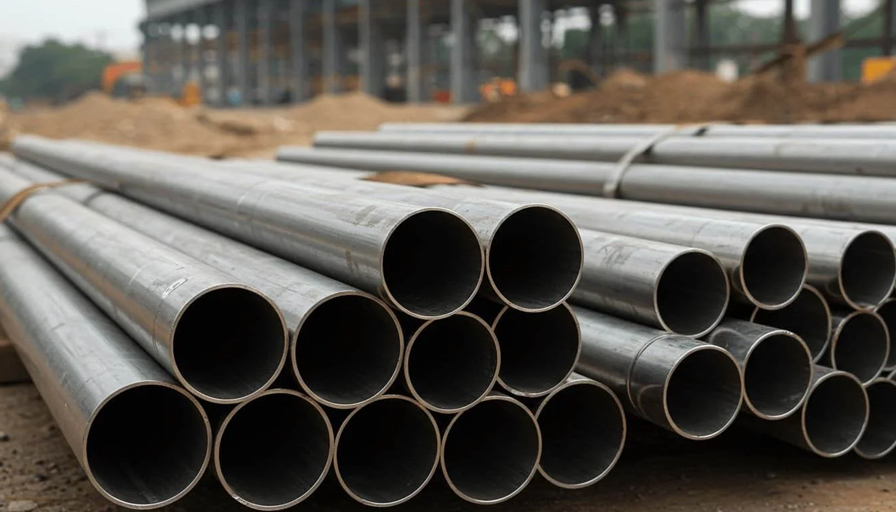 Stainless Steel 316 ERW Pipes
Stainless Steel 316 ERW Pipes are welded stainless steel pipes manufactured from 316-grade austenitic stainless steel. They are selected for applications where good corrosion resistance, weldability, strength, and reliable dimensional control are required. The 316 grade contains molybdenum in addition to chromium and nickel, which helps improve resistance to localized corrosion in suitable service environments. ERW production forms stainless steel strip into a cylindrical section and joins the longitudinal edges through an electric welding process. ASTM lists several specifications covering welded austenitic stainless steel pipe and tubing, including A312, A778, A813, A358, and related standards for different service conditions.
Understanding 316 ERW Pipes
Stainless Steel 316 is an austenitic grade commonly used where corrosion resistance requirements are higher than those typically associated with general-purpose stainless steel. Its molybdenum addition is an important part of its alloy design and contributes to improved resistance to localized corrosion in appropriate environments. However, material selection should always consider the actual chemicals, concentration, temperature, chloride exposure, pressure, and operating conditions of the application.
ERW manufacturing starts with stainless steel strip or coil that is progressively formed into a round tubular shape. The adjoining edges are heated and joined using electrical resistance, producing a longitudinal welded seam. After welding, the pipe can undergo sizing, straightening, surface finishing, cutting, and inspection. Welded stainless steel specifications can establish requirements for chemical composition, mechanical properties, testing, dimensions, and examination depending on the selected standard. (ASTM International Store)
Manufacturing and Quality Control
The quality of an ERW pipe depends on controlled forming, welding, sizing, and finishing operations. During production, the welding parameters need to remain consistent so that the longitudinal seam achieves the required integrity. Dimensional checks are also important because outside diameter, wall thickness, straightness, and roundness influence installation and service performance.
Depending on the specification and purchase requirement, welded stainless steel pipe may be subjected to tensile testing, flattening or other mechanical tests, hydrostatic testing, or nondestructive examination. ASTM A813/A813M, for example, covers single- and double-welded austenitic steel pipe for high-temperature and general corrosive service and includes requirements for testing and examination. (ASTM International Store)
Standards and Specifications
The appropriate specification should be selected according to the intended application rather than assuming that every 316 ERW pipe falls under one standard. ASTM A312/A312M covers seamless, welded, and heavily cold-worked austenitic stainless steel pipe, while A778/A778M covers certain welded, unannealed austenitic stainless steel tubular products for low and moderate temperatures and corrosive service. ASTM A813/A813M covers specific straight-seam single- or double-welded austenitic pipe requirements. (ASTM International Store)
For mechanical or ornamental tubing requirements, ASTM A554 is another relevant welded stainless steel specification, with requirements covering welded stainless steel mechanical tubing. The buyer should therefore specify the exact grade, product type, dimensions, standard, testing requirements, surface finish, and documentation when placing an enquiry. (ASTM International Store)
Applications of 316 ERW Pipes
Stainless Steel 316 ERW Pipes are used across industries where corrosion resistance and welded construction are important. Typical applications include chemical processing equipment, pharmaceutical facilities, food-processing systems, water and process piping, marine-related equipment, architectural fabrication, and general industrial installations.
The grade can be useful in environments where exposure to certain chlorides and other corrosive media makes material selection more demanding. Nevertheless, 316 should not automatically be treated as suitable for every chloride or chemical environment. The complete operating conditions should be reviewed before finalizing the material.
Benefits of ERW Construction
One important advantage of ERW manufacturing is the ability to produce pipes efficiently with consistent dimensions. The process is suitable for applications where a longitudinal welded construction meets the requirements of the applicable specification.
The finished pipe can also be supplied with different surface conditions and end preparations depending on the project requirement. Proper inspection of the welded seam, dimensions, surface, and material documentation helps ensure that the supplied pipe corresponds with the purchase specification.
Selecting 316 ERW Pipes
When purchasing these pipes, buyers should clearly define the required grade, outside diameter, wall thickness or schedule, pipe length, applicable ASTM or other standard, surface finish, quantity, testing requirements, and inspection documentation. Service conditions should also be communicated when material selection depends on corrosion exposure or operating temperature.
For pressure-containing applications, the applicable piping code and product specification should be confirmed before procurement. A technically correct specification helps prevent problems related to incorrect dimensions, unsuitable testing, missing certificates, or inappropriate material selection.
Supply and Export
Reliable supply is important when projects require several pipe sizes, wall thicknesses, and quantities. Stainless Steel 316 ERW Pipes Manufacturers can produce or arrange pipes according to defined material specifications, dimensions, standards, and inspection requirements.
For regular industrial procurement, Stainless Steel 316 ERW Pipes Suppliers can support requirements for standard and project-specific sizes. Buyers should provide complete technical details with their enquiry so that the material offered matches the intended application.
For customers requiring available inventory, Stainless Steel 316 ERW Pipes Stockists can provide commonly requested sizes subject to actual stock availability. Stock-based sourcing can be useful when standard dimensions are required within a shorter delivery schedule.
International buyers can approach Stainless Steel 316 ERW Pipes Exporters for export orders involving international packing, inspection coordination, material certificates, commercial documentation, and shipment arrangements. Export requirements can vary according to the destination country and project.
Stainless Steel 316 ERW Pipes in India
India has a large industrial market for stainless steel piping across engineering, chemical processing, pharmaceutical, food processing, construction, and manufacturing sectors. Stainless Steel 316 ERW Pipes Manufacturers in India can supply material according to the required grade, dimensions, standards, finish, testing, and quantity, depending on their manufacturing and sourcing capabilities.
For domestic industrial requirements, Stainless Steel 316 ERW Pipes Suppliers in India can assist with quotations, material availability, technical specifications, documentation, and delivery schedules. Providing the complete pipe specification at the enquiry stage makes procurement more straightforward.
When immediate availability is important, Stainless Steel 316 ERW Pipes Stockists in India can be considered for commonly required sizes and specifications. Actual stock should be confirmed before purchase because availability can vary according to diameter, thickness, finish, and quantity.
For international customers sourcing stainless steel products from India, Stainless Steel 316 ERW Pipes Exporters in India can support overseas supply requirements, including export packing and required documentation. The buyer should communicate the destination, applicable product standard, inspection requirements, and documentation requirements before order confirmation.
Quality and Procurement Considerations
A reliable procurement process should verify the material grade, dimensions, applicable standard, manufacturing condition, weld quality, testing, and material certification. For critical applications, buyers may also specify third-party inspection or additional nondestructive examination where permitted by the relevant product specification.
It is also important to distinguish between pipe and tubing specifications. ASTM standards apply to different products and service conditions, so selecting a specification based only on the word "welded" may not provide sufficient technical control. The product standard should correspond to the actual application and required service conditions. (ASTM International Store)
Frequently Asked Questions
What are Stainless Steel 316 ERW Pipes?
They are welded stainless steel pipes manufactured from 316 austenitic stainless steel. The ERW process forms stainless steel strip into a tubular shape and joins the longitudinal edges using an electric welding process.
What makes 316 different from common 304 stainless steel?
316 contains molybdenum as part of its alloy composition, which provides improved resistance to localized corrosion in suitable environments. The appropriate grade still depends on the actual service conditions.
Which standards can apply to 316 welded pipes?
Depending on the product and application, relevant ASTM specifications can include A312/A312M, A778/A778M, A813/A813M, A358/A358M, and other applicable standards. The correct specification should be confirmed against the intended service. (ASTM International Store)
Where are 316 ERW pipes used?
They can be used in chemical processing, pharmaceutical, food processing, water and process systems, marine-related applications, engineering, construction, and other industrial environments where the properties of 316 stainless steel are appropriate.
What should be specified when ordering?
The enquiry should normally include grade, outside diameter, wall thickness or schedule, length, applicable standard, surface finish, quantity, testing requirements, inspection requirements, and required material documentation.
Can 316 ERW pipes be exported from India?
Yes. Export supply can include material documentation, inspection coordination, suitable packing, and shipment arrangements according to the buyer's project and destination requirements.
A M Industries – Stainless Steel 316 ERW Pipes
A M Industries supports industrial requirements for stainless steel products according to specified grades, dimensions, standards, quantities, and documentation requirements. Customers looking for Stainless Steel 316 ERW Pipes Manufacturers, Stainless Steel 316 ERW Pipes Suppliers, Stainless Steel 316 ERW Pipes Stockists, or Stainless Steel 316 ERW Pipes Exporters can provide their complete technical requirement for quotation and supply. For India and international enquiries, the required grade, pipe size, wall thickness, applicable standard, quantity, testing, and certification requirements should be shared for accurate order processing.
