Solving Last Mile Bottleneck in Direct-to-Consumer Agricultural Sales
Author : Alex Turner | Published On : 25 Sep 2026
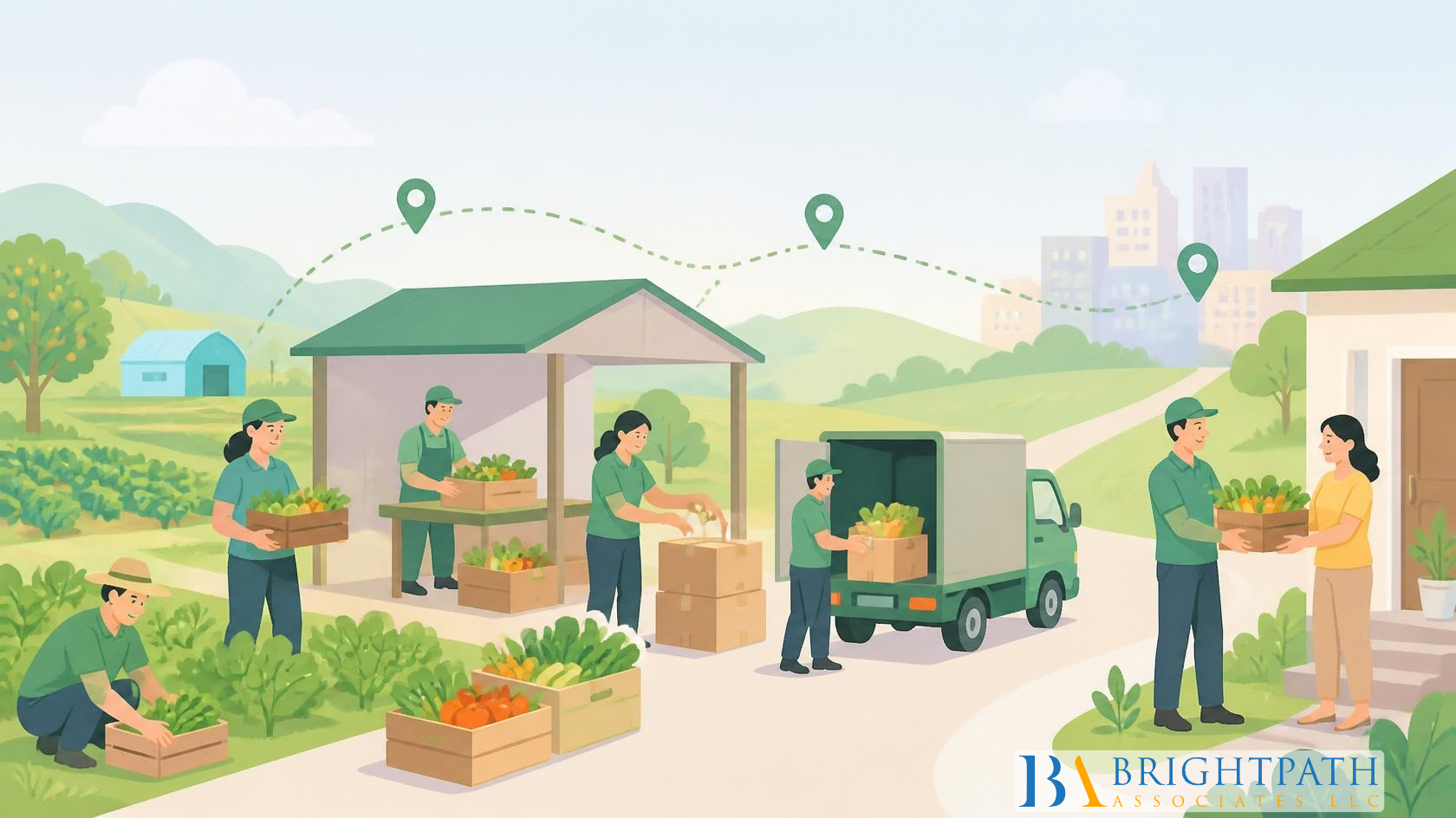
Direct-to-consumer (DTC) agriculture is changing how farmers and agribusinesses connect with the people who ultimately consume their products. From fresh vegetables and fruits to dairy, eggs, specialty foods, grains, and value-added agricultural products, producers increasingly have opportunities to reach households, restaurants, retailers, and institutional customers without depending entirely on traditional intermediaries.
The opportunity is significant, but selling directly to customers introduces a difficult operational question: How efficiently can a farm move products from the field to the customer's doorstep? For businesses exploring the future of direct agricultural sales, understanding and solving this bottleneck can become an important component of long-term growth.
The final stage of distribution can become one of the most expensive and complicated parts of a DTC agricultural business. Perishable products, scattered customers, unpredictable demand, seasonal production, transportation expenses, packaging requirements, and delivery expectations all create challenges that traditional agricultural distribution models were not designed to handle.
Why the Last Mile Is Different in Agriculture
Traditional agricultural supply chains are built around consolidation. A producer can move a large quantity of products to a wholesaler, processor, distribution center, or centralized market. From there, products are distributed through established logistics networks.
Instead of moving large volumes to a limited number of buyers, a producer may need to fulfill dozens or hundreds of smaller orders going to geographically dispersed customers. Every additional delivery can involve transportation, labor, packaging, communication, scheduling, and handling costs.
Perishability makes the equation even more complicated. Fresh produce, dairy products, eggs, meat, and other temperature-sensitive products have limited selling windows. A delayed delivery can affect product quality and customer satisfaction while increasing waste. This means that agricultural businesses cannot treat delivery as simply an administrative function. Last-mile distribution needs to be considered as part of the overall business model.
Technology Can Connect Production With Demand
Farm management platforms, digital ordering systems, inventory tools, customer databases, and route-planning technologies can help producers coordinate production and distribution more effectively. When sales information is connected with harvest forecasts, businesses can make more informed decisions about how much to harvest, package, store, and deliver.
This is particularly valuable for businesses operating with seasonal or highly variable production.
Precision agriculture can also contribute indirectly to better distribution planning. Information about crop conditions, expected yields, maturity, and field performance can provide useful inputs for commercial planning.
The broader opportunity is not simply automation. It is visibility. When agricultural leaders can see demand, inventory, production capacity, and delivery requirements within a connected operational framework, they can respond more quickly to changes.
Geographic Consolidation Can Reduce Delivery Costs
One of the most practical ways to improve last-mile economics is to stop treating every customer as an entirely separate delivery destination. Agricultural businesses serving urban or suburban markets can create geographic delivery zones. Customers in the same neighborhood or surrounding area can receive products on designated days, allowing businesses to consolidate multiple orders into fewer routes.
Collection points provide another option. Community stores, farmers' markets, residential communities, restaurants, or partner businesses can serve as centralized locations where multiple customers collect orders.
For larger operations, micro-distribution hubs can bring inventory closer to concentrated demand centers. The right model depends on customer density, product characteristics, order frequency, and transportation economics.
The Workforce Behind the Last Mile
As agricultural businesses become more digitally connected, they increasingly require professionals who understand multiple sides of the operation. Modern agricultural logistics can involve supply-chain planning, data analysis, customer operations, procurement, technology implementation, sustainability, and traditional agricultural knowledge.
A logistics leader who understands perishability and seasonal production can approach agricultural distribution differently from someone working exclusively with durable manufactured products. Likewise, an agricultural operations leader increasingly benefits from understanding digital systems, customer expectations, inventory management, and commercial distribution.
This convergence is creating demand for leaders with hybrid capabilities. Businesses looking to strengthen their leadership teams can explore specialized agriculture and farming industry recruitment services when they need professionals capable of connecting operational performance with long-term growth.
Turning the Last Mile Into a Competitive Capability
Direct-to-consumer agriculture is likely to remain an attractive opportunity for producers seeking stronger relationships with customers and greater control over how their products reach the market. But customer acquisition is only the beginning.
The businesses that approach DTC agriculture strategically will need to consider the entire journey from production to consumption. Technology, demand forecasting, route planning, cold-chain management, packaging, workforce capabilities, and distribution partnerships all need to work together.
For a deeper examination of the operational challenges and potential solutions, explore BrightPath Associates' analysis of solving last-mile bottleneck in direct-to-consumer agricultural sales. Ultimately, the last mile should not be viewed merely as the final step after production. It is a strategic component of the agricultural business model.
