Solid Carbide Thread Mills – Benefits, Applications.
Author : Surya makeyoueasy | Published On : 01 Jul 2026
Introduction
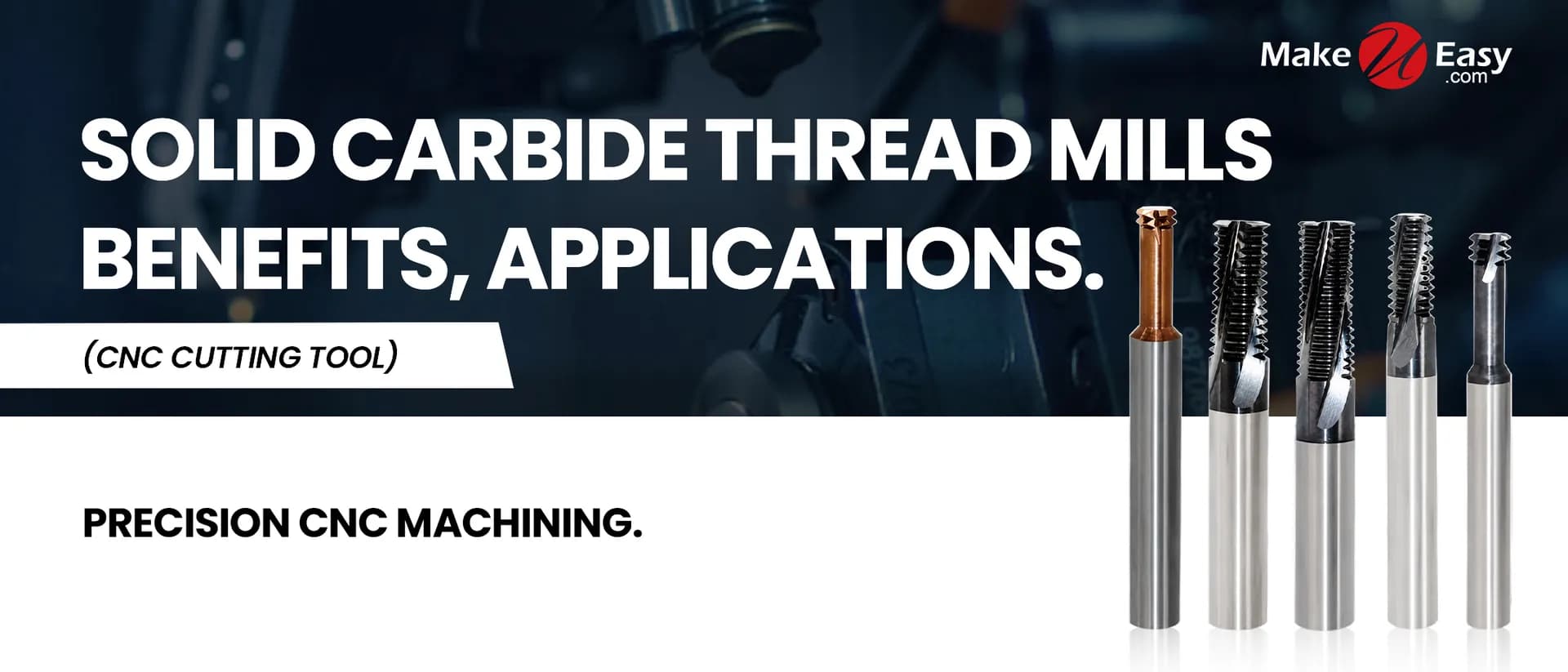
Precision threading is a critical operation in CNC machining, and choosing the right cutting tool directly impacts thread quality, production efficiency, and tool life. Among the various threading solutions available today, the Solid Carbide Thread Mill has become the preferred choice for manufacturers requiring high accuracy, excellent surface finish, and reliable performance.
At Makeyoueasy, we supply high-quality CNC cutting tools and accessories designed to deliver precision machining performance.
What Is a Solid Carbide Thread Mill?
A Solid Carbide Thread Mill is a precision cutting tool manufactured entirely from solid carbide. Instead of forcing threads into a hole like a tap, a thread mill cuts the thread profile by moving in a helical path inside or outside the workpiece.
Because only a small portion of the cutter engages the material at any time, cutting forces are lower, heat generation is reduced, and thread quality is improved. This makes thread milling especially valuable for difficult materials and precision components.
Why Choose Solid Carbide Thread Mills?
Solid carbide thread mills offer several advantages over conventional tapping methods.
High Thread Accuracy
Produces precise internal and external threads with excellent dimensional consistency.
Longer Tool Life
Solid carbide provides excellent wear resistance and maintains cutting performance over extended production runs.
Reduced Tool Breakage
Unlike taps, thread mills experience lower cutting pressure, reducing the chance of tool failure, especially in blind holes and difficult materials.
Better Surface Finish
Clean cutting action results in smoother thread profiles and improved part quality.
Greater Flexibility
One thread mill can often produce multiple thread diameters that share the same pitch, reducing tooling inventory.
Applications of Solid Carbide Thread Mills
Solid carbide thread mills are widely used in:
- CNC Machining Centers
- VMC Machines
- Automotive Manufacturing
- Aerospace Components
- Medical Device Manufacturing
- Mold & Die Industry
- Precision Engineering
- General Industrial Machining
These tools are suitable for producing both internal and external threads with high accuracy.
Materials Suitable for Thread Milling
Solid carbide thread mills perform well on various materials, including:
- Carbon Steel
- Alloy Steel
- Stainless Steel
- Cast Iron
- Aluminum
- Titanium
- Hardened Steel
Selecting the appropriate coating and cutting parameters further improves tool performance.
Solid Carbide Thread Mill vs Tapping
| Solid Carbide Thread Mill | Conventional Tap |
|---|---|
| Lower cutting forces | Higher cutting forces |
| Reduced risk of breakage | Greater chance of tap breakage |
| Better thread finish | Standard finish |
| Suitable for blind holes | Limited in difficult applications |
| One tool can produce multiple diameters with the same pitch | Separate tap required for each thread size |
Thread milling is often preferred for high-value components, hard materials, and applications where minimizing scrap is important.
How to Choose the Right Thread Mill
Before purchasing a thread mill, consider the following:
Thread Type
Choose according to:
- Metric Threads
- UN Threads
- BSP Threads
- NPT Threads
Material
Select the correct carbide grade and coating based on the workpiece material.
Thread Size
Choose the proper diameter and pitch for the required application.
Machine Compatibility
Ensure compatibility with your CNC machine, spindle, and tool holder.
Cutting Parameters
Use recommended spindle speed, feed rate, and coolant conditions to maximize performance.
Common Mistakes to Avoid
Avoid these mistakes when thread milling:
- Using incorrect cutting parameters
- Selecting the wrong thread profile
- Poor tool holder rigidity
- Incorrect interpolation programming
- Ignoring tool wear
Proper setup helps improve thread accuracy and extend tool life.
Benefits for CNC Workshops
Using Solid Carbide Thread Mills helps manufacturers:
- Improve thread quality
- Increase machining productivity
- Reduce cycle time
- Lower tooling costs
- Extend tool life
- Minimize machine downtime
These advantages make thread milling an excellent investment for precision manufacturing.
Why Buy Solid Carbide Thread Mills from Makeyoueasy?
Makeyoueasy offers a complete range of CNC tooling solutions, including:
CNC Cutting Tools
- Solid Carbide Thread Mills
- Turning Inserts
- Milling Inserts
- Milling Cutters
- Threading Inserts
- Grooving Inserts
CNC Accessories
- VMC Tool Holders
- ER Collets
- Pull Studs
- Zero Adjustment Nuts
- Tool Boy Locking Devices
CNC Machine Spares
- Lubrication Systems
- Coolant Systems
- Hydraulic Components
- Pneumatic Components
- Electrical & Mechanical Parts
Our products are selected to help workshops achieve higher productivity, better machining accuracy, and long-term reliability.
Conclusion
A Solid Carbide Thread Mill is an essential CNC cutting tool for manufacturers seeking precision, flexibility, and long tool life. Compared with conventional tapping, thread milling offers improved thread quality, lower cutting forces, and better performance on difficult materials.
Whether you manufacture automotive components, aerospace parts, molds, or precision engineering products, investing in high-quality solid carbide thread mills can improve productivity and reduce machining costs.
Explore the complete range of Solid Carbide Thread Mills, CNC Cutting Tools, CNC Accessories, and Machine Spares at Makeyoueasy and take your machining performance to the next level.
Frequently Asked Questions
A solid carbide thread mill is a precision cutting tool used to machine internal or external threads using helical interpolation in CNC machines.
Thread milling produces lower cutting forces, better thread quality, reduced tool breakage, and greater flexibility than conventional tapping.
Solid carbide thread mills can machine steel, stainless steel, cast iron, aluminum, titanium, and other engineering materials.
Yes. A thread mill can often produce multiple thread diameters with the same thread pitch, reducing the number of tools required.
