Social Media Marketing: Turn Scrolling Into Business Growth
Author : learn digital marketing | Published On : 13 Sep 2026
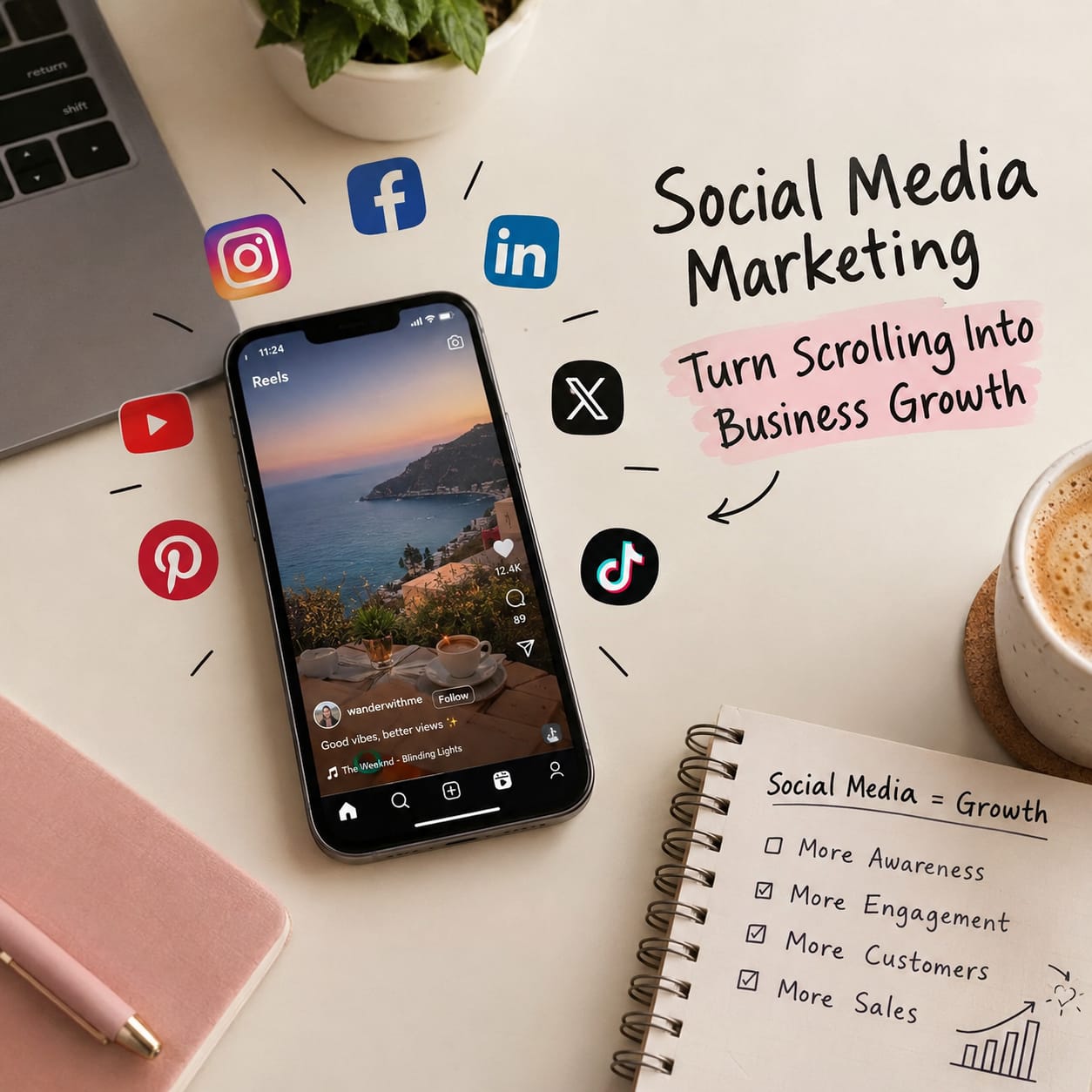 How many times have you opened Instagram or Facebook today?
Maybe you checked one Reel, replied to a message, watched a short video—and suddenly 30 minutes were gone.
Now imagine this: what if your business could be in front of those same people while they are scrolling?
That's the power of social media marketing.
Social media is no longer just a platform for sharing selfies, food pictures, and holiday memories. For businesses, it has become a place to build relationships, attract customers, increase brand awareness, and generate sales.
But here's the catch: simply creating an account and posting every day isn't enough. Your audience has thousands of posts competing for their attention. So, how do you make them stop scrolling and notice you?
Let's find out.
What Is Social Media Marketing?
In simple words, social media marketing means using social media platforms to promote your business and connect with your target audience.
Businesses can use platforms such as:
- Instagram
- Facebook
- YouTube
- LinkedIn
- Pinterest
- X
- TikTok
But successful social media marketing isn't just about saying, “Look at our product!”
It's about giving people a reason to care.
For example, a fitness brand could simply post:
“Buy our protein powder today.”
Or it could post:
“Trying to build muscle but not seeing results? Here are 5 common mistakes you might be making.”
Which one would you stop scrolling for?
Probably the second one.
That's because good social media marketing starts with the audience's problem, not the company's product.
Why Does Social Media Marketing Matter?
Think about the last time you discovered a brand online.
Maybe you saw a Reel. Maybe someone recommended a product in a post. Maybe an advertisement appeared while you were scrolling.
That's exactly why social media is so valuable.
It allows businesses to reach potential customers where they already spend their time.
Here are some of its biggest advantages:
- Build brand awareness – The more people see and interact with your brand, the more familiar it becomes.
- Connect directly with customers – Comments and direct messages make communication quick and personal.
- Increase website traffic – Social posts can guide interested users to your website.
- Generate leads – The right content can turn viewers into potential customers.
- Build trust – Reviews, testimonials, educational content, and behind-the-scenes posts can make your business feel more genuine.
- Promote products and services – Businesses can introduce their offerings to highly relevant audiences.
- Understand your audience – Comments, shares, saves, and messages can tell you what people actually want.
Stop Trying to Sell in Every Post
Here's a simple question:
Would you enjoy talking to someone who tried to sell you something every time you met them?
Probably not.
Your social media audience feels the same way.
If every post says “Buy now,” “Limited offer,” or “Contact us today,” people may simply scroll past your content.
Instead, follow the 80/20 approach:
- 80% valuable or entertaining content
- 20% promotional content
Your valuable content could include:
- Helpful tips
- Tutorials
- Industry insights
- Frequently asked questions
- Customer stories
- Behind-the-scenes moments
- Quick solutions to common problems
- Entertaining or relatable posts
Give people a reason to follow you before asking them to buy from you.
Make Your Content Feel Human
People connect with people—not corporate-sounding sentences.
Imagine a small café posting:
“We are pleased to announce the availability of our newly launched coffee beverage.”
It sounds formal.
Now imagine:
“We created this coffee for the days when you need caffeine and a little happiness in the same cup. ☕”
Much better, right?
Humanized content feels like a conversation rather than an advertisement.
You can make your brand more human by:
- Sharing your team's stories
- Showing behind-the-scenes moments
- Talking about challenges you've overcome
- Responding to comments naturally
- Sharing customer experiences
- Using conversational language
- Showing the people behind your business
Don't be afraid to show personality.
Your audience doesn't expect perfection. They want something they can relate to.
Create Content That Makes People Stop Scrolling
You have only a few seconds to capture someone's attention.
So instead of starting with a boring introduction, start with something that creates curiosity.
Try hooks such as:
- “You're probably making this social media mistake…”
- “Nobody tells you this about digital marketing.”
- “Before you spend money on social media ads, read this.”
- “3 reasons your Instagram posts aren't getting engagement.”
- “Here's what we learned after helping businesses grow online.”
A strong hook makes people think:
“Wait… this is about me.”
And that's exactly what you want.
Choose the Right Social Media Platform
You don't need to be everywhere.
Being active on three platforms without a strategy is often less effective than doing an excellent job on one or two platforms where your audience actually spends time.
For example:
- Instagram: Great for visual content, Reels, lifestyle brands, and younger audiences.
- Facebook: Useful for communities, local businesses, and a broad audience.
- LinkedIn: Excellent for professionals, B2B companies, and industry-focused content.
- YouTube: Ideal for tutorials, educational videos, reviews, and long-form content.
- Pinterest: Useful for visual discovery and inspiration-driven niches.
The right platform depends on your audience, industry, and goals.
Consistency Beats Perfection
One of the biggest social media mistakes is waiting for the “perfect” post.
You spend hours designing something. You post it. Then you check your phone every five minutes hoping for likes.
And when the engagement isn't what you expected, you feel disappointed.
Don't give up.
Social media growth takes time.
Instead of trying to create one perfect post, focus on creating useful content consistently.
For example:
- Monday → Educational tip
- Tuesday → Short video
- Wednesday → Customer story
- Thursday → Industry insight
- Friday → Fun or relatable post
- Saturday → Q&A or poll
Consistency helps your audience know when to expect content from you.
Don't Ignore Your Analytics
Your social media numbers are trying to tell you something.
Pay attention to:
- Reach
- Engagement
- Shares
- Saves
- Comments
- Profile visits
- Website clicks
- Leads
- Conversions
If one type of post receives significantly more shares or saves than others, that's a clue.
Make more of what works.
Social media marketing isn't about guessing. It's about experimenting, measuring, learning, and improving.
Common Mistakes to Avoid
Even businesses with great products can struggle on social media because of simple mistakes.
Avoid:
- Posting without a strategy
- Copying competitors
- Focusing only on selling
- Ignoring comments and messages
- Using irrelevant hashtags
- Posting randomly
- Buying followers
- Ignoring analytics
- Expecting overnight success
Remember, 10,000 followers don't automatically mean 10,000 customers.
A smaller audience that trusts your brand can be far more valuable.
The Future of Social Media Marketing
Social media continues to change.
New platforms appear. Algorithms change. Content trends come and go. One year, a particular format may dominate; the next year, something completely different may capture people's attention.
But one thing remains constant:
People want useful, interesting, authentic content.
Businesses that understand their audience, adapt to changes, and create genuine connections will always have an advantage.
Final Thoughts
Social media marketing isn't simply about getting likes.
It's about getting attention.It's about turning that attention into trust.
And eventually, turning that trust into relationships and business growth.
So the next time you're planning a social media post, don't just ask:
“What should I post today?”
Ask:
“What can I give my audience today that is useful, interesting, or worth remembering?”
Because when you stop treating social media like a billboard and start treating it like a conversation, your audience doesn't just see your brand.
They start remembering it.
