SME Growth Trap: How to Scale Machinery Production Without Sacrificing Quality
Author : Ayesha Diaz | Published On : 24 Aug 2026
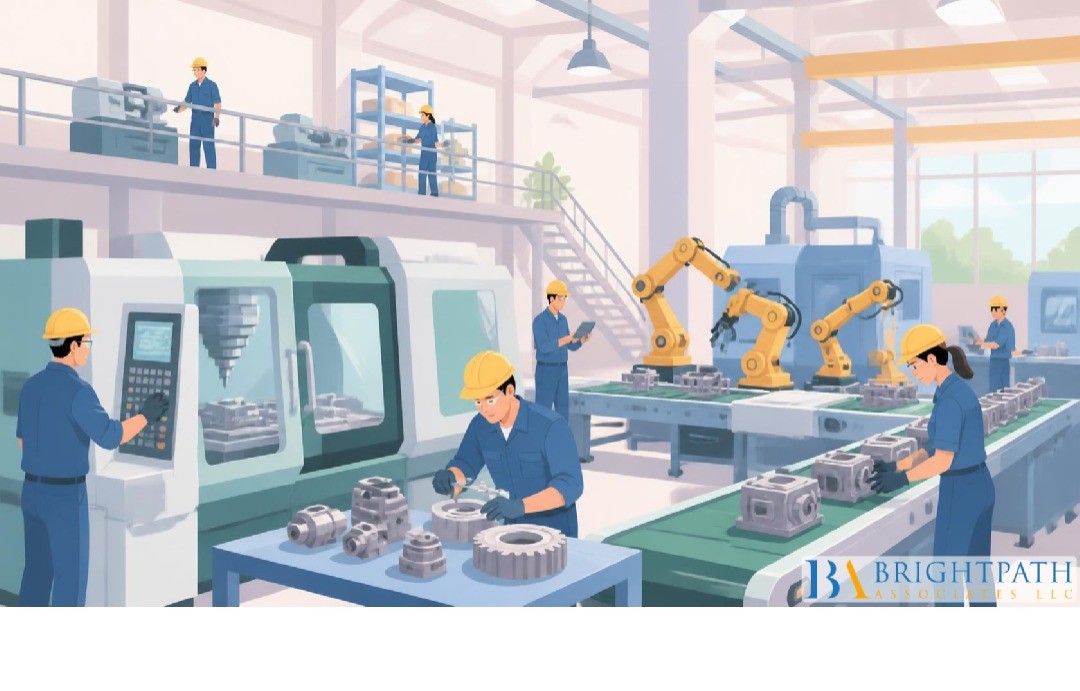
Growth is often considered a straightforward objective for a manufacturing company. More orders, more customers, greater production capacity, and higher revenue all appear to point in the same direction. Yet for small and mid-sized machinery manufacturers, rapid growth can create a difficult operational dilemma: How do you increase production without allowing quality, reliability, and customer satisfaction to decline?
This challenge is especially important because machinery products are rarely simple commodities. Customers depend on equipment to perform consistently in demanding environments. A quality issue can therefore create consequences that extend beyond a single defective unit. It can result in installation delays, service calls, warranty expenses, production interruptions, and damage to long-term customer relationships.
For businesses operating in the Machinery Industry, sustainable growth requires more than adding production capacity. It requires building an operating system capable of handling greater volume while maintaining engineering standards and quality discipline.
Why Growth Can Create a Quality Problem
A machinery manufacturer may operate successfully at a certain production volume because experienced employees know the processes, managers can personally monitor important activities, and engineering teams have sufficient time to review individual projects.
Suddenly, the organization must manufacture more units, hire more employees, purchase additional components, manage more suppliers, and coordinate more complex production schedules. Processes that once depended on informal communication begin to break down.
An experienced technician may have known exactly how a particular assembly should be completed, but a newly hired employee may not have that knowledge. A production supervisor who previously monitored every major stage may no longer have enough time to do so. Growth therefore exposes weaknesses that may have remained invisible at a smaller scale.
Standardization Becomes More Valuable as Volume Increases
One of the strongest foundations for scalable manufacturing is process standardization. Standardization does not mean eliminating engineering flexibility. Machinery companies often need to customize equipment for individual customers. Instead, it means determining which aspects of production should remain consistent and documented.
Assembly procedures, inspection points, testing requirements, documentation, torque specifications, calibration procedures, and quality checkpoints can all be standardized where appropriate. The objective is to reduce dependence on individual memory.
When processes are documented clearly, employees can perform critical tasks consistently even as the workforce expands. This becomes increasingly important when companies are onboarding new technicians, engineers, operators, and quality professionals at the same time that production is increasing.
Automation Can Support Consistency
Automation can provide another path toward scalable quality. Robotics, CNC equipment, automated inspection, digital work instructions, sensors, and manufacturing software can reduce variability in repetitive processes.
Before investing in equipment, leaders should identify where variability, labor constraints, bottlenecks, or quality problems are occurring. A highly automated process that solves the wrong problem may simply create an expensive version of the same inefficiency.
The most effective automation strategies usually begin with a clear operational question: Which process needs to become more consistent, faster, safer, or more measurable?
Quality Must Be Designed Into the Production Process
Final inspection remains important, but relying on final inspection alone can be expensive. If a problem is discovered after a machine is almost completely assembled, correcting it may require significant labor, disassembly, replacement components, and retesting.
A stronger approach is to build quality checks into multiple stages of production. Early verification can identify problems before additional work is performed. Digital inspection systems can capture measurements and records throughout the assembly process.
This creates a shift from detecting defects to preventing defects. For growing machinery manufacturers, that shift can make a major difference to both quality and production economics.
Data Can Help Management Scale Responsibly
Production cycle times, first-pass yield, defect rates, rework, downtime, supplier performance, inventory turnover, delivery performance, and warranty issues can all provide insight into whether growth is creating operational stress.
The important point is to avoid measuring everything simply because technology makes measurement possible. Leadership should identify the indicators that reveal whether production is scaling successfully.
If output increases by 30% but rework increases by 50%, the organization has not necessarily achieved healthy growth. The best metrics connect production volume with quality, cost, reliability, and customer outcomes.
Growth Should Be Designed, Not Simply Absorbed
The SME growth trap occurs when demand increases faster than the organization's systems, processes, technology, and talent can adapt. The answer is not to reject growth. It is to build the infrastructure required to support it.
Machinery manufacturers can strengthen scalability through standardized processes, strategic automation, supplier management, data visibility, quality-at-source practices, disciplined inventory strategies, and proactive workforce planning.
For a deeper discussion of the challenges SMEs face when scaling machinery production while protecting product quality, explore SME Growth Trap: How to Scale Machinery Production Without Sacrificing Quality. That answer can reveal where your next strategic investment should be.
