SME Advantage: Agility in Sustainable Packaging Prototyping
Author : Alan Wood | Published On : 26 Aug 2026
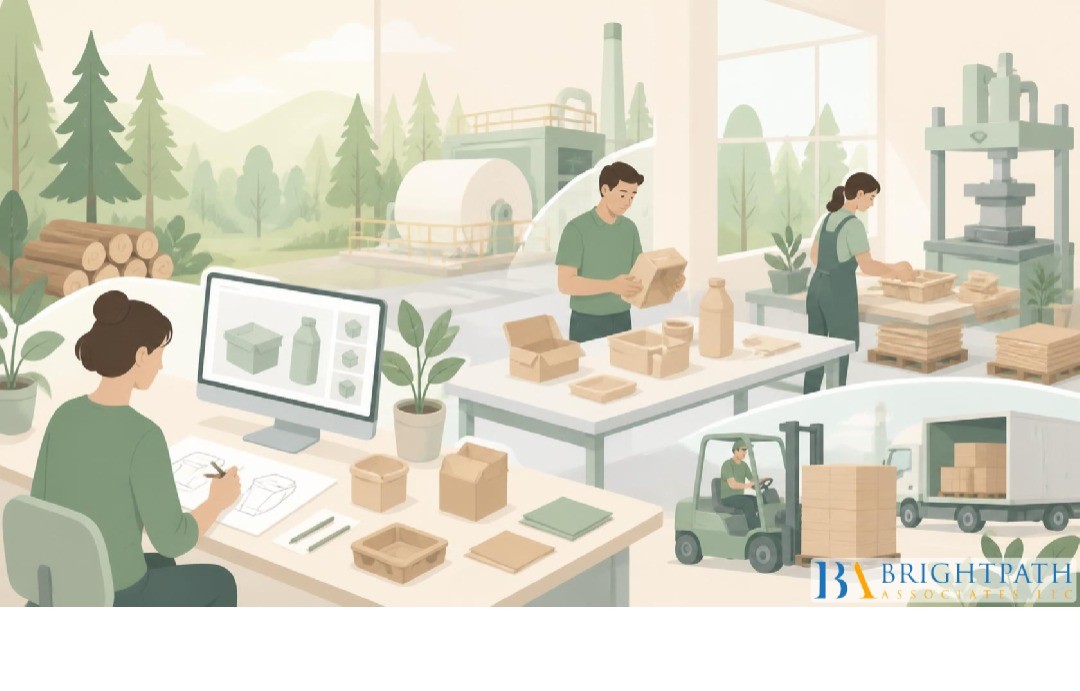
The packaging industry is undergoing a significant transformation. Customers increasingly expect packaging solutions that are functional, cost-effective, recyclable, and aligned with sustainability goals. At the same time, brands are under pressure to respond quickly to changing consumer preferences, regulatory expectations, and product launches.
For companies in the paper and forest products sector, these changes create both challenges and opportunities. Large manufacturers may have substantial production capacity and established supply chains, but smaller and mid-sized enterprises can possess another valuable asset: agility.
The ability to experiment, prototype, adjust designs, and respond quickly to customer requirements can become a powerful competitive advantage. For organizations operating in the Paper and Forest Products Industry, sustainable packaging prototyping can provide a practical way to turn that agility into market differentiation.
Why Sustainable Packaging Is Becoming a Strategic Priority
Packaging decisions are increasingly connected to broader business objectives. Consumers are paying greater attention to recyclable and renewable materials. Retailers are establishing packaging expectations for suppliers. Brand owners are exploring alternatives to packaging formats that are difficult to recycle or create excessive waste.
At the same time, companies cannot simply replace one material with another without considering performance. Packaging must protect products, withstand transportation, maintain shelf appeal, meet production requirements, and remain economically viable.
This creates a difficult balancing act. A sustainable packaging concept may look attractive from an environmental perspective but fail if it is too expensive, difficult to manufacture, or unable to protect the product adequately.
Prototyping Turns Sustainability Ideas Into Testable Solutions
Sustainability discussions can remain theoretical unless companies have a way to test new concepts. Prototyping creates that bridge.
A packaging manufacturer can develop an initial concept, test its structural performance, evaluate material usage, collect customer feedback, identify manufacturing challenges, and make modifications before committing to large-scale production.
For smaller companies, this process can be particularly valuable because it allows them to compete through innovation rather than manufacturing volume. Instead of trying to outperform larger competitors solely on production capacity, an SME can differentiate through speed, customization, and responsiveness.
Agility Can Help SMEs Respond Faster
Large organizations often have extensive approval processes. Those systems can provide consistency and control, but they can also make experimentation slower. A smaller packaging company may be able to move from customer request to prototype significantly faster.
That speed can matter when a consumer brand is preparing for a product launch or testing a new packaging format. A customer may not initially know exactly what solution it needs. The packaging supplier that can collaborate, develop a prototype, test it, and refine it quickly can become more than a vendor. It can become an innovation partner.
This is one of the strongest potential advantages available to smaller and mid-sized packaging companies. Replacing conventional packaging materials with sustainable alternatives involves numerous considerations.
Paper-based packaging, recycled fiber, molded fiber, coatings, adhesives, inks, and other components all affect the final product. A successful design needs to consider material availability, strength, moisture resistance, recyclability, manufacturing compatibility, transportation requirements, and end-of-life characteristics.
The SME Advantage May Be Speed to Market
The competitive landscape for sustainable packaging will continue to evolve. Large companies will bring scale, purchasing power, extensive manufacturing infrastructure, and global customer relationships. Smaller businesses may not be able to compete with those advantages directly.
But they can compete differently. They can listen closely to customers, make decisions quickly, prototype efficiently, customize solutions, and respond rapidly to emerging market requirements.
That combination can make agility a genuine strategic advantage. For a deeper look at how smaller companies can use agility to accelerate sustainable packaging innovation, explore SME Advantage: Agility in Sustainable Packaging Prototyping.
If the answer is measured in months while competitors are responding in weeks, there may be a significant opportunity to rethink the innovation process. As sustainable packaging becomes increasingly important, companies will need leaders and technical professionals who can connect innovation with commercial execution.
