Small-Batch Automation: Balancing Craft Quality with Scalability
Author : Jimmy Patel | Published On : 06 Aug 2026
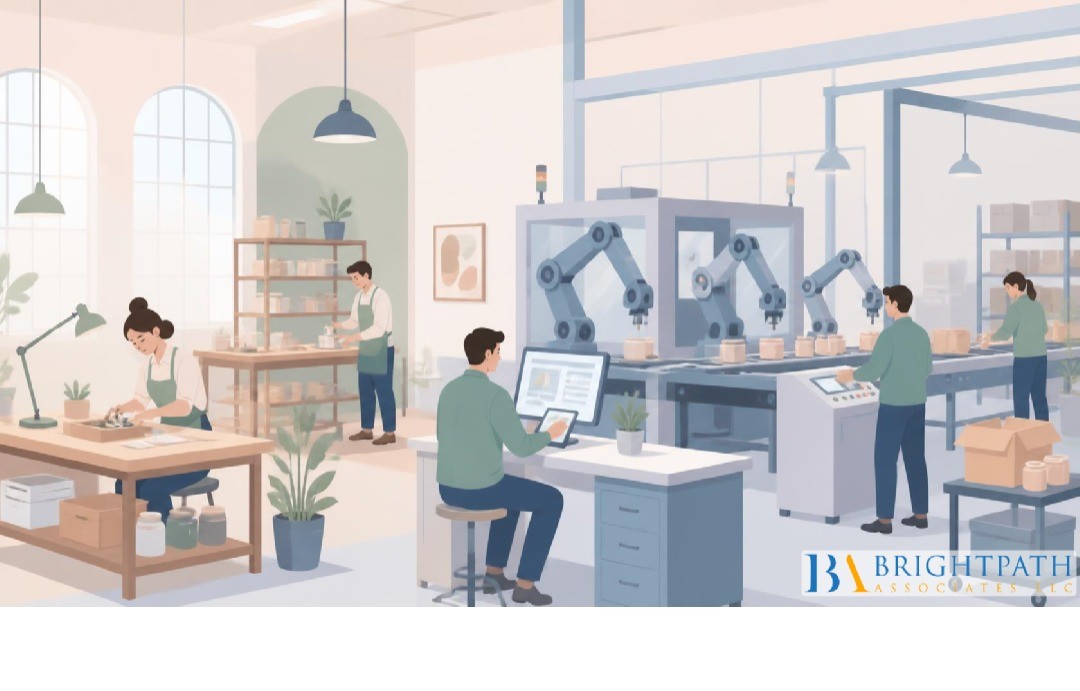
For many manufacturers, growth presents an unexpected challenge. As customer demand increases, businesses must expand production without compromising the craftsmanship, precision, and product quality that originally earned customer trust. Small and mid-sized manufacturers often find themselves balancing two competing priorities—maintaining exceptional quality while improving throughput and operational efficiency. Fortunately, advances in industrial automation are making it possible to achieve both.
Small-batch automation has emerged as a practical solution for manufacturers that require production flexibility rather than high-volume, repetitive manufacturing. Instead of replacing skilled employees or investing in fully automated production lines, organizations are implementing targeted automation technologies that support workers, improve consistency, and create scalable operations capable of adapting to changing customer requirements.
Companies operating within the Industrial Automation Industry increasingly recognize that modern automation is not solely about maximizing production volume. It is about enabling manufacturers to produce high-quality products efficiently while maintaining the flexibility needed to respond to customized orders, shorter production runs, and evolving market expectations.
Unlike traditional mass production environments, small-batch manufacturing frequently involves product variations, frequent setup changes, customized specifications, and shorter production cycles. These characteristics require production systems that can adapt quickly without introducing unnecessary downtime or quality issues. Flexible automation technologies—including collaborative robots, programmable workstations, intelligent sensors, and automated inspection systems—allow manufacturers to optimize repetitive processes while preserving the craftsmanship required for specialized production.
One of the most significant advantages of small-batch automation is consistency. Even the most experienced employees can experience fatigue during repetitive tasks, leading to minor variations in quality over time. Automated systems perform repetitive operations with exceptional precision, reducing variability while allowing skilled employees to focus on tasks requiring creativity, technical expertise, and complex decision-making. This balance between human expertise and automation creates more reliable production outcomes without sacrificing product quality.
Automation also improves production flexibility. Modern manufacturing environments rarely operate with identical product specifications throughout the day. Customers increasingly expect customized products, faster delivery schedules, and greater responsiveness. Modular automation systems enable manufacturers to reconfigure production processes quickly, reducing changeover times while supporting multiple product variations. This adaptability helps organizations serve diverse customer needs without requiring extensive production interruptions.
Workforce productivity benefits significantly from targeted automation investments. Rather than eliminating jobs, automation often removes repetitive, physically demanding, or low-value activities from employees' daily responsibilities. Workers can instead dedicate more time to quality assurance, process improvement, equipment optimization, customer collaboration, and innovation. Organizations that position automation as a productivity tool rather than a workforce replacement strategy typically experience stronger employee engagement and higher acceptance of new technologies.
Quality assurance represents another area where automation delivers measurable value. Automated vision systems, precision measurement technologies, and real-time process monitoring identify defects earlier in the manufacturing process, reducing waste and minimizing costly rework. Early detection also supports continuous improvement by providing production teams with immediate feedback about process performance. Manufacturers gain greater confidence that products consistently meet customer specifications before leaving the facility.
Data collection has become an equally valuable advantage. Modern automation systems continuously gather information related to machine performance, production output, cycle times, quality metrics, equipment utilization, and maintenance requirements. This operational visibility enables leadership teams to identify inefficiencies, optimize workflows, and make informed decisions based on measurable performance rather than assumptions. Data-driven manufacturing supports continuous improvement while creating opportunities for long-term operational excellence.
Predictive maintenance further enhances production reliability. Equipment failures can significantly disrupt small-batch manufacturing because production schedules often involve limited inventory and strict customer deadlines. Smart sensors monitor equipment conditions in real time, identifying early warning signs before failures occur. Maintenance teams can schedule repairs proactively, reducing unexpected downtime while extending equipment life and lowering maintenance costs.
Customer satisfaction also improves when manufacturers successfully balance quality with scalability. Reliable production processes support consistent delivery schedules, accurate order fulfillment, and dependable product performance. Customers increasingly value suppliers capable of maintaining exceptional quality while responding quickly to changing business requirements. Organizations that combine operational efficiency with manufacturing flexibility strengthen customer relationships while increasing opportunities for repeat business.
Financial performance benefits from incremental automation strategies. Many small and mid-sized manufacturers hesitate to pursue automation because they associate it with large capital investments. However, modular automation allows organizations to modernize one process at a time, generating measurable operational improvements before expanding additional automation initiatives. This phased approach reduces financial risk while enabling continuous modernization aligned with business growth.
Leadership plays a critical role in successful automation initiatives. Technology investments alone rarely produce lasting results without clear strategic direction. Manufacturing leaders must evaluate business objectives, production challenges, workforce capabilities, customer expectations, and return on investment before implementing automation solutions. Effective leaders also encourage employee involvement throughout implementation, ensuring new technologies complement existing expertise rather than disrupt valuable operational knowledge.
Another important consideration is workforce development. As automation technologies become increasingly sophisticated, manufacturers require employees with expertise in robotics, controls engineering, industrial software, data analytics, maintenance, systems integration, and digital manufacturing. Recruiting professionals capable of operating, maintaining, and improving automated production systems has become a strategic priority for organizations pursuing long-term competitiveness. Companies that invest in technical talent alongside automation infrastructure create stronger foundations for sustainable growth.
Supply chain resilience also benefits from flexible manufacturing capabilities. Businesses with adaptable production systems can respond more effectively to material shortages, changing customer demand, supplier disruptions, or evolving regulatory requirements. Automation provides greater production visibility while improving scheduling flexibility and resource utilization. These capabilities allow manufacturers to maintain operational continuity even during periods of market uncertainty.
Organizations interested in exploring additional perspectives on flexible manufacturing strategies can also review Small-Batch Automation Balancing Craft Quality, which discusses how businesses can strengthen production capabilities while preserving the quality standards that differentiate them in competitive markets.
Ultimately, small-batch automation is not about replacing craftsmanship—it is about empowering it. By combining intelligent automation with experienced employees, manufacturers create production environments that deliver consistency, flexibility, efficiency, and innovation simultaneously. As customer expectations continue evolving and competition intensifies, organizations that embrace thoughtful automation strategies will be better positioned to scale operations while maintaining the quality and responsiveness that define long-term success.
