Shopify for Ecommerce Startups: Why It Remains a Strong Choice in 2026
Author : Vrinsoft Pty Ltd | Published On : 20 Aug 2026
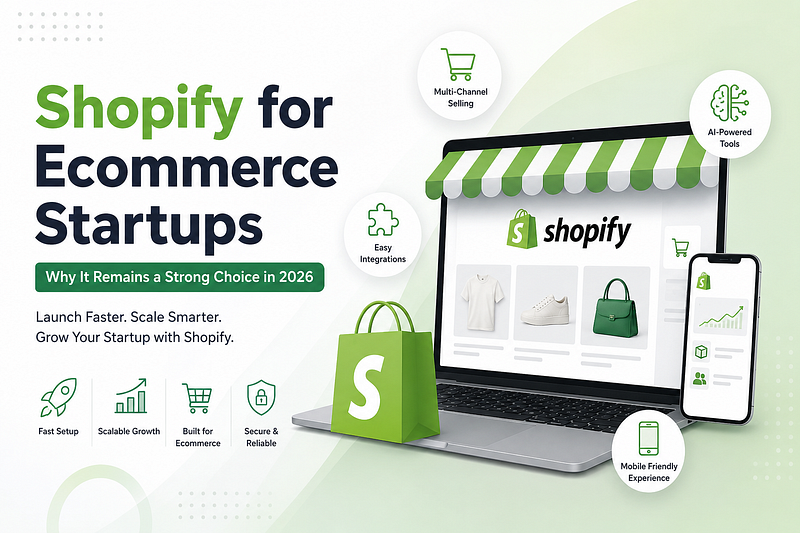
Launching an online store is easier than ever, but selecting the right ecommerce platform can have a major impact on how quickly a startup gets started and grows. Shopify for Ecommerce Startups continues to be a practical choice because it combines simple store management, faster setup, scalability and access to a broad ecommerce ecosystem.
For Australian startups, Shopify provides a way to launch an online store without the complexity of building and maintaining a fully custom platform from the beginning. It can support businesses ranging from new D2C brands to growing online retailers.
Why Startups Prefer Shopify for Ecommerce
Startups often need to balance speed, budget and future growth. Shopify helps address these requirements by reducing many of the technical challenges involved in launching an ecommerce store.
Key Reasons Startups Choose Shopify
- Faster store launch: Ready-made themes and built-in ecommerce features help businesses get online sooner.
- Lower initial development requirements: Subscription-based plans can reduce upfront costs compared with building a completely custom platform.
- Easy store management: Products, inventory, payments and orders can be managed through one dashboard.
- Scalable platform: Businesses can begin with essential features and expand functionality as they grow.
- Reliable infrastructure: Hosting, SSL and platform updates are handled by Shopify.
- Extensive ecosystem: Apps and integrations can support marketing, payments, shipping and customer engagement.
For businesses that require more specialised functionality, custom ecommerce development can provide greater control. However, Shopify offers a strong balance for startups that want to begin selling quickly while keeping room for future development.
Shopify Features That Support Startup Growth
Shopify continues to provide features that help startups manage their stores and improve the customer experience without having to manage a complicated technology stack.
AI-Powered Ecommerce Capabilities
AI tools can help reduce repetitive tasks and support day-to-day store operations. Shopify features include tools for creating product descriptions and marketing content, gaining store insights, generating product recommendations and supporting customer interactions.
Businesses can also integrate AI in Shopify to explore additional ways of improving ecommerce operations and customer experiences.
Multi-Channel Selling
Shopify allows businesses to sell beyond their main online storefront. Depending on their strategy, startups can reach customers through:
- Online stores
- Social media channels
- Online marketplaces
- Point of Sale (POS) systems
This gives growing businesses more opportunities to reach customers across different sales channels.
Business System Integrations
As a startup grows, its technology requirements may also increase. Shopify can be connected with systems such as:
- CRM platforms
- ERP systems
- Accounting software
- Shipping and logistics providers
- Marketing automation tools
These integrations can reduce manual processes and help connect ecommerce operations with other areas of the business.
Mobile-Friendly Store Experience
With many customers browsing and purchasing through smartphones, mobile responsiveness is important for ecommerce businesses. Shopify themes use responsive layouts that help provide a consistent shopping experience across smartphones, tablets and desktop devices.
For businesses considering professional development support, understanding the Reasons to Hire Shopify Developers can help when deciding whether expert assistance is required.
When Shopify Makes Sense for a Startup
Shopify can be a suitable option for startups that want to launch quickly without managing their own ecommerce infrastructure.
It can be a good fit if a business:
- Wants to launch an online store within weeks.
- Has a limited website development budget.
- Needs a platform that is simple to manage.
- Plans to sell through websites, social media and marketplaces.
- Expects to add more features as the business grows.
Startup Businesses That Can Benefit
Shopify can support different types of growing ecommerce businesses, including:
- Fashion and apparel: Product variants, catalogues and promotional features.
- Beauty and skincare: Product management along with subscription and loyalty integrations.
- Food and beverage: Support for delivery and payment integrations.
- Electronics: Inventory management, product filtering and secure payments.
- D2C brands: Faster launch with the ability to scale as sales increase.
- Small retailers: Lower technical overhead while supporting continued growth.
As requirements become more advanced, Shopify developers can extend a store through custom themes, integrations, applications and automation rather than requiring an immediate platform replacement.
When Shopify May Not Be the Ideal Platform
Although Shopify works well for many startups, some businesses may require capabilities that go beyond the platform’s standard approach.
A custom ecommerce solution may be worth considering when a business needs:
- A multi-vendor marketplace with independent vendor management.
- Complex B2B pricing and customer-specific catalogues.
- Deep connections with ERP, CRM or legacy systems.
- Extensive industry-specific compliance requirements.
- Complete control over backend architecture and server infrastructure.
For businesses with highly specialised workflows, custom development may provide greater flexibility. However, businesses that can meet their requirements through Shopify apps, custom development and integrations can continue using Shopify as they scale.
Shopify Compared With Other Ecommerce Platforms
The right ecommerce platform depends on the startup’s budget, technical requirements and growth plans.
- Shopify: Fast setup, low technical requirements and minimal platform maintenance, making it suitable for startups and growing businesses.
- WooCommerce: A useful option for businesses already using WordPress and looking for greater control over plugins and content.
- Magento: Better suited to larger businesses with complex ecommerce requirements and the resources for ongoing maintenance.
- Custom Ecommerce: Suitable for businesses that require highly unique workflows, integrations or complete control over their platform architecture.
Which Ecommerce Platform Should a Startup Choose?
Shopify is generally suitable for startups that prioritise fast launch times, simple management and scalability without maintaining their own servers.
WooCommerce may be more appropriate for businesses already operating on WordPress, while Magento can suit larger enterprises with complex ecommerce operations and dedicated technical resources.
A custom ecommerce platform can be considered when standard solutions cannot support specific business workflows or when complete control over architecture and integrations is essential.
For startups evaluating professional Shopify expertise, researching the Best Companies to Hire Shopify Developers in Sydney can help when comparing development partners.
Final Thoughts
For many startups, choosing an ecommerce platform is about finding the right balance between launch speed, affordability, ease of management and future scalability. Shopify continues to provide these advantages while allowing businesses to add apps, integrations and custom functionality as their requirements develop.
Whether launching a new store, upgrading an existing ecommerce website or planning a migration, experienced development support can make the process more effective. A professional Shopify development team can assist with store development, custom integrations, performance, scalability and ongoing improvements.
Ready to discuss your ecommerce project? Contact Us to explore Shopify development options for your startup.
