Shardiya Navratri Festival in India: Significance and Celebrations
Author : Nitish Rane | Published On : 14 Oct 2026
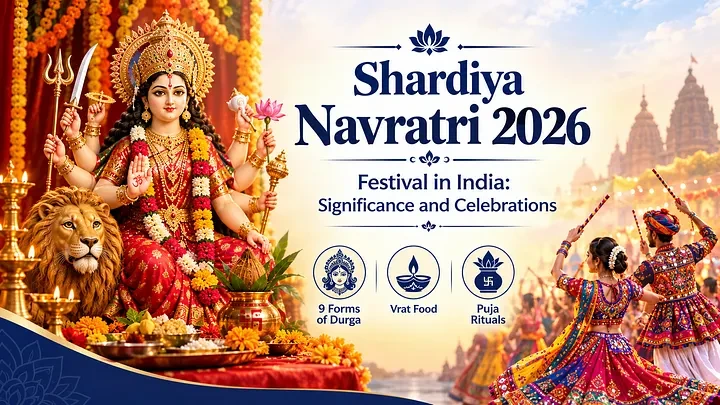
Every year around the end of September, my mother starts scrubbing the puja itself, and I know. Navratri. A few days later, the speaker in the corner starts playing aarti at 6 a.m., and some uncle announces he is fasting all nine days. He never made it past day four. Still announces it, though.
Shardiya Navratri comes in the month of Ashwin, so late September or early October. It’s for Goddess Durga. There are four other Navratris, but this is the one people look forward to most. Dussehra comes right after it.
Importance of Navratri
The story is like this. Mahishasura, a demon, got a gift that made him nearly impossible to kill, and he started harassing the gods. They pooled their powers, and Durga came out of that. She fought him for nine nights and finished him on the 10th day. Good beats evil, we know. What stays with me is that the one who wins is a woman, and the story treats that as normal.
Then there’s Rama, who is believed to have prayed to Durga before fighting Ravana. That’s the link to Dussehra.
Many people enjoy this time. Because they eat lighter food, wake up earlier, and find some quiet time. The weather changes this time of year. My grandmother always said fasting is good for the body now. I used to ignore that. Not anymore.
The Nine Days
Each day is dedicated to a different form of the Goddess, known as Navadurga.
- Day 1, Shailputri: Ghatasthapana.
- Day 2, Brahmacharini: Devotion and discipline.
- Day 3, Chandraghanta: Courage
- Day 4, Kushmanda: Said to have created the universe; people pray for health.
- Day 5, Skandamata: a mother’s love
- Day 6, Katyayani: the warrior.
- Day 7, Kalaratri: the scariest form, who takes away fear.
- Day 8, Mahagauri: calm and pure, Durga Ashtami, the biggest day in many homes.
- Day 9, Siddhidatri: Fulfillment, Maha Navami.
Garba and Dandiya
If Navratri has a sound, it’s the dhol. Garba is danced in circles around a clay pot with a lamp inside, or around the Goddess’s image. “Garba” comes from “garbha”, the womb, and the lamp means life. It looks like pure fun, but it started as a prayer.
Dandiya is faster. Pairs hit painted sticks together, and some say it recalls Durga’s mock fight with Mahishasura. Women wear chaniya choli with mirror work; men wear kediyu or a kurta set.
Ahmedabad and Vadodara are the famous places for it, but Mumbai, Delhi, and cities abroad now have big events too. You needn’t be Gujarati. Stand in the circle, copy whoever is ahead of you, mess up, laugh.
If Navratri has a sound, it's the dhol. Garba is danced in circles around a clay pot with a lamp inside, or around the Goddess’s image. “Garba” comes from “garbha,” the womb, and the lamp means life. It looks like pure fun, but it started as a prayer.
Dandiya is faster.
Giving Back
What I remember after Navratri isn't the food or music. It's that people were a little kinder for a while. Maybe that’s the point.
Giving has always been part of these auspicious days. If you want a place to start donating, Narayan Seva Sansthan in Udaipur, Rajasthan, is the best choice. They support differently abled people and others in need. They provide free surgeries, artificial limbs, calipers, and skill training. Their official website explains how to donate. Visit https://www.narayanseva.org/donate/
Shubh Navratri to you and your family.
