Self-Defense Classes in Indianapolis: A Beginner’s Guide to Personal Safety
Author : Indianapolis Taekwondo | Published On : 09 Sep 2026
Self-Defense Classes in Indianapolis can provide beginners with structured opportunities to learn personal safety concepts, physical techniques, situational awareness, and decision-making skills. Self-defense education is not simply about learning how to fight. A well-rounded approach focuses on recognizing potentially unsafe situations, avoiding unnecessary confrontation, communicating clearly, creating distance, and knowing when to seek help. Physical techniques may be included, but they are generally one part of a broader personal-safety strategy.
For someone who has never attended a self-defense program, the subject can initially seem complicated. Different schools may teach martial arts, defensive tactics, fitness exercises, awareness training, or combinations of these approaches. Programs can also vary according to age, experience, class structure, instructor qualifications, and the amount of physical contact involved.
The most useful starting point is understanding what self-defense actually means and what beginners should reasonably expect from training. No course can guarantee protection in every situation. Instead, responsible instruction can help participants develop practical habits for recognizing risks, making safer decisions, and responding appropriately when circumstances become difficult.
This guide explains the foundations of self-defense training, potential benefits, common mistakes, safety considerations, class formats, and questions beginners may have before starting.
What Is Self-Defense?
Self-defense refers broadly to actions taken to protect oneself from an immediate threat of harm. Depending on the circumstances, self-defense can involve prevention, avoidance, communication, escape, seeking assistance, or physical action.
A comprehensive approach usually begins before physical contact occurs.
For example, personal safety may involve:
- Paying attention to surroundings
- Identifying potentially unsafe circumstances
- Maintaining appropriate personal boundaries
- Avoiding unnecessary confrontation
- Using verbal communication
- Moving toward safer locations
- Seeking assistance
- Leaving when an opportunity is available
- Using physical techniques only when necessary and appropriate
The exact legal standards surrounding self-defense vary by jurisdiction and situation. A martial arts instructor is not necessarily a legal professional, so legal questions should be directed to an appropriately qualified source.
Self-Defense Is Not the Same as Fighting
Fighting generally describes a physical confrontation.
Self-defense has a broader objective: staying safe.
A person may successfully protect themselves by avoiding a confrontation entirely.
This distinction is important for beginners because the goal of training should not be to encourage people to look for opportunities to test their skills.
The Prevention Principle
Prevention is often the first layer of personal safety.
If a person notices an escalating situation early, they may have more options available than if they wait until physical contact occurs.
Awareness can therefore be considered an important part of self-defense education.

What Happens in Self-Defense Classes?
The structure of a class depends on the program.
A beginner-oriented class might include:
- Warm-up exercises
- Basic movement
- Awareness concepts
- Verbal communication exercises
- Positioning and distance
- Escape-oriented drills
- Controlled physical techniques
- Scenario-based exercises
- Review and cooldown
Not every class includes all of these elements.
Some programs are heavily based on martial arts technique, while others emphasize awareness and prevention.
Before joining, beginners should ask what the class actually teaches.
Why Beginners Consider Self-Defense Training
People participate for different reasons.
Some want to feel more prepared when traveling or commuting. Others are interested in martial arts, fitness, personal development, or learning how to respond during emergencies.
Training can also provide a structured environment for practicing skills that may be difficult to understand through reading alone.
Learning Through Practice
Reading about a defensive movement is different from physically practicing it.
Controlled practice allows students to understand:
- Body positioning
- Distance
- Timing
- Balance
- Movement
- Communication
- Appropriate responses
However, training should remain controlled and appropriate for the student's experience level.
Benefits of Self-Defense Education
Self-Defense Classes in Indianapolis may offer several potential benefits beyond physical techniques. The exact results depend on the student, training frequency, instructor, and program structure.
Situational Awareness
Awareness involves paying attention to the environment and recognizing changes that may require a different response.
Examples include noticing:
- Unusual behavior
- Environmental hazards
- Limited exits
- Isolated locations
- Changes in crowd behavior
- Potentially escalating interactions
Awareness does not mean assuming that everyone is dangerous.
It means maintaining enough attention to make informed decisions.
Improved Physical Coordination
Many self-defense and martial arts exercises require coordinated movement.
Training may involve:
- Footwork
- Balance
- Hand-eye coordination
- Reaction drills
- Controlled movements
- Core stability
The amount of physical conditioning varies by program.
Increased Familiarity With Stress
Controlled drills can expose students to manageable amounts of pressure.
For example, a student may practice responding to a verbal challenge or moving away from a simulated threat.
The purpose is not to recreate real danger perfectly. Rather, it is to give students an opportunity to practice decision-making under controlled conditions.
Communication Skills
Verbal communication can be an important part of personal safety.
Students may practice using a clear voice, establishing boundaries, and seeking assistance.
Communication strategies should be appropriate to the situation because there is no single phrase that works in every circumstance.
Confidence Through Preparation
Learning and practicing a skill can make it feel more familiar.
That familiarity may contribute to confidence.
Healthy confidence means understanding available options and knowing personal limitations. It does not mean assuming that training makes someone invulnerable.
The Role of Martial Arts in Self-Defense
Martial arts can provide useful physical training for self-defense, but the relationship between martial arts and practical personal safety depends on the discipline and how it is taught.
Different martial arts emphasize different skills.
Taekwondo
Taekwondo commonly emphasizes:
- Kicking techniques
- Footwork
- Balance
- Flexibility
- Forms
- Controlled sparring
- Physical conditioning
Some programs may also discuss practical defensive applications.
Karate
Karate commonly includes:
- Striking
- Blocking
- Stances
- Movement
- Forms
- Partner drills
Training approaches vary significantly between schools.
Judo
Judo emphasizes:
- Throws
- Gripping
- Balance
- Breakfalls
- Controlled grappling
Learning how to fall safely can be particularly valuable in physical training.
Brazilian Jiu-Jitsu
Brazilian Jiu-Jitsu generally focuses heavily on grappling and ground positions.
Students may learn concepts involving:
- Position
- Leverage
- Escapes
- Control
- Submissions
- Ground movement
Physical contact is an important part of many BJJ programs.
Boxing
Boxing emphasizes:
- Punching
- Footwork
- Defense
- Timing
- Conditioning
- Distance management
Training should distinguish between controlled practice and unsupervised physical confrontation.
Comparing Common Training Approaches
| Training Approach | Main Focus | Physical Contact | Useful Beginner Skills |
|---|---|---|---|
| Self-defense class | Awareness, avoidance, escape, defensive skills | Varies | Awareness, boundaries, decision-making |
| Taekwondo | Kicks, movement, forms, sport training | Varies | Balance, coordination, discipline |
| Karate | Striking, blocks, forms, movement | Varies | Technique, focus, coordination |
| Judo | Throws, grips, falling, grappling | High in many classes | Balance, breakfalls, control |
| Brazilian Jiu-Jitsu | Grappling and ground skills | High | Position, leverage, persistence |
| Boxing | Striking, footwork, defense | Varies | Timing, movement, conditioning |
This comparison is general. Individual instructors and organizations may use substantially different curricula.
Awareness as the First Layer of Safety
A common misunderstanding is that self-defense begins when someone physically attacks.
In many situations, earlier decisions can matter.
Awareness may help a person notice that:
- A location is becoming uncomfortable
- An interaction is escalating
- An exit is available
- Assistance is nearby
- A different route is safer
- Leaving early is preferable
The objective is not to become fearful of ordinary situations.
It is to develop practical awareness without unnecessary anxiety.
Understanding Personal Boundaries
Boundaries are limits that communicate what behavior is acceptable.
In personal-safety training, boundaries may involve physical space, communication, or unwanted contact.
Beginners can learn that they are allowed to communicate discomfort clearly.
Examples of boundary-setting language can include:
- "Please step back."
- "I don't want to continue this conversation."
- "Stop."
- "I need help."
The appropriate response depends on the circumstances. Verbal communication should never be treated as a guaranteed solution to every dangerous situation.
Verbal De-Escalation
De-escalation involves reducing tension rather than increasing it.
Depending on the circumstances, useful principles can include:
- Remaining as calm as possible
- Avoiding unnecessary insults
- Keeping appropriate distance
- Speaking clearly
- Avoiding provocative gestures
- Looking for opportunities to leave
- Moving toward safer areas
- Seeking assistance
De-escalation is not about surrendering personal boundaries.
It is about prioritizing safety over winning an argument.
Distance and Positioning
Distance can influence how much time a person has to respond.
Training may introduce concepts such as:
- Maintaining space
- Avoiding being cornered
- Identifying exits
- Moving toward populated areas
- Keeping stable footing
These are practical concepts that can be discussed without assuming that physical confrontation is inevitable.
Why Footwork Matters
Movement is often more important than simply knowing individual techniques.
A person may need to:
- Step away
- Change direction
- Move around an obstacle
- Reach an exit
- Create space
Practicing movement can help beginners become more comfortable with body positioning.
Escape-Oriented Training
The primary objective in many practical self-defense scenarios should be reaching safety.
Escape training can involve controlled drills that teach students to recognize opportunities to move away.
Depending on the program, this might include:
- Moving from confined positions
- Practicing balance recovery
- Creating distance
- Identifying exits
- Moving toward assistance
These drills should be conducted under appropriate supervision.
Physical Techniques
Some programs teach physical techniques as part of their curriculum.
Examples may include:
- Basic defensive movements
- Escapes
- Breakfalls
- Position changes
- Controlled strikes
- Grip releases
Beginners should understand that technique effectiveness can vary significantly depending on circumstances.
No technique works identically in every real-world situation.
Technique Versus Principle
A beginner may be tempted to memorize a long list of techniques.
A more useful approach can be learning underlying principles:
- Maintain awareness
- Protect yourself
- Manage distance
- Stay balanced
- Communicate clearly
- Look for exits
- Avoid unnecessary engagement
Principles can be adapted more easily than memorized sequences.
Common Mistakes Beginners Make
Mistake 1: Believing Training Makes You Invincible
No training eliminates risk.
Real-world situations can be unpredictable, and physical confrontations can result in serious injury.
The purpose of training should be preparation, not overconfidence.
Mistake 2: Focusing Only on Physical Techniques
Physical techniques are only one part of personal safety.
Awareness, prevention, communication, and escape can be equally important.
Mistake 3: Practicing Too Aggressively
Beginners sometimes try to perform techniques with excessive force.
Controlled practice is generally more useful for learning.
Mistake 4: Ignoring Safety Rules
Safety rules exist to protect students and training partners.
Ignoring them can turn a learning exercise into an unnecessary injury risk.
Mistake 5: Comparing Yourself With Advanced Students
Experienced students have accumulated substantially more practice.
Beginners should measure progress against their own previous ability.
Mistake 6: Trying Techniques Without Instruction
Videos and online demonstrations can provide information, but they cannot fully replace supervised instruction.
Incorrect positioning or timing can create problems.
Mistake 7: Treating Every Situation as a Challenge
A self-defense mindset should not encourage unnecessary confrontation.
Knowing when to walk away can be an important part of personal safety.
Expert Tips for Beginners
Start Slowly
The first objective should be learning the fundamentals.
Speed and intensity can increase gradually as technique improves.
Ask Questions
If a movement is unclear, ask the instructor.
Understanding why a technique is being practiced can make learning easier.
Learn the Rules
Every training facility has its own policies.
Understand expectations about:
- Contact
- Equipment
- Partner drills
- Sparring
- Attendance
- Safety
- Hygiene
Focus on Consistency
Regular training generally provides more opportunities for learning than occasional intense sessions.
Keep Expectations Realistic
A beginner should not expect to master complex defensive skills after a few classes.
Skill development takes time.
Best Practices for Safe Training
A safe training environment should include clear boundaries.
Warm Up Properly
A suitable warm-up prepares the body for physical activity.
Use Appropriate Equipment
Depending on the activity, protective equipment may be required.
Examples include:
- Mouthguards
- Gloves
- Head protection
- Shin protection
- Protective padding
Requirements vary.
Control Contact
Partner exercises should match the student's experience and the instructor's guidelines.
Communicate
Students should tell instructors about relevant limitations and speak up if an exercise becomes unsafe.
Recover
Rest and recovery are part of responsible training.
Adequate sleep, hydration, nutrition, and rest can support physical adaptation.
Choosing Self-Defense Classes in Indianapolis
When evaluating Self-Defense Classes in Indianapolis, beginners should consider more than the name of the program.
Important factors can include:
- Instructor experience
- Beginner curriculum
- Safety policies
- Class size
- Training intensity
- Contact level
- Class schedule
- Location
- Equipment requirements
- Age suitability
- Opportunity for supervised practice
Observe a Class
If observation is permitted, watching a class can reveal useful information.
Look for:
- Respectful communication
- Organized instruction
- Controlled contact
- Appropriate supervision
- Clear explanations
- Students following safety rules
A program that relies heavily on intimidation or humiliation may not provide an appropriate learning environment.
Questions to Ask Before Joining
Beginners can ask:
- Is the class suitable for people with no experience?
- What topics are included?
- How much physical contact is involved?
- What equipment is required?
- How are beginners introduced to partner drills?
- What safety procedures are used?
- Can students modify exercises?
- What should a first-time student bring?
These questions can help establish realistic expectations.
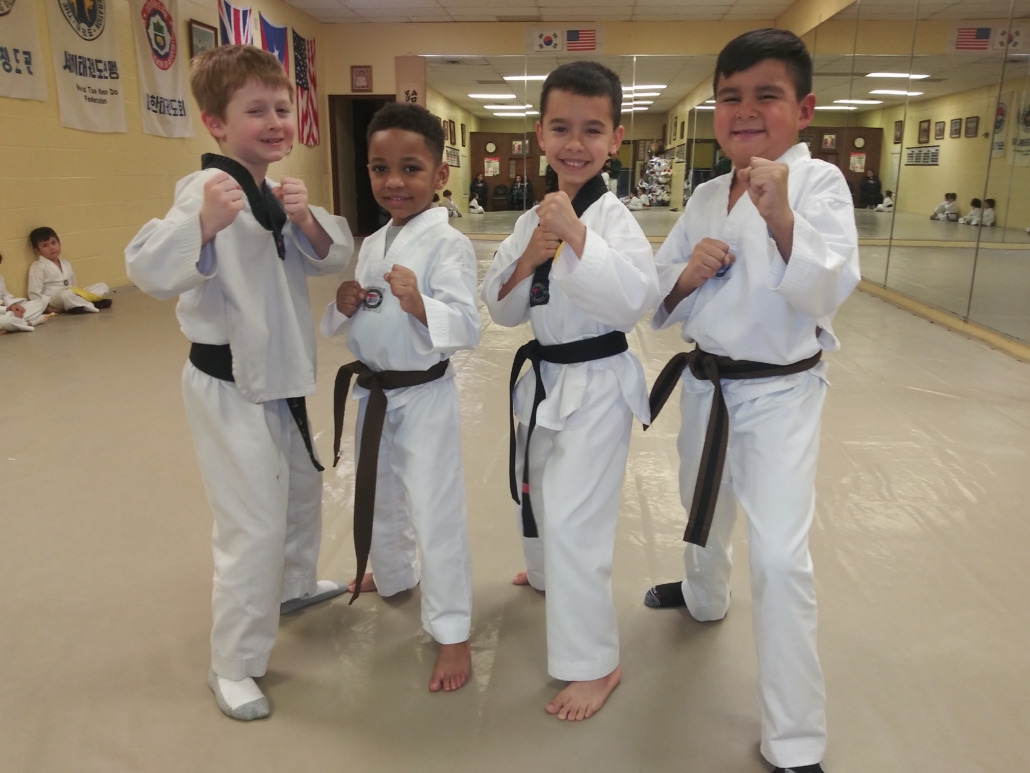
Training for Different Age Groups
Self-defense education can be adapted to different ages.
Children
Children's programs often focus heavily on:
- Awareness
- Boundaries
- Listening
- Communication
- Safe decision-making
- Basic movement
Physical techniques should be age appropriate and carefully supervised.
Teenagers
Teenagers may benefit from training that addresses:
- Situational awareness
- Personal boundaries
- Peer pressure
- Communication
- Physical coordination
- Responsible decision-making
Programs should account for differences in physical and emotional development.
Adults
Adults may have a wide range of goals.
Some seek martial arts training, while others want practical personal-safety education or physical activity.
Training should be appropriate for the individual's experience and physical condition.
Older Adults
Older adults may benefit from programs that emphasize:
- Balance
- Mobility
- Awareness
- Safe movement
- Escape strategies
Exercises may need to be modified to account for mobility or balance considerations.
Teen Martial Arts Programs and Self-Defense Education
When evaluating Teen Martial Arts Programs, parents and students should consider whether the curriculum balances physical skills with awareness, communication, respect, and responsible decision-making. The quality of supervision and the appropriateness of physical contact are particularly important for younger participants.
Self-Defense and Physical Fitness
Self-defense classes may contribute to physical fitness, but fitness levels vary substantially.
A class may include:
- Cardio drills
- Strength exercises
- Mobility work
- Footwork
- Repeated technical movements
- Partner exercises
People seeking a specific fitness outcome should evaluate the actual class structure rather than assuming that every self-defense program provides the same workout.
Self-Defense and Mental Preparedness
Mental preparedness involves recognizing that unexpected situations can require quick decisions.
Training may help students practice:
- Staying attentive
- Assessing options
- Remaining composed
- Moving toward safety
- Communicating under pressure
However, no training environment can perfectly reproduce the unpredictability of a real emergency.
Understanding Stress Responses
People may respond to stressful situations in different ways.
Some may become highly alert. Others may freeze or become confused.
Training scenarios can provide limited opportunities to practice decision-making under pressure, but students should not assume that practice guarantees a particular response during an actual emergency.
The goal is familiarity with principles rather than certainty about future behavior.
The Importance of Scenario Training
Scenario-based exercises can make training more practical.
A responsible scenario should have:
- Clearly defined objectives
- Appropriate supervision
- Controlled intensity
- Safety boundaries
- A way to stop the exercise
- A review afterward
Debriefing
After a scenario, instructors can discuss:
- What happened
- What decisions were made
- What worked
- What could be improved
- What alternative choices were available
This reflection can be more valuable than simply repeating the physical movement.
What Good Instruction Looks Like
Good instruction is usually progressive.
Students should first understand basic concepts before being introduced to more complicated scenarios.
An instructor should be able to explain:
- What the exercise teaches
- Why it matters
- How to perform it safely
- What common errors look like
- How beginners can modify it
Appropriate Corrections
Corrections should be clear and respectful.
The goal should be improving technique rather than embarrassing students.
Legal and Ethical Considerations
Self-defense laws vary by location and circumstances.
Students should not assume that martial arts training determines whether a particular physical response is legally justified.
Important legal questions may involve:
- Immediacy of the threat
- Proportionality
- Reasonableness
- Local law
- Circumstances surrounding the event
Because laws can change and individual cases differ, legal questions should be directed to a qualified legal professional.
Self-Defense Equipment
Equipment depends on the discipline.
Some classes may require:
- Uniforms
- Gloves
- Hand wraps
- Mouthguards
- Protective padding
- Training mats
Beginners should not purchase large amounts of equipment before understanding the program's requirements.
Home Practice
Home practice can reinforce certain skills, but beginners should choose exercises that are safe to perform independently.
Appropriate solo practice might include:
- Basic footwork
- Mobility
- Balance
- Shadow movement
- Technique review without a partner
Partner-dependent techniques should generally be practiced under appropriate supervision until the student understands them properly.
How Often Should Beginners Train?
There is no universal training frequency.
A person's schedule, physical condition, recovery, and goals all matter.
A beginner may start with one or two sessions per week and adjust based on how the body responds and what the program requires.
Consistency is usually more sustainable than suddenly increasing training volume.
Recovery and Injury Prevention
Physical training creates stress on the body.
Recovery helps manage that stress.
Useful habits include:
- Adequate sleep
- Hydration
- Appropriate nutrition
- Rest periods
- Gradual increases in intensity
- Proper warm-ups
- Appropriate technique
Persistent or significant pain should not simply be treated as evidence of successful training.
People with medical concerns or existing injuries should seek appropriate professional guidance about physical activity.
Confidence Without Overconfidence
A major objective of responsible self-defense education is developing informed confidence.
Healthy confidence can mean:
- Knowing what you have practiced
- Understanding your limitations
- Recognizing unsafe circumstances
- Knowing when to leave
- Asking for assistance
- Remaining calm when possible
Overconfidence can create additional risk if someone assumes training makes them immune to danger.
Building a Long-Term Training Habit
A sustainable routine is easier to maintain when it fits daily life.
Beginners can create a simple schedule:
Choose: Select realistic training days.
Prepare: Organize equipment and clothing.
Attend: Show up consistently.
Practice: Focus on fundamentals.
Review: Consider what improved.
Recover: Allow adequate rest.
Repeat: Continue the cycle.
This approach supports gradual development.
Measuring Progress
Progress should not be measured only by physical performance.
A beginner can also evaluate:
| Area | Early Progress | Longer-Term Development |
|---|---|---|
| Awareness | Notices surroundings more consistently | Identifies potential risks earlier |
| Movement | Understands basic footwork | Moves with greater control |
| Communication | Practices clear boundaries | Communicates confidently under pressure |
| Technique | Learns fundamental movements | Performs them consistently |
| Confidence | Becomes comfortable attending class | Approaches challenges more calmly |
| Discipline | Attends regularly | Maintains a sustainable routine |
| Decision-making | Understands basic options | Evaluates situations more effectively |
These indicators provide a broader view of development.
PAA: People Also Ask
What do beginners learn in self-defense classes?
Beginners may learn awareness, boundary setting, verbal communication, movement, distance management, escape strategies, and selected physical techniques. The exact curriculum depends on the program.
Are self-defense classes useful for beginners?
They can provide structured practice in personal-safety concepts and physical skills. Beginners should choose programs that clearly explain their curriculum and provide appropriate supervision.
What is the most important self-defense skill?
Awareness and decision-making are important because recognizing a potentially unsafe situation early can create opportunities to avoid or leave it.
Are self-defense classes the same as martial arts?
Not always. Martial arts generally represent structured disciplines with specific techniques and traditions, while self-defense classes may focus more directly on awareness, avoidance, escape, and practical safety scenarios.
Can self-defense training guarantee personal safety?
No. Real-world situations are unpredictable, and no training program can guarantee a particular outcome.
How often should a beginner take self-defense classes?
Frequency depends on the program, schedule, fitness, and recovery needs. Starting with a manageable schedule and maintaining consistency can be more practical than training excessively.
Is physical strength necessary for self-defense training?
Advanced strength is not necessarily required for beginner classes. Many programs teach movement, awareness, positioning, and technique alongside physical conditioning.

Frequently Asked Questions
1. What should I bring to my first self-defense class?
Requirements vary. Comfortable athletic clothing and water are commonly useful, while some programs require specific uniforms or protective equipment. Ask the instructor about equipment before attending.
2. Can someone with no martial arts experience join?
Many programs offer beginner-level instruction. New students should confirm that the class is designed for people without previous experience.
3. Will self-defense training make me more confident?
Training may improve confidence by providing opportunities to practice skills and overcome manageable challenges. The effect differs among individuals.
4. Are self-defense classes physically demanding?
Some are highly physical, while others place greater emphasis on awareness and scenario training. Beginners should ask about intensity before joining.
5. Should self-defense training focus mainly on fighting?
Not necessarily. A comprehensive approach can include awareness, prevention, communication, avoidance, escape, and physical techniques.
6. Can self-defense techniques be practiced at home?
Some basic solo exercises can be practiced safely, such as footwork and mobility. Partner techniques should generally be learned and practiced under appropriate supervision.
7. How long does it take to learn self-defense?
There is no fixed timeline. Basic concepts can be introduced quickly, but reliable technical skill and decision-making develop through repeated practice over time.
Beginner's Self-Defense Checklist
Before choosing a class:
- Identify your main reason for training.
- Determine your preferred level of physical activity.
- Ask about beginner instruction.
- Review the curriculum.
- Ask about physical contact.
- Check safety procedures.
- Understand equipment requirements.
- Consider class schedules.
During training:
- Listen to instructions.
- Practice slowly.
- Communicate with partners.
- Respect boundaries.
- Ask questions.
- Avoid unnecessary force.
- Follow safety rules.
For long-term development:
- Attend consistently.
- Practice appropriate fundamentals.
- Track progress.
- Review mistakes.
- Allow adequate recovery.
- Keep expectations realistic.
Creating a Personal Safety Mindset
A useful safety mindset is based on awareness rather than fear.
It involves recognizing that personal safety can include ordinary decisions such as choosing well-lit routes, maintaining communication with trusted people, paying attention to surroundings, and leaving uncomfortable situations early.
Self-defense training can complement these habits.
It should not replace common-sense precautions or emergency services.
The Role of Emergency Assistance
There are circumstances in which professional emergency assistance is the safest option.
Depending on the situation, this may involve contacting:
- Emergency services
- Security personnel
- Trusted people
- Local authorities
- Medical professionals
Self-defense training should never create the impression that a person must handle every dangerous situation alone.
Developing Responsible Confidence
Responsible confidence develops when students understand both capabilities and limitations.
A student may become more comfortable with physical movement while also learning that avoidance can be preferable to confrontation.
This balance is important.
The objective is not to prove that training works.
The objective is to make safer decisions.
Conclusion
Self-Defense Classes in Indianapolis can provide beginners with structured education in awareness, communication, movement, physical skills, and decision-making. The most comprehensive approach does not treat self-defense as simply learning how to fight. Instead, it recognizes prevention, avoidance, de-escalation, escape, and seeking assistance as important parts of personal safety.
The quality and focus of programs can differ considerably. Beginners should therefore evaluate instructor experience, class structure, safety procedures, physical-contact levels, beginner support, and the overall training environment before choosing a program.
Consistent practice can help students become more familiar with movement and defensive concepts, but no course can guarantee safety in every situation. Real-world circumstances are unpredictable, and responsible training should emphasize judgment rather than unnecessary confrontation.
For beginners, progress is best approached gradually. Learn the fundamentals, ask questions, respect training partners, follow safety instructions, and maintain realistic expectations.
Self-defense education is ultimately about making informed choices. Physical skills can be useful, but awareness, communication, prevention, and the ability to recognize when leaving or seeking assistance is the safest option are equally important.
Indianapolis Taekwondo can serve as a local reference for readers exploring structured martial arts and self-defense training.
#Self-Defense Classes in Indianapolis, #Self Defense, #Indianapolis Self Defense, #Martial Arts, #Personal Safety, #Self Defense Training, #Beginner Self Defense, #Martial Arts Training, #Situational Awareness, #Personal Protection, #Teen Martial Arts, #Adult Martial Arts, #Taekwondo, #Self Defense Techniques, #Safety Training
Indianapolis Taekwondo
1744 E. 86th Street Indianapolis IN 46240
317-345-1037
