Securing Connected Factory: Cybersecurity Checklist for Mid-Sized Manufacturers
Author : Ayesha Diaz | Published On : 28 Sep 2026
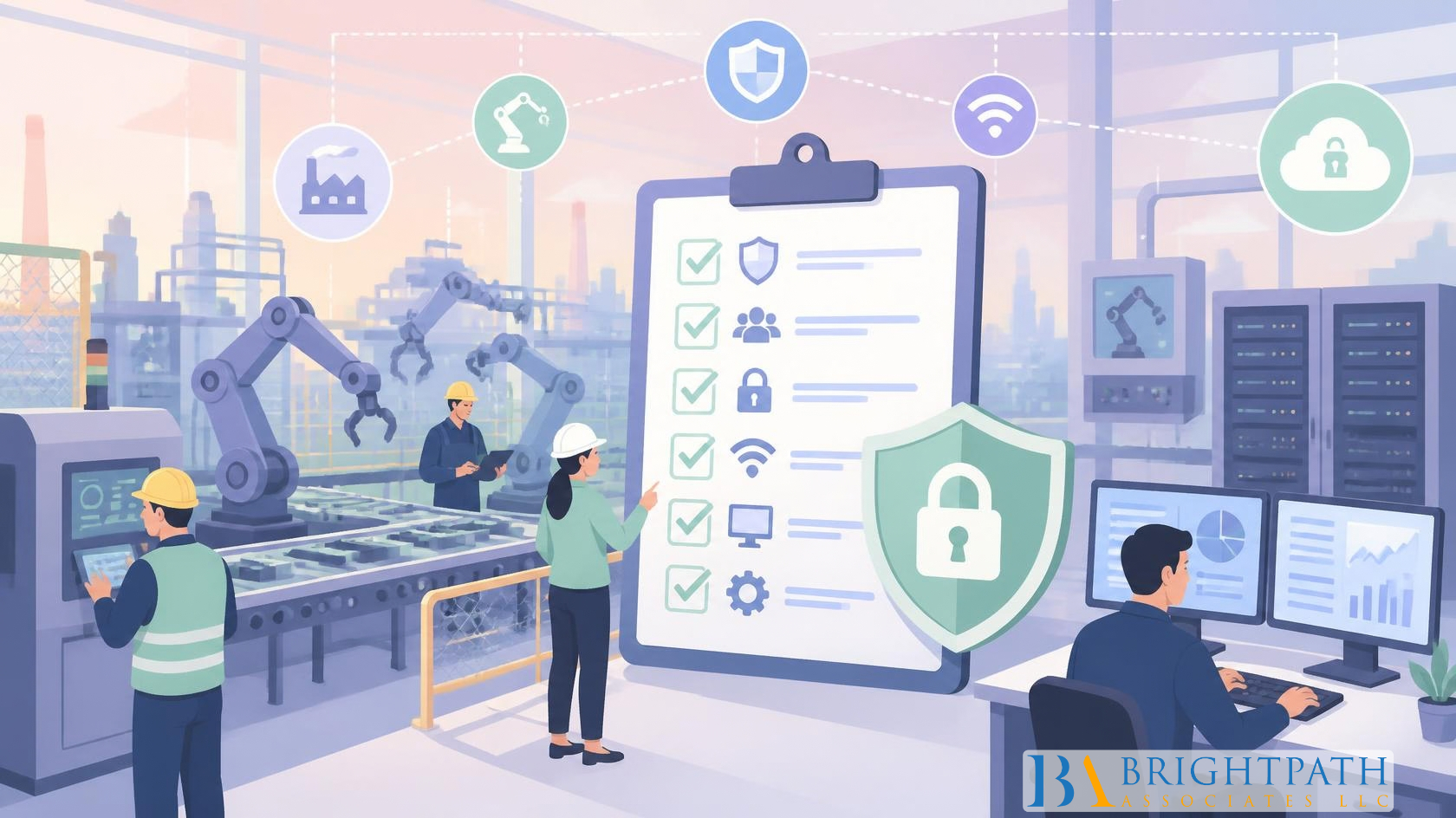
The modern factory is no longer defined solely by machines, operators, and production lines. Industrial machinery is increasingly connected to sensors, programmable logic controllers, manufacturing software, cloud platforms, enterprise systems, and remote monitoring technologies. This digital transformation is helping manufacturers improve productivity, maintenance, quality, and operational visibility. At the same time, however, greater connectivity creates a larger cybersecurity exposure.
For small and mid-sized manufacturers, the challenge can be particularly significant. These organizations may operate sophisticated production environments without having the extensive IT and cybersecurity resources available to larger enterprises. Legacy equipment, third-party vendors, remote maintenance connections, and increasingly automated production systems can create vulnerabilities that extend beyond traditional corporate networks.
Why Connected Factories Face a Different Cybersecurity Challenge
A connected manufacturing environment brings together information technology and operational technology. Office computers, ERP systems, engineering applications, industrial PCs, sensors, robotics, PLCs, and production machinery may all communicate across interconnected environments.
That connectivity can create considerable efficiency. Yet every connection potentially represents another pathway through which unauthorized users could reach sensitive systems. This means manufacturers often need to secure older machinery through compensating controls such as network segmentation, restricted access, monitoring, and carefully managed connectivity.
Legacy machinery presents another challenge. Many machines currently operating on factory floors were designed years or even decades ago, before cybersecurity became a major consideration in industrial environments. Some may not support modern authentication, encryption, monitoring, or security updates.
Start With Visibility
A manufacturer cannot adequately protect assets it does not know exist. One of the first steps toward improving factory cybersecurity is creating an accurate inventory of physical and digital assets. This should include industrial machinery, PLCs, sensors, servers, network equipment, software applications, cloud services, remote-access systems, and connected devices.
Manufacturers should understand where each asset is located, what function it performs, how it connects to other systems, who is responsible for it, and how important it is to production.
This becomes especially important when used or older machinery has been integrated into a modern production environment. A machine may remain productive for many years while having significantly different cybersecurity capabilities from newer equipment.
Separate IT From Operational Technology
Network segmentation is one of the fundamental principles of connected-factory security. Corporate IT systems and factory-floor operational technology have different purposes and risk profiles. When everything operates on a flat network, a compromised employee device could potentially provide a pathway toward production infrastructure.
Manufacturers can reduce this exposure by separating IT and OT environments through appropriate firewalls, gateways, virtual networks, and access-control mechanisms. The objective is not to eliminate connectivity. It is to ensure that connectivity exists for a legitimate business or production reason.
However, segmentation should not be treated as a one-time configuration. Leadership teams should periodically review which systems communicate with each other and whether those connections remain necessary.
Leadership and Talent Matter
Connected-factory cybersecurity ultimately requires ownership. Executives need visibility into the operational consequences of cybersecurity risks and should ensure that appropriate responsibilities, resources, and processes are established.
This is also where talent strategy becomes relevant. Modern machinery companies increasingly need leaders who can understand the intersection of manufacturing operations, automation, technology, cybersecurity, engineering, and business strategy.
Organizations operating across the broader Machinery Industry are navigating technological transformation alongside talent shortages, workforce transitions, automation initiatives, and succession challenges. The right leadership can help bring these different priorities together.
Cybersecurity Should Become a Continuous Process
New machinery is installed. Existing equipment is upgraded. Vendors change. Employees join and leave. Software platforms evolve. Remote-access requirements expand. Production networks become more interconnected.
Cybersecurity should therefore be treated as a continuous improvement process rather than a project with a fixed completion date. Manufacturers should periodically reassess their assets, access controls, vulnerabilities, suppliers, recovery procedures, employee training, and incident-response capabilities.
For a deeper checklist covering the connected manufacturing environment, manufacturers can also explore BrightPath Associates' cybersecurity checklist for mid-sized manufacturers.
The Connected Factory Needs Connected Leadership
The future of manufacturing will depend on more than smarter machines. It will depend on secure relationships between machines, people, data, software, suppliers, and business systems.
For mid-sized manufacturers, cybersecurity is increasingly intertwined with production continuity, intellectual property protection, automation strategy, operational resilience, and leadership.
The question for manufacturing executives is no longer simply whether their factory is connected. The more important question is whether that connected environment has the people, processes, and leadership required to keep it secure.
