Scientific Strategies to Flatten the Forgetting Curve in Corporate L&D | MaxLearn LMS
Author : Alex mathew | Published On : 19 Jun 2026
The Science of Recall: Why Knowledge Decay Destroys Corporate Training ROI
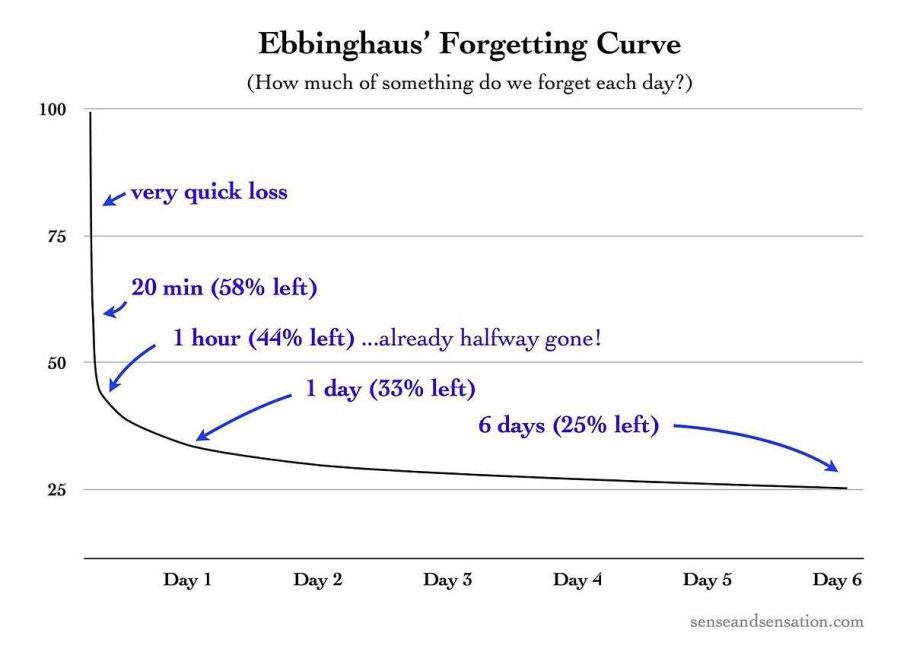
Every year, enterprise organizations invest millions in structured training initiatives to ensure operational excellence, regulatory compliance, and market competitiveness. Yet, a silent operational risk threatens this investment. According to the foundational cognitive research of Hermann Ebbinghaus, human memory is volatile. Without intentional reinforcement, employees forget approximately 75% of newly acquired training data within just forty-eight hours. Within a single week, that number escalates, leaving only a fraction of the original instructional value intact.
For Learning and Development (L&D) executives steering high-stakes industries, this steep memory decay presents a massive challenge. When field agents, clinicians, or relationship managers fail to retain critical operational data, the consequences extend far beyond lost training hours—they manifest as regulatory fines, security vulnerabilities, or dropped revenue pipeline.
Industry Manifestations of Memory Decay
The penalty for knowledge loss varies by market sector, but the underlying vulnerability remains uniform across enterprise environments:
-
Compliance & Pharma: In highly regulated environments like pharmaceutical manufacturing or clinical healthcare, memory decay directly correlates with human error. A missed step in an SOP or a minor misunderstanding of Good Manufacturing Practices (GMP) can lead to batch-impact deviations, costly regulatory audits, and severe compliance liabilities.
-
Banking, Finance & Insurance: With constantly shifting financial regulations, asset managers, loan officers, and insurance adjusters must maintain absolute precision. Forgetting data security protocols or compliance mandates increases operational risk exposure and threatens audit readiness.
-
Sales & Retail: High-velocity environments demand immediate product recall. If retail staff or B2B sales professionals cannot instantly articulate product differentiators or handle customer objections on the spot, conversion rates plummet and brand loyalty erodes.
-
High-Risk Sectors (Oil and Gas, Mining, Hospitality): In asset-heavy industrial sectors, forgotten safety protocols or machine handling guidelines do not just hurt productivity—they directly impact physical safety, resulting in avoidable operational downtime and on-site incidents.
To defeat this systematic cognitive decline, enterprise organizations must move away from archaic, monolithic learning models and implement scientifically validated reinforcement strategies.
Mitigating Memory Decay Through Modern Architecture
The Ebbinghaus framework highlights that memory decay can be successfully countered by targeting two primary levers: content presentation and scheduled cognitive retrieval.
1. Deconstructing Complexity via Bite-Sized Content
The human working memory possesses a finite processing capacity. When subjected to hours of dense training material during traditional onboarding or annual seminars, the brain undergoes cognitive overload, systematically discarding data to free up processing bandwidth.
The solution lies in breaking down complex organizational workflows into highly targeted, standalone learning nodes. By isolating single operational objectives into brief, focused modules, information is seamlessly absorbed without overwhelming the learner's working memory.
2. Flattening the Decay Curve with Spaced Repetition
Mere repetition is insufficient; the timing of that reinforcement dictates whether information shifts from short-term memory into long-term retention. Forcing the brain to retrieve information precisely at the moment it begins to fade strengthens neural pathways. By strategically spacing micro-assessments over days and weeks, the forgetting curve is flattened, resulting in sustainable, long-term mastery.
Elevating Corporate Learning with MaxLearn
Standard enterprise architectures are often poorly equipped to handle the fluid requirements of modern cognitive reinforcement. Traditional platforms act as passive repositories rather than dynamic tools for knowledge retention. This is where the MaxLearn LMS redefines the corporate learning ecosystem.
As a state-of-the-art microlearning platform, MaxLearn transforms corporate training from a static event into an ongoing, high-impact workflow.
[Traditional Training] ──> Dense Content ──> Rapid Memory Decay (75% Lost)
                                                       │
[The MaxLearn Method]  ──> Bite-Sized Decks ──> AI-Driven Spaced Repetition ──> Long-Term Mastery
The Repeat Before Forgetting (RbF) Algorithm
At the core of the MaxLearn LMS is its proprietary Repeat before Forgetting (RbF) algorithm. Rather than blasting employees with uniform, repetitive content, this intelligent system continuously tracks individual metrics—including historical response accuracy, confidence levels, and time elapsed since the last review.
By calculating the precise mathematical window of cognitive decay for every individual, the Microlearning LMS delivers hyper-personalized reinforcement challenges exactly when they are needed most.
Effortless Authoring via Intelligent Automation
L&D teams are frequently bogged down by lengthy content development cycles. MaxLearn resolves this bottleneck through its integrated Learning Content Management System (LCMS) capabilities, featuring an advanced AI-powered authoring tool.
Instead of spending weeks constructing dense slideshows, instructional designers can instantly ingest raw corporate source documents, safety manuals, or product briefs into the platform. The system automatically translates complex documentation into targeted learning card decks and adaptive quiz challenges, accelerating time-to-market by a factor of ten.
Risk-Focused Training & Gamification
MaxLearn shifts enterprise learning away from rigid, one-size-fits-all frameworks. The Cloud Based Learning Management System allows administrators to deploy automated, risk-specific training goals tailored to individual roles or observed operational gaps.
To sustain engagement without causing platform fatigue, MaxLearn integrates a win-win gamification model. Employees participate in brief, collaborative challenges, earning points and badges for their teams based on active participation and progressive mastery. This turns daily reinforcement into a habit seamlessly integrated into the flow of work.
Verifiable ROI Through Real-Time Analytics
For senior L&D leadership, proving the business impact of training programs is critical. MaxLearn provides a comprehensive dashboard tracking data points well beyond simple completion rates.
Managers gain granular visibility into real-time competency status, individual knowledge gaps, and verified knowledge growth across specific topics. This definitive, audit-ready data bridges the gap between training metrics and actual on-the-job business performance.
Future-Proofing Enterprise Knowledge
In fast-moving, high-stakes sectors, an organization's collective knowledge is its most valuable asset. Relying on outdated training delivery systems that fail to address natural cognitive decay introduces substantial operational risk.
By deploying a robust Enterprise Learning Management framework powered by MaxLearn's specialized learning management software, organizations can successfully eliminate knowledge gaps, safeguard operational compliance, and maximize their overall training ROI. Transition your strategy from simple information distribution to permanent, verifiable knowledge retention.
