Scaffolding Materials & Hot Rolled Coil: What Every Site Manager Should Know
Author : Monish Roy | Published On : 15 Jul 2026
Every tube, coupler, board, and tie used to build a scaffold started life as a flat, wide roll of steel: hot rolled coil (HR coil). Steel mills cast slabs, roll them down to a target thickness while still hot, and coil the result for handling. From there, HR coil is slit, pipe-welded, pressed, or cut into the individual scaffolding materials that arrive on a job site.
"Scaffolding materials" usually refers to the full kit of components needed to erect a working scaffold system — not just the tubes, but the connectors, decking, and safety hardware around them.
Core Material Categories
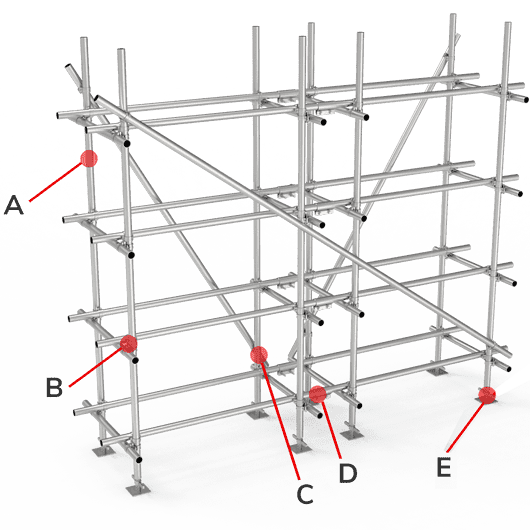
- Steel/aluminium tubes — standards, ledgers, and transoms, typically 48.3 mm outside diameter
- Couplers & fittings — right-angle, swivel, and putlog couplers that join tubes at fixed or variable angles
- Base plates & sole boards — spread the load from standards onto the ground or a supporting surface
- Scaffold boards/planks — timber, steel, or aluminium decking that forms the working platform
- Ties & bracing — diagonal braces and wall ties that stabilise the structure against sway and wind load
- Guardrails & toe boards — fall-prevention hardware fitted to every working platform
Steel vs Aluminium Tube — Approx. Weight per Metre (48.3mm tube, indicative)
- Steel Tube: 4.4 kg/m
- Aluminium Tube: 2.1 kg/m
Steel tube is favoured for strength and cost; aluminium is favoured where lighter handling and corrosion resistance matter more than raw load capacity.
Where Scaffolding Materials Are Specified
- Building facades — new construction, render, and painting works
- Industrial plants — shutdown and turnaround access
- Bridges and civil infrastructure — formwork support and access
- Events and temporary structures — stages, seating, and signage towers
Material choice on a job is rarely just about cost — tube wall thickness, coupler slip resistance, and board load rating all have to be checked against the specific working load and standard (e.g. EN 12811, TG20) for the scaffold design.
3. Hot Rolled Coil (HR Coil)
Hot rolled coil is flat steel that has been rolled at a temperature above the steel's recrystallization point (typically over 900°C) and then coiled for storage and transport. It's one of the most fundamental semi-finished steel products — the starting point for pipes, tubes, structural sections, and further cold-rolled or coated products. A single HR coil can weigh from a few tonnes up to 25–30 tonnes, with widths commonly ranging from about 900 mm to over 2000 mm depending on the mill.
Manufacturing Process
- Slab reheating — continuously cast steel slabs reheated to rolling temperature in a walking-beam furnace
- Roughing mill — slab rolled down in thickness and extended in length
- Finishing mill — a train of stands reduces the strip to final target thickness at high speed
- Run-out table cooling — water sprays cool the strip at a controlled rate to set the microstructure
- Coiling — strip wound into a coil at the down-coiler for handling and dispatch
Typical Thickness Ranges by Application (upper end of range)
- Pipe & Tube: 2–6 mm
- Structural: 6–12 mm
- Heavy Fabrication: 12–25 mm
Thinner gauges feed pipe and tube mills (including scaffold tube production); thicker gauges go into structural sections and heavy fabrication.
Common Grades
| Grade | Standard | Typical Yield Strength | Common Use |
|---|---|---|---|
| IS 2062 E250 | India | 250 MPa | General structural fabrication |
| ASTM A1011 (CS/SS Grades) | USA | 230–345 MPa | General & structural sheet/coil |
| EN 10025 S275/S355 | Europe | 275–355 MPa | Structural steel, construction |
| SAE 1006–1008 | International | 170–205 MPa | Deep drawing, pipe skelp |
Common Applications
- Skelp for ERW and spiral-welded pipe manufacturing
- Structural sections, beams, and columns (after further processing)
- Cold-rolled coil feedstock (further reduced and annealed)
- Chassis, wheels, and heavy equipment components
- General fabrication, tanks, and containers
4. From HR Coil to Job-Site Scaffolding
The link between these two topics is direct: much of the tube used in scaffolding materials standards and ledgers is produced by slitting HR coil into strip and welding it into pipe, in the same way as structural ERW tube. Base plates, coupler bodies, and toe boards are often pressed or cut from HR coil sheet as well. Getting the right HR coil grade and thickness upstream is what determines the strength, weldability, and consistency of the finished scaffolding material downstream.
Quick Reference: What to Check Before Ordering
- Scaffolding materials: tube wall thickness, coupler slip-resistance rating, board load class, and compliance with the relevant scaffold design standard
- HR coil: grade/yield strength, thickness and width tolerance, surface finish, and mill test certificate (MTC) for traceability
