Role of Micro-Factories in Regional Textile Growth
Author : Ayesha Diaz | Published On : 17 Aug 2026
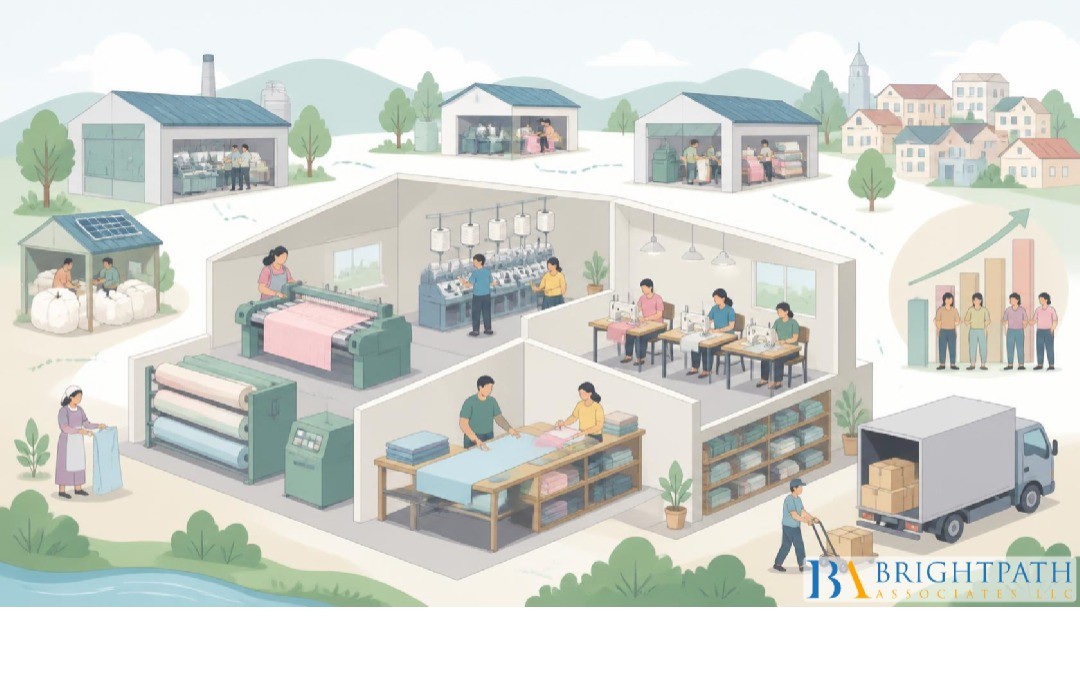
The textile industry is undergoing a significant transformation as manufacturers rethink how products are designed, produced, distributed, and brought to market. For decades, textile manufacturing has often been associated with large centralized facilities, long production runs, extensive supply chains, and significant capital investment. However, changing customer expectations, supply-chain uncertainty, demand for customization, and advances in manufacturing technology are creating new opportunities for smaller production models.
One of the most interesting developments is the rise of micro-factories. These smaller, technology-enabled production facilities can allow textile companies to manufacture closer to customers while maintaining greater flexibility than traditional large-scale plants. For regional manufacturers and small to mid-sized businesses, this model could become an important pathway toward growth.
The broader Textile Industry is increasingly influenced by automation, digital manufacturing, sustainability, supply-chain resilience, and changing consumer preferences. Micro-factories bring many of these trends together by creating production environments designed around agility rather than simply maximizing volume.
What Is a Textile Micro-Factory?
A micro-factory is a relatively small-scale manufacturing facility designed to produce goods efficiently using advanced technologies, flexible equipment, and streamlined processes. Unlike traditional factories that may depend on extremely large production runs, micro-factories can focus on shorter production cycles, regional demand, customized products, or specialized textile applications.
The concept is particularly relevant to businesses that struggle with the economics of large-scale manufacturing. A company may not need a massive facility to serve a regional market if technology can reduce labor requirements, improve production flexibility, and optimize material usage.
Micro-factories can also support a more localized approach to manufacturing. Instead of producing products in one distant facility and transporting them across multiple markets, businesses can potentially establish smaller production units closer to customers. This could shorten lead times and create greater responsiveness to regional demand.
Why Regional Manufacturing Is Becoming More Important
Global supply chains have demonstrated both their efficiency and their vulnerabilities. Transportation disruptions, geopolitical uncertainty, labor shortages, changing trade policies, and unpredictable demand can affect textile companies that depend heavily on geographically concentrated production.
Regional manufacturing provides an alternative approach. A textile company with multiple smaller production facilities may be able to distribute manufacturing risk across different locations. If one facility experiences disruption, other locations may potentially continue serving customers.
This does not mean micro-factories will replace large textile mills. Instead, they can complement traditional manufacturing by handling specialized products, regional demand, prototyping, customized orders, or smaller production runs. For executives, the key question becomes whether a distributed manufacturing model can create sufficient economic and operational value for their particular market.
Technology Makes Smaller Facilities More Competitive
Historically, one of the biggest advantages of large textile factories was economies of scale. Large facilities could justify expensive machinery and spread fixed costs across enormous production volumes. Modern manufacturing technologies are changing that equation.
Digital technologies can also reduce the need for manual intervention and improve production consistency. When equipment is connected to centralized systems, managers can monitor production performance, identify bottlenecks, and make adjustments more quickly. This creates the foundation for smart textile manufacturing, where physical production and digital information systems work together.
Workforce Requirements Are Changing
Technology-enabled textile manufacturing does not eliminate the need for people. Instead, it changes the skills organizations require. Traditional production roles remain important, but companies may increasingly need automation technicians, industrial engineers, digital manufacturing specialists, maintenance professionals, data analysts, production planners, quality managers, and technology-focused plant leaders.
This creates a significant workforce challenge. A small textile manufacturer establishing a micro-factory may need a relatively compact team, but each employee may carry greater responsibility. A production manager might need to understand automation, data analytics, quality management, and workforce planning simultaneously. The ability to attract and retain these multidisciplinary professionals can therefore influence whether a micro-factory succeeds.
Leadership Will Determine the Success of Regional Expansion
Micro-factories require more than advanced equipment. They require leaders capable of connecting technology investments with commercial objectives. Executives need to understand market demand, production economics, workforce requirements, supply-chain considerations, technology integration, and customer expectations.
For small and mid-sized textile companies, selecting the right leadership can be especially important because organizational structures are often lean. A strong operations or manufacturing leader can have a significant influence on productivity, quality, employee engagement, and technology adoption. This makes talent strategy an important component of regional manufacturing expansion.
Micro-Factories and the Future of Textile Manufacturing
The rise of micro-factories does not signal the end of large textile manufacturing facilities. Large plants will continue to provide significant economies of scale for commodities and high-volume products. Instead, the future may involve a combination of manufacturing models.
Large centralized facilities can handle high-volume production, while smaller regional micro-factories can support customization, rapid-response manufacturing, prototyping, specialized products, and local markets.
This hybrid approach could give textile companies greater flexibility while maintaining the advantages of traditional scale. The original BrightPath Associates analysis, Role of Micro-Factories in Regional Textile Growth, explores how smaller, technology-enabled production facilities can reshape regional textile manufacturing and create new opportunities for businesses seeking greater agility.
Conclusion: A More Flexible Future for Textiles
Their potential advantages include shorter supply chains, faster response times, customization, reduced overproduction, technology-enabled efficiency, and greater manufacturing resilience. At the same time, companies must carefully evaluate capital requirements, workforce availability, technology integration, raw-material sourcing, and market demand.
For small and mid-sized textile companies, the opportunity may not be about building smaller factories simply for the sake of size. It is about creating smarter manufacturing systems that match production capacity with real market requirements.
