Role of Generative Design in Custom Building Component Production
Author : Shawn Fisher | Published On : 29 Sep 2026
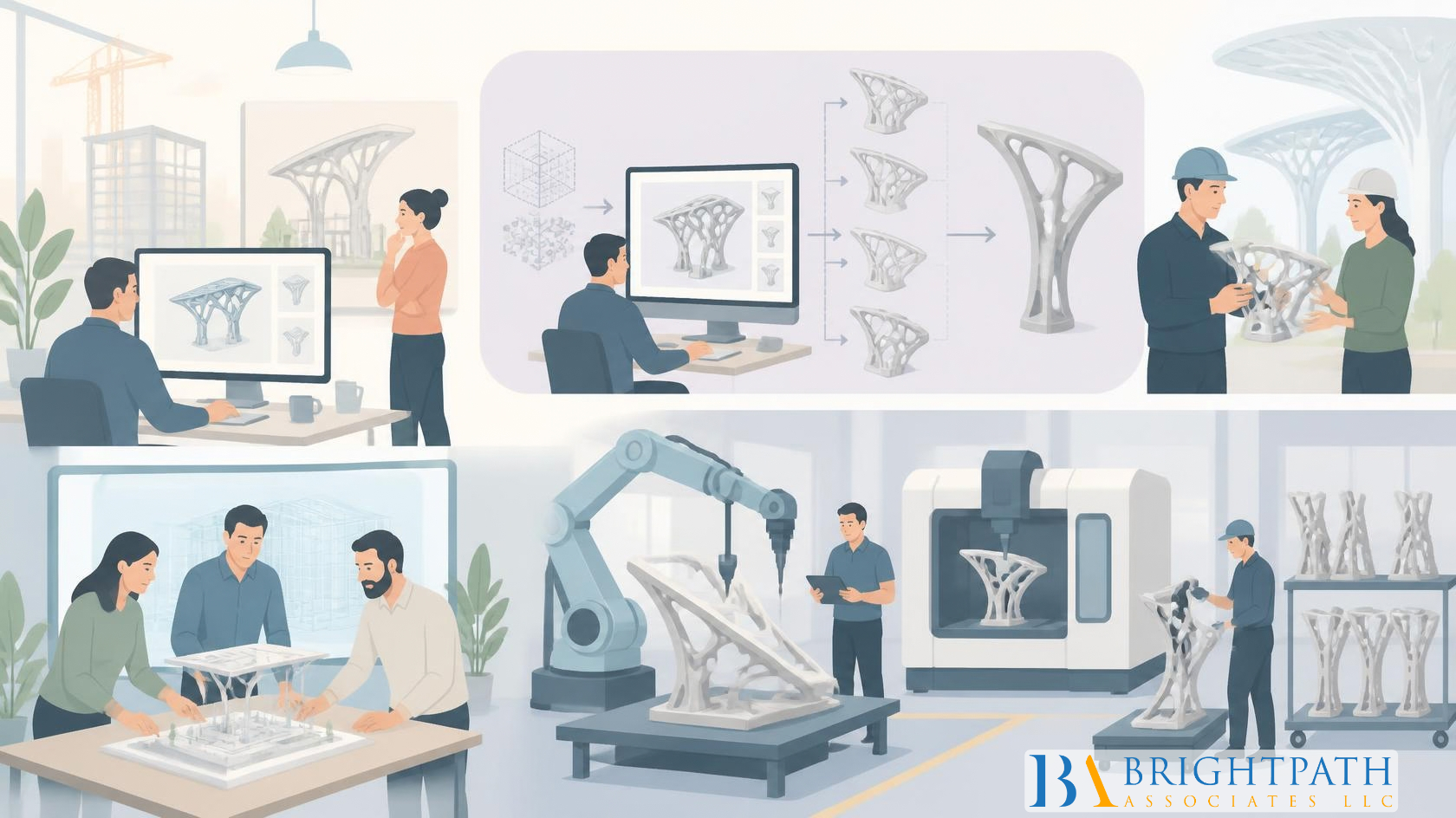
The building materials industry is entering a period in which digital design is becoming increasingly connected to physical manufacturing. Architects and engineers are no longer limited to developing a single component configuration and refining it manually. Computational tools can now evaluate numerous design possibilities against structural requirements, material availability, manufacturing limitations, cost considerations, and sustainability objectives.
For building-material manufacturers and construction companies, generative design offers more than an opportunity to create unusual geometries. Its larger potential lies in optimizing customized components for how they will be manufactured, transported, installed, used, and eventually recovered or recycled.
This is particularly relevant as construction companies seek greater customization while manufacturers look for ways to improve material efficiency and maintain scalable production.
From Fixed Designs to Performance-Based Design
Traditional design processes generally begin with a predetermined component. Engineers establish its dimensions and specifications and then make adjustments based on structural and manufacturing requirements. Generative design approaches the problem differently.
Designers establish objectives and constraints, such as load requirements, available materials, connection points, manufacturing capabilities, dimensions, and cost targets. Computational systems can then explore multiple configurations that satisfy those parameters.
The result is not necessarily one “perfect” design. Instead, teams receive a range of alternatives that can be evaluated according to performance, manufacturability, cost, and other project priorities. For manufacturers producing customized beams, panels, brackets, façade elements, roof components, structural connections, or prefabricated systems, this approach can potentially reduce the limitations associated with one-size-fits-all production.
Making Better Use of Construction Materials
Building materials account for a significant share of project costs, and unnecessary material use can also increase waste and environmental impacts. Computational optimization can help engineers investigate whether a component can achieve the required strength and stiffness with a more efficient geometry.
For example, a structural component may contain areas where material contributes little to overall performance. A generative algorithm can explore alternative geometries that redistribute material toward areas where it is most needed.
The potential benefits extend beyond material consumption. Lighter components may also influence transportation, handling, lifting, and installation requirements. However, material reduction should never be treated as an automatic benefit. Structural performance, durability, manufacturing complexity, safety, and lifecycle requirements must remain part of the evaluation.
Connecting Digital Design With Manufacturing
A digital model can contain information about dimensions, materials, connection points, tolerances, and production requirements. When this information flows into CNC machines, robotics, automated fabrication equipment, or other production systems, manufacturers can reduce some of the manual translation traditionally required between engineering and production teams.
The concept is particularly valuable for companies producing customized building components. Instead of treating customization as an entirely separate manufacturing process, companies can develop flexible production systems capable of manufacturing variations while maintaining repeatable workflows.
This aligns with broader transformation occurring throughout the Building Materials Industry, where companies are facing simultaneous pressure to innovate, improve sustainability, manage supply chains, and adopt digital technologies.
Generative Design and Sustainable Construction
Sustainability is another area where computational design can influence decision-making. Design platforms can potentially incorporate variables such as material quantities, embodied carbon, thermal performance, structural efficiency, and lifecycle considerations into the evaluation process.
This allows teams to compare alternatives rather than treating sustainability as an assessment performed after the design has already been finalized. For manufacturers, optimized designs may reduce cutting waste or enable more efficient use of raw materials. For construction companies, lighter or more efficiently designed components may affect transportation and installation requirements.
Yet generative design itself does not automatically produce a sustainable outcome. The environmental performance of a component still depends on material sourcing, manufacturing energy, transportation, durability, maintenance, and end-of-life options. The technology is therefore best understood as a tool that can help teams make sustainability trade-offs more visible.
Moving From Experimentation to Business Value
Generative design still faces practical barriers, including software investment, integration challenges, data quality, training requirements, regulatory considerations, and resistance to changing established workflows.
There is also a human challenge: generating hundreds of design alternatives does not necessarily improve decision-making if teams lack clear criteria for evaluating them. Successful organizations will therefore need to define the business problem before selecting the technology.
The original BrightPath analysis, Role of Generative Design in Custom Building Component Production, explores how this technology can connect computational design with customized manufacturing and broader construction-industry requirements.
The larger opportunity is not simply producing more complex components. It is creating a production environment in which design, materials, manufacturing, cost, sustainability, compliance, and lifecycle performance can be evaluated together.
What Comes Next for Building Materials Manufacturers?
Generative design could become increasingly valuable as manufacturers move toward flexible production, prefabrication, mass customization, and digitally connected factories. But technology alone will not determine success. Companies will need appropriate manufacturing infrastructure, interoperable data systems, skilled professionals, regulatory expertise, and leadership capable of managing organizational change.
How is your company approaching generative design today? Are material efficiency, sustainability, customization, or automated manufacturing driving your interest? What barriers are preventing wider adoption? Share your experience and perspective with other building-material professionals.
If your organization is preparing for digital transformation, expanding advanced manufacturing capabilities, or searching for leaders who can connect engineering, operations, technology, and sustainability, BrightPath Associates LLC can help identify the specialized executive talent required for the next stage of growth. Connect with BrightPath to discuss your leadership and hiring needs.
