Rise of Co-Op Digital Transformation: Why F&B Clusters are Winning
Author : Jimmy Patel | Published On : 04 Sep 2026
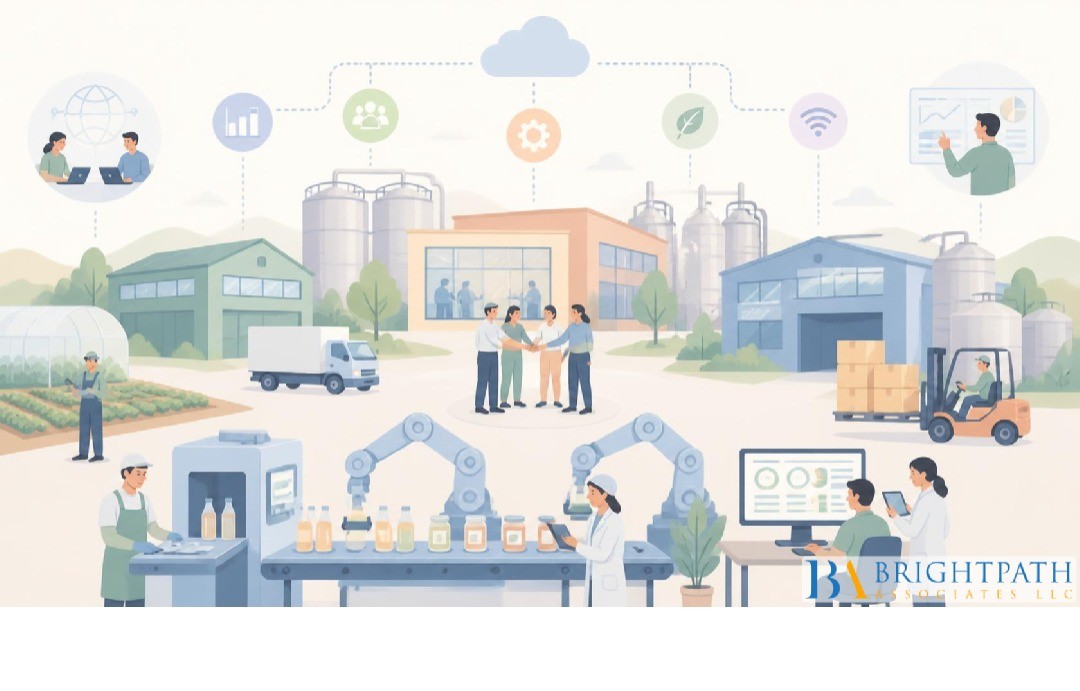
Digital transformation in industrial automation is often presented as a story about technology. Robotics, artificial intelligence, industrial IoT, connected equipment, cloud platforms, digital twins, and advanced analytics are all changing how factories operate.
For small and mid-sized industrial companies, one of the more important questions is how they can adopt these technologies without carrying the financial and operational burden of doing everything independently. Increasingly, collaborative models are offering an alternative.
Industry clusters, cooperative networks, technology partnerships, and shared digital initiatives are allowing companies to combine resources, knowledge, and capabilities. Instead of every organization attempting to build its own transformation ecosystem from the ground up, businesses can benefit from an environment where expertise and infrastructure are shared.
Digital Transformation Is Becoming a Team Sport
Traditional digital transformation strategies often follow a straightforward model: a company identifies a technology gap, selects a vendor, invests in implementation, and trains its workforce. That approach can work, but it can also become expensive and slow.
Industrial automation involves interconnected systems. A manufacturer may need expertise in PLCs, SCADA, robotics, machine vision, cybersecurity, data analytics, cloud integration, and production engineering. Finding all of these capabilities internally can be particularly challenging for a mid-sized organization.
A cluster of manufacturers, technology providers, system integrators, engineering firms, educational institutions, and industry specialists can create an environment in which knowledge moves more efficiently between participants.
Why Smaller Manufacturers May Benefit the Most
Large enterprises generally have more resources available for transformation initiatives. They can maintain dedicated engineering teams, technology departments, innovation groups, and cybersecurity specialists.
Capital must be allocated carefully. Employees may perform multiple functions. Technology decisions have to demonstrate practical value. A failed implementation can create a disproportionate financial and operational burden.
Rather than independently developing every capability, smaller businesses can potentially leverage shared expertise, regional technology ecosystems, specialized vendors, and partnerships with other organizations facing similar challenges.
This can make advanced industrial automation more accessible. It also creates an important strategic advantage: companies can learn from one another instead of repeating the same mistakes.
From Technology Adoption to Shared Learning
One of the overlooked benefits of industrial clusters is knowledge exchange. Imagine several manufacturers in the same region dealing with similar challenges around predictive maintenance, workforce shortages, energy consumption, or production visibility. Each company may independently experiment with solutions.
A collaborative environment creates the possibility of sharing lessons learned. Which technologies produced measurable results? Where did implementation fail? How should employees be trained? Which processes should be automated first? How can legacy equipment be connected to modern platforms?
These questions become easier to address when organizations have access to a broader pool of practical experience. This is particularly valuable in industrial automation because successful implementation depends on much more than purchasing equipment. Integration, process redesign, employee adoption, cybersecurity, maintenance, and leadership all influence the outcome.
The Rise of Connected Industrial Ecosystems
The industrial automation industry is already moving toward increasingly connected production environments. Companies are integrating robotics, IIoT platforms, machine vision, advanced control systems, predictive analytics, and digital twins into manufacturing operations.
BrightPath Associates' Industrial Automation Industry resources reflect this broader shift toward automation, smart manufacturing, robotics, control systems, IIoT, and digital transformation. As systems become more interconnected, the boundaries between companies and technology disciplines are also becoming less rigid.
A robotics implementation may require software expertise. A predictive-maintenance project may depend on data infrastructure. A smart-factory initiative may require cybersecurity capabilities. A digital-twin program may require engineering knowledge alongside analytics expertise.
Talent May Become the Real Differentiator
An industrial company can invest in a sophisticated automation platform, but without people capable of implementing and managing that technology, the investment may never reach its full potential. This is creating demand for professionals who combine traditional industrial expertise with digital capabilities.
Companies increasingly need leaders who understand manufacturing operations while also being comfortable with data, automation strategy, cybersecurity, software, systems integration, and emerging technologies.
The challenge becomes particularly significant for small and mid-sized businesses competing for a limited pool of specialized professionals. The future industrial workforce may therefore look considerably different from the workforce of a decade ago.
Instead of separating engineering, operations, IT, and technology strategy into isolated functions, companies will increasingly value leaders who can connect these areas.
The Future May Belong to Connected Communities
The industrial automation revolution is not simply about machines becoming smarter. Manufacturers that participate in collaborative ecosystems may gain access to knowledge, technology, partnerships, specialized expertise, and talent that would be difficult to develop independently.
For small and mid-sized companies, this can be especially powerful. The competitive advantage of tomorrow may not come from having the largest automation budget. It may come from knowing how to build the right network around the business and use that network intelligently.
The broader lesson from the rise of cooperative digital transformation is explored in BrightPath Associates' analysis, Rise of Co-op Digital Transformation: Why F&B Clusters Are Winning.
A Leadership Challenge for the Next Industrial Era
Industrial automation is becoming more sophisticated, but sophistication alone does not guarantee success. Companies need the right technologies, processes, partnerships, and people working together.
For executives leading small and mid-sized industrial businesses, this creates an opportunity to rethink transformation. Instead of viewing digitalization as an isolated technology project, leaders can treat it as an ecosystem strategy—one that combines collaboration, innovation, workforce development, and operational discipline.
