RFID Antenna Compatibility Guide: Reader Compatibility, Connector Types, and Cable Loss Explained
Author : Jaming Wong | Published On : 02 Jul 2026
Sometimes the Problem Isn’t the Antenna at All
One purchasing manager emailed us after replacing four RFID antennas.
The reading distance hadn’t improved.
The tags were the same.
The reader was the same.
Even the mounting position barely changed.
After a short conversation, the actual problem turned out to be something much less obvious.
The antenna cable was almost fifteen meters long, and it wasn’t designed for UHF RFID.
Nobody had questioned the cable because, well, it looked fine.
Moments like that are surprisingly common.
When people compare RFID antennas, they usually focus on gain, polarization or price.
Compatibility often gets checked at the very end.
In real projects, it probably deserves attention much earlier.
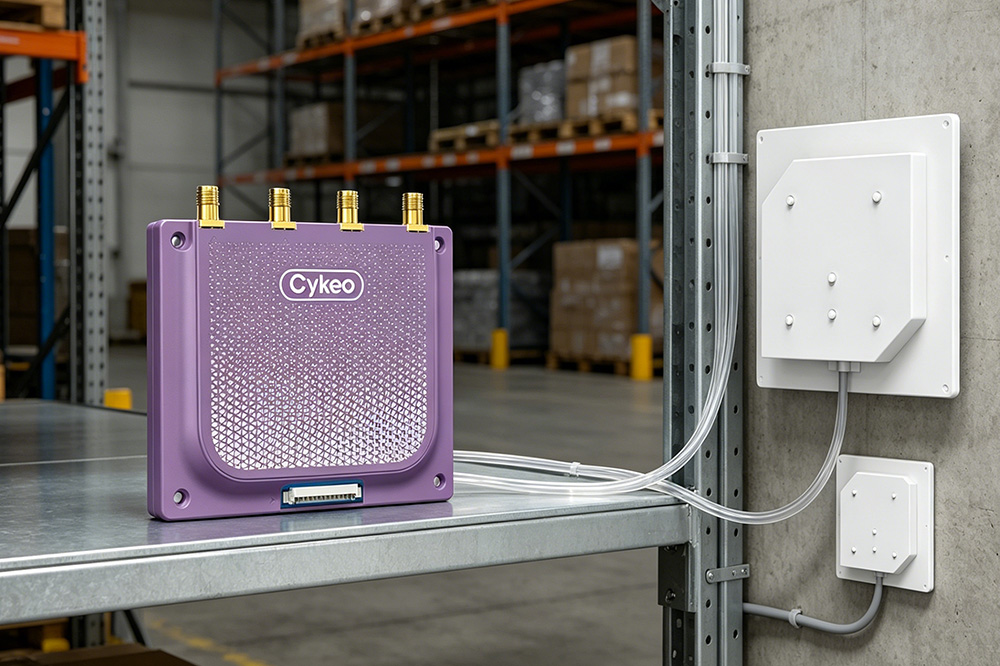
Will Any UHF RFID Antenna Work with Your Reader?
This is probably the first question many buyers ask.
The short answer is…
Usually yes.
But “usually” isn’t the same as “always.”
Most modern UHF RFID readers follow standard RF specifications, which means antennas from different manufacturers can often work together without major issues.
For example, readers based on the widely adopted RAIN RFID ecosystem—including platforms built around chips from Impinj—are commonly paired with third-party antennas in warehouse, logistics and manufacturing projects.
That doesn’t automatically guarantee compatibility.
You still need to verify a few practical details.
- Frequency range
- Impedance (typically 50Ω)
- Connector type
- Power handling
- Polarization
- Cable specification
Most incompatibility problems don’t come from the antenna itself.
They come from overlooking one of those details.
Connector Types Look Similar Until Installation Day
Connector selection rarely gets much attention during quotation discussions.
Then the equipment arrives.
Someone opens the box.
The connector doesn’t match.
Work stops.
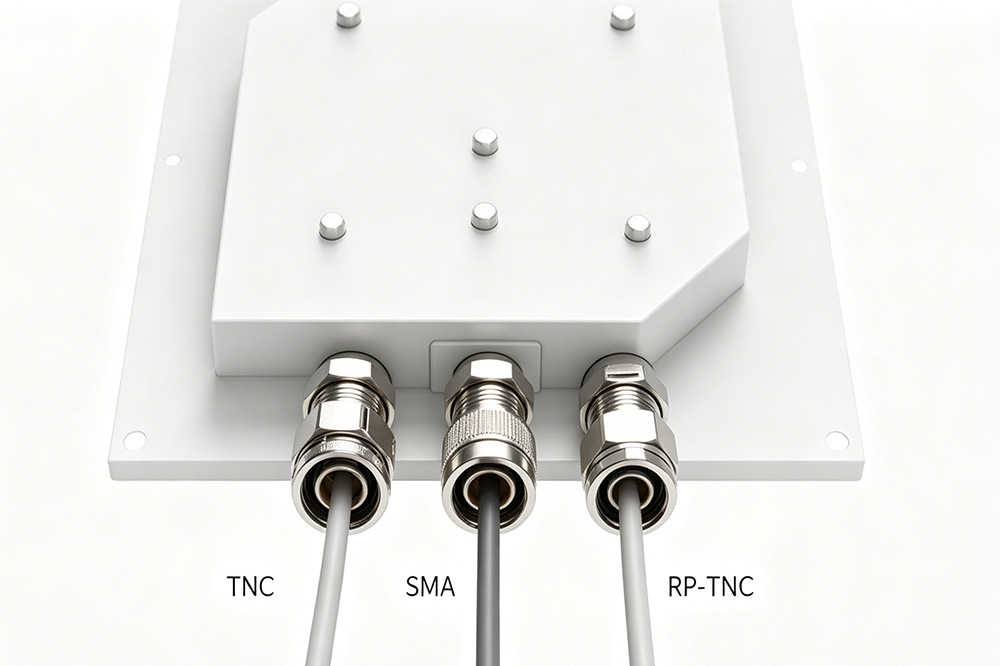
The three connector types most buyers encounter are:
TNC
TNC connectors are probably the most common choice for industrial RFID installations.
They’re mechanically secure and resist vibration well.
That’s one reason warehouse gates and outdoor systems frequently use them.
If forklifts, conveyors or industrial equipment create constant vibration, TNC is often the safer option.
SMA
SMA connectors are much smaller.
They’re common in compact RFID readers, embedded modules and development boards.
They work well.
They just aren’t designed for repeated industrial cable movement.
If the installation remains fixed, that’s usually not a concern.
RP-TNC
RP-TNC connectors appear less frequently in RFID than in wireless networking, but they’re still found in some specialized equipment.
At first glance they look almost identical to standard TNC connectors.
The center pin arrangement is different.
More than one installer has discovered that after trying to tighten the connector.
It’s a simple mistake.
Still frustrating when the project is waiting.
The Cable Usually Doesn’t Receive Enough Attention
Here’s something I’ve noticed over the years.
Teams will spend days comparing antennas.
They’ll compare gain, beam width and polarization.
Then they’ll purchase the least expensive RF cable available.
That decision can quietly reduce system performance.
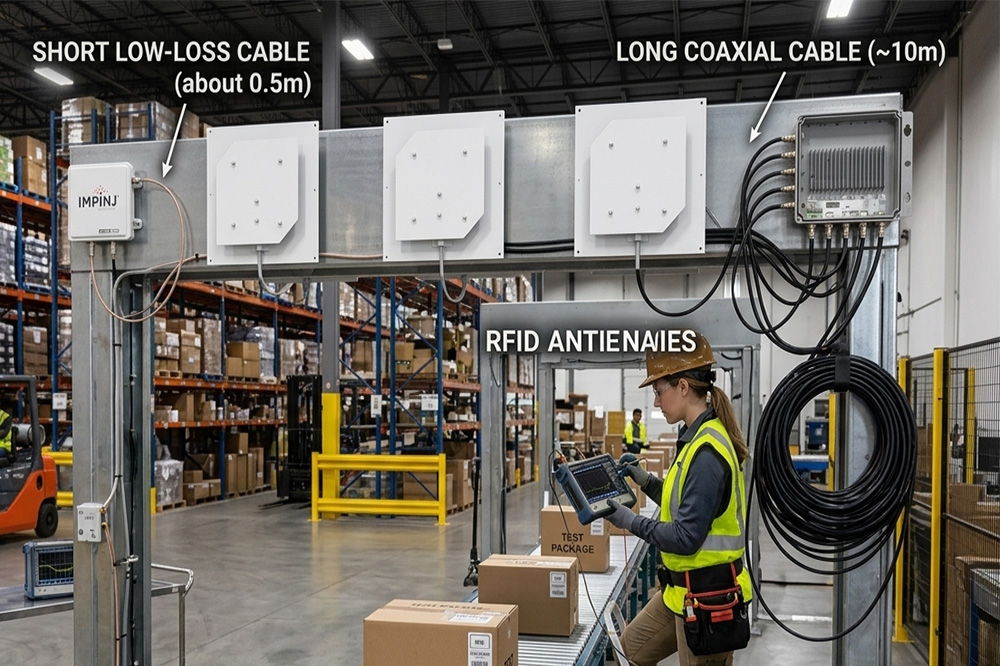
Every RF cable introduces signal loss.
The longer the cable, the greater the attenuation.
A one-meter cable isn’t much of a concern.
Ten or fifteen meters can become another story, especially if lower-quality coaxial cable is used.
The reader doesn’t know why performance changed.
It simply receives less usable RF energy.
Longer Cable Doesn’t Always Mean Better Installation
Sometimes installers position the reader far away because it seems more convenient.
A control cabinet may already have available power.
Network access is nearby.
Maintenance is easier.
Then the antenna requires a long cable.
In some situations, moving the reader closer to the antenna actually improves performance more than changing antennas.
It’s one of those small design decisions that doesn’t appear on the quotation sheet but becomes obvious after commissioning.
Compatibility Is About the Whole RF Path
An RFID system isn’t just:
Reader → Antenna
There’s more happening between those two devices.
Reader.
Connector.
Cable.
Connector again.
Antenna.
Every connection introduces a small amount of loss.
Usually it’s insignificant.
Occasionally it adds up.
Especially in outdoor projects where surge protectors or extension cables are also installed.
Looking at only one component rarely tells the whole story.
Questions Experienced Buyers Tend to Ask
After working with enough deployments, procurement teams start asking different questions.
Instead of asking only whether the antenna is compatible, they ask:
- Which connector is supplied by default?
- Can you provide TNC or SMA according to our reader?
- What cable length do you recommend?
- Is low-loss cable available?
- Can the antenna be supplied with custom cable assemblies?
- Is OEM branding supported?
- Do you test the complete antenna and cable assembly before shipment?
Those questions usually prevent installation delays later.
OEM Projects Often Require More Than Standard Connectors
OEM customers sometimes need something slightly different.
A different connector.
A custom cable length.
Specific mounting hardware.
Weatherproof cable glands.
Factory-installed jumpers.
These details may seem small individually.
Together they determine how smoothly the equipment integrates into an existing RFID system.
That’s why many RFID manufacturers offer connector and cable customization alongside the antenna itself.
Choosing an Antenna Isn’t Just Choosing an Antenna
When projects move from the laboratory into warehouses, factories or logistics centers, compatibility becomes much more practical than theoretical.
The antenna has to fit the reader.
The connector has to fit the cable.
The cable has to preserve enough RF power.
And the complete assembly has to survive the environment where it’s installed.
Manufacturers supplying complete RFID antenna solutions, including companies such as Cykeo, often support OEM connector options, customized cable lengths and compatibility testing before shipment because these details tend to matter more during installation than they do on a specification sheet.
In many deployments, the antenna that works best isn’t necessarily the one with the highest gain.
It’s the one that fits the entire system without creating unexpected problems.
Connector Comparison Table
| Connector | Typical Applications | Advantages | Considerations |
|---|---|---|---|
| TNC | Warehouse gates, industrial RFID readers | Secure threaded connection, vibration resistant | Larger physical size |
| SMA | Embedded RFID modules, compact readers | Small, lightweight, widely available | Less suitable for frequent cable movement |
| RP-TNC | Some specialized RF devices | Similar mechanical design to TNC | Not interchangeable with standard TNC |
Cable Length Impact
| Cable Length | Typical RF Loss Impact | Recommendation |
|---|---|---|
| 1–3 m | Very Low | Ideal for most indoor readers |
| 3–5 m | Low | Suitable for standard warehouse installations |
| 5–10 m | Moderate | Consider using low-loss coaxial cable |
| Over 10 m | Higher | Evaluate reader placement before extending cable |
