Reverse Logistics for SMBs: Turning Returns into a Customer Retention Tool
Author : Lori Spatt | Published On : 26 Aug 2026
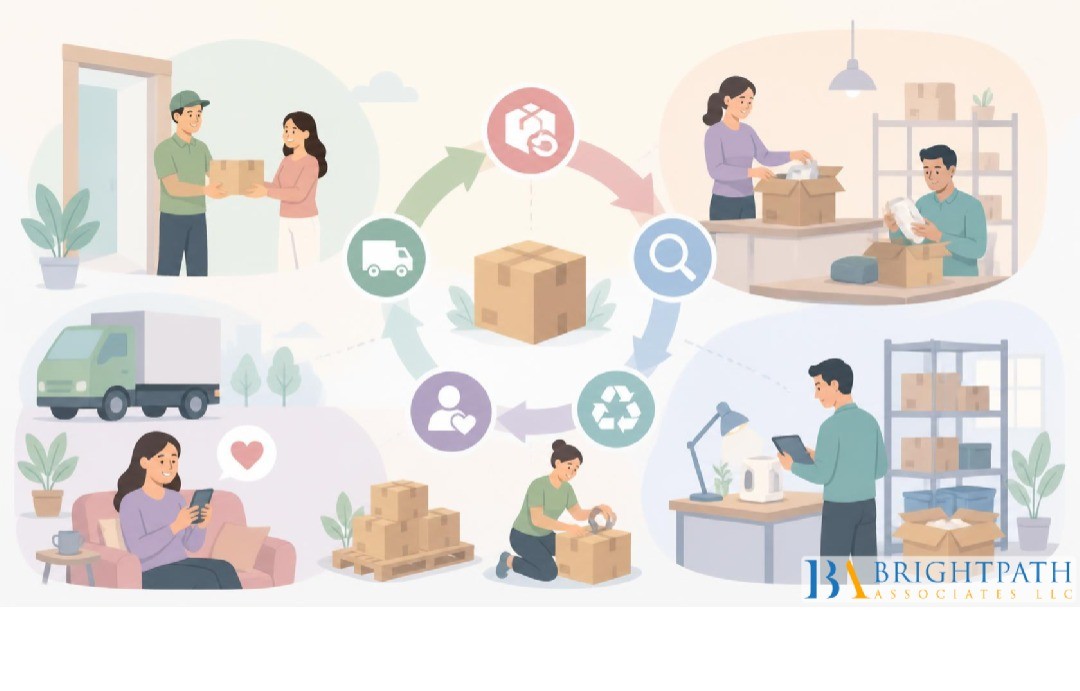
For many small and mid-sized businesses, the customer journey does not end when an order is delivered. In fact, one of the most important moments may occur when something goes wrong and the customer needs to return, exchange, repair, or replace a product.
Returns are often viewed as an unavoidable cost of doing business. Shipping expenses, inspection, repackaging, restocking, refunds, and customer-service interactions can all put pressure on margins. But there is another way to look at the process.
That question is becoming increasingly relevant for businesses operating across the Packaging and Delivery Industry. As customer expectations around convenience, transparency, and speed continue to rise, companies that manage reverse logistics effectively can potentially transform a frustrating experience into a reason for customers to remain loyal.
Why Reverse Logistics Deserves More Attention
Traditional logistics focuses on moving products from a seller to a customer. Reverse logistics addresses the movement in the opposite direction.
Products may come back because they are defective, damaged, incorrectly ordered, unwanted, overstocked, or simply no longer needed. Depending on the business model, returned products may need to be inspected, repaired, refurbished, repackaged, recycled, resold, or disposed of.
For a large organization, these processes may already be supported by dedicated systems and teams. For an SMB, however, returns can quickly become operationally complicated. A return that appears simple to the customer may involve multiple internal decisions.
Where should the product go? Who inspects it? Is it eligible for resale? Should it be repaired? What happens to the packaging? How quickly should the customer receive a refund or replacement? Without a structured process, each return can become a manual exception.
The Customer Experience Does Not Stop at Delivery
Businesses often invest heavily in improving the initial delivery experience. They optimize shipping times, packaging, tracking, and communication. But customers also judge companies based on what happens after delivery.
A customer who receives a damaged product may be disappointed initially. If the company resolves the problem quickly and professionally, however, that negative experience does not necessarily have to become a lost relationship.
In some cases, the quality of the recovery process can influence customer loyalty more than the original problem. A company cannot always prevent every return. But it can control how efficiently and transparently it manages the return.
Convenience Can Become a Competitive Differentiator
Complicated forms, unclear instructions, long waiting periods, and uncertain refund timelines can create frustration. For SMBs competing against larger businesses, this can be especially challenging because customers may compare their experience with companies that have highly developed return systems.
The solution does not necessarily require an expensive technology overhaul. A smaller company can begin by simplifying return instructions, establishing clear eligibility criteria, providing tracking information, and communicating expected timelines.
The objective is to remove uncertainty. Customers want to know what they need to do, where the product is going, what happens next, and when they can expect resolution.
Returns Can Generate Valuable Business Data
Reverse logistics also creates a source of information that companies sometimes overlook. Are certain products returned more frequently than others? Are specific sizes, models, or configurations generating disproportionate returns? Are products being damaged during transportation? Are packaging failures contributing to customer complaints?
These questions can reveal problems that are not visible in forward logistics data. For example, if a particular product consistently arrives damaged, the issue may not be the product itself. It could be inadequate protective packaging, poor palletization, or transportation handling.
A company that analyzes return patterns can potentially identify the root cause and reduce future returns. This turns reverse logistics from a reactive function into a source of operational intelligence.
Turning a Negative Moment Into a Positive Relationship
A return represents a moment when customer expectations may already be under pressure. Handled poorly, it can create frustration and accelerate customer churn.
Handled well, it can demonstrate that the company is responsive, transparent, and committed to solving problems. This is why reverse logistics deserves a place in customer-retention strategy.
The companies that succeed will not necessarily be those that experience the fewest returns. They may be the companies that understand their returns better, resolve them faster, recover more value, and learn from every transaction.
For a deeper discussion of how SMBs can use returns strategically to improve customer loyalty and operational performance, explore Reverse Logistics for SMBs Turning Returns Into a Customer Retention Tool.
As reverse logistics becomes increasingly important to customer retention and operational efficiency, companies need capable leaders who can connect logistics, technology, customer experience, and business strategy. If your organization is strengthening its delivery or logistics operations and needs specialized operational or executive talent, connect with BrightPath Associates LLC to discuss your hiring requirements.
