Retaining Technical Talent: Building People-First Culture in F&B Plants
Author : Jimmy Patel | Published On : 13 Aug 2026
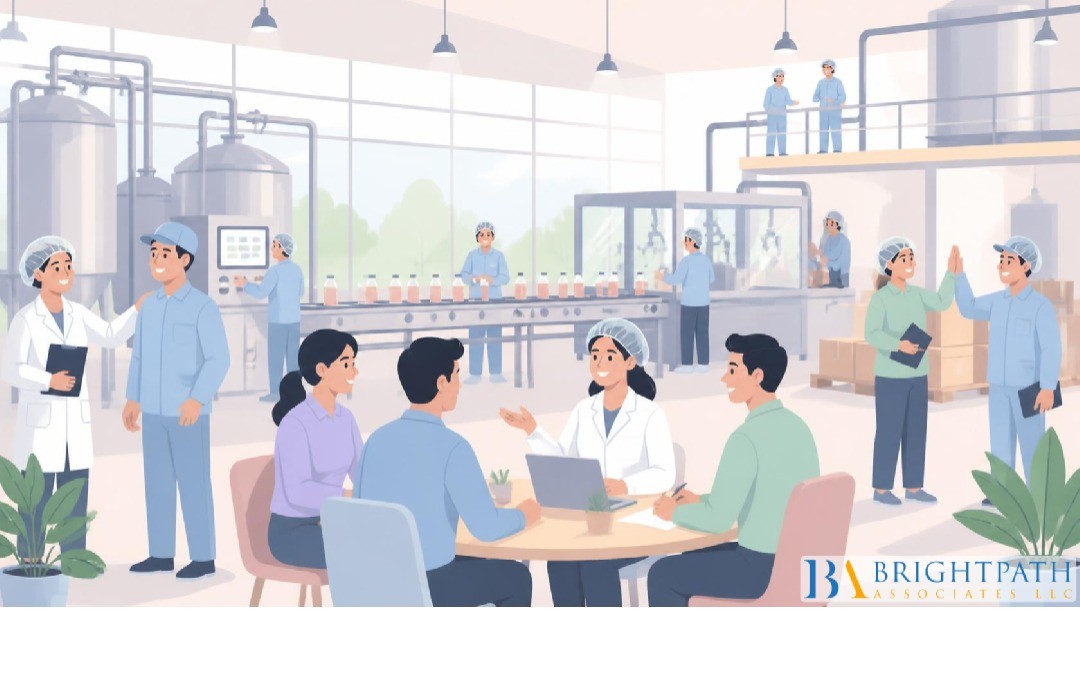
Food and beverage manufacturing is becoming increasingly dependent on automation, connected equipment, robotics, advanced controls, and data-driven production systems. Yet technology alone cannot determine whether a plant succeeds. Behind every automated production line are engineers, technicians, controls specialists, maintenance professionals, operators, and managers responsible for keeping those systems productive and reliable. As automation becomes more sophisticated, retaining technical talent is becoming a strategic priority for manufacturers.
For companies operating in the Industrial Automation Industry, the challenge is no longer simply finding people who can operate machinery. Companies need professionals who can understand automated systems, troubleshoot complex equipment, interpret production data, collaborate across departments, and continuously improve processes. Creating a people-first workplace can therefore become one of the most effective ways to retain the technical expertise required for long-term automation success.
Why Technical Talent Is Becoming Harder to Retain
Modern manufacturing plants are experiencing a significant transformation in the skills required to operate production environments. Traditional mechanical knowledge remains valuable, but employees are increasingly expected to understand programmable logic controllers, robotics, sensors, industrial networks, machine vision, data systems, and computerized maintenance platforms.
This creates intense competition for experienced technical professionals. Skilled engineers and technicians can often choose between opportunities in manufacturing, automation integrators, technology companies, logistics, energy, and other industries. If a manufacturing organization treats employees as interchangeable labor rather than valuable technical contributors, talented professionals may eventually look elsewhere.
People-First Culture Starts With Respect
A people-first culture does not mean offering superficial perks. It means creating an environment in which employees feel that their expertise, ideas, time, and career ambitions are genuinely valued. Technical employees often know exactly where operational problems exist because they interact directly with equipment and processes. When leadership consistently ignores their observations, frustration can build quickly. Conversely, when technicians and engineers are encouraged to identify problems and contribute solutions, they become active participants in continuous improvement.
Simple practices can make a meaningful difference. Managers can regularly ask employees what prevents them from doing their jobs effectively. Leaders can create structured channels for improvement suggestions and communicate what happened after an idea was submitted. When employees see their contributions influencing actual decisions, trust increases.
Automation Should Empower Employees, Not Replace Them
Automation is sometimes presented as a threat to manufacturing employment. A more effective approach is to position automation as a tool that allows employees to perform higher-value work. Robots can handle repetitive physical activities, while employees can focus on troubleshooting, optimization, quality improvement, programming, maintenance, and process development. This shift can make technical roles more intellectually rewarding.
Leadership communication is critical. Employees need to understand how automation will affect their responsibilities and what skills they will need to develop. When workers believe technology is being introduced without considering their future, resistance can increase. When they understand that automation can create opportunities for more advanced work, adoption can become easier.
Create Collaboration Across Departments
Automation connects departments that historically operated independently. Maintenance teams work with engineering. Engineering works with operations. IT increasingly interacts with industrial technology teams. Quality professionals rely on production data. Supply-chain leaders depend on manufacturing performance.
Technical talent can become frustrated when organizational silos prevent them from solving problems efficiently. Cross-functional teams can help address this challenge. When engineers, technicians, operators, quality professionals, and managers work together on improvement initiatives, employees gain broader exposure to the business while organizations benefit from diverse perspectives.
Connection Between Talent and Automation Success
Automation investments are often measured through metrics such as productivity, throughput, downtime, quality, and return on investment. But the workforce supporting those technologies should be considered part of the investment equation.
A sophisticated robotic production line cannot deliver its full potential without professionals who can maintain, program, troubleshoot, optimize, and continuously improve it. Losing experienced technical employees can therefore reduce the return on expensive automation investments. The BrightPath article Retaining Technical Talent in F&B Plants explores this connection between workforce strategy, employee experience, and the technological evolution of food and beverage manufacturing plants.
Building Workforce Ready for Next Generation of Manufacturing
A people-first culture can help manufacturers retain institutional knowledge, develop future technical leaders, encourage innovation, and improve employee commitment. It also allows companies to treat workforce development as a strategic component of automation rather than a separate HR initiative.
For small and mid-sized manufacturers, this can be particularly valuable. They may not always be able to compete with larger organizations on salary or benefits, but they can differentiate themselves through meaningful responsibilities, career development, direct access to leadership, technical learning opportunities, and a workplace culture where employees can see the impact of their contributions.
