Reinventing Business Model: Turning Farming Operations into SaaS Platforms
Author : Alex Turner | Published On : 16 Sep 2026
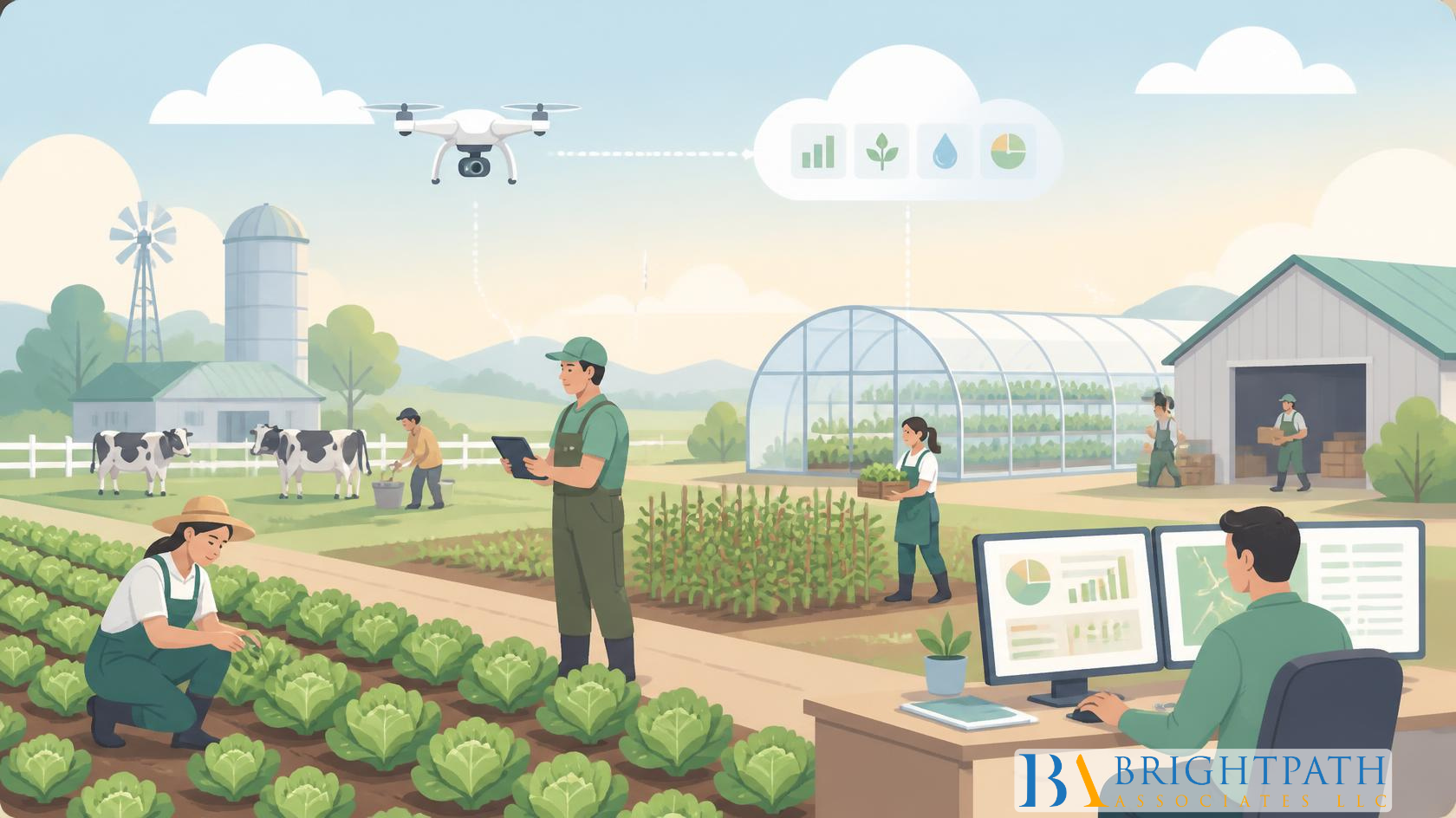
For generations, the economics of farming have been tied to land, equipment, labor, weather, yields, and commodity markets. A successful farming operation was largely defined by how efficiently it could produce and sell agricultural output. But technology is introducing a different possibility: what if a farming company could monetize not only what it grows, but also what it knows?
The rise of connected equipment, precision agriculture, artificial intelligence, sensors, satellite imagery, and cloud computing is creating an opportunity for farming businesses to turn operational knowledge into digital products. The concept is explored in greater detail in BrightPath Associates’ discussion of turning farming operations into SaaS platforms, where agriculture is viewed not simply as a production industry but as a potential source of scalable digital services.
For small and mid-sized agricultural enterprises, this shift could represent a significant change in how growth is approached.
The Farm Is Becoming a Data-Generating Enterprise
Modern farms generate information across nearly every stage of production. Planting schedules, irrigation activity, soil conditions, machinery performance, weather patterns, crop health, fertilizer applications, labor utilization, harvesting, storage, and transportation can all generate valuable operational data.
Historically, much of this information remained fragmented. Farmers relied heavily on experience, paper records, individual equipment systems, spreadsheets, and disconnected software. Today, digital tools can bring these sources together and transform raw information into actionable insights.
A farm does not necessarily need to become a software company overnight. Instead, it can begin by identifying repetitive operational challenges that can be standardized, measured, and improved through technology.
For example, an internal system developed to monitor irrigation efficiency could eventually become a digital service for other producers. A crop-monitoring workflow created for one operation could potentially be adapted for neighboring farms or agricultural cooperatives.
Precision Agriculture Creates the Foundation
Precision agriculture is particularly important because it transforms farming from a uniform activity into a data-driven management process. Different parts of the same field can have different soil conditions, moisture levels, crop health, and productivity potential.
Sensors, GPS-enabled machinery, satellite imagery, drones, and analytics can help agricultural managers identify these differences and make more targeted decisions. For a farming business, the long-term opportunity is not limited to purchasing precision-agriculture technology. The deeper opportunity is understanding how technology changes the company's operating model.
If a farming organization develops a reliable process for combining field information, weather data, equipment information, and historical production records, that process could potentially be packaged into a digital platform.
SaaS Introduces a Different Revenue Logic
Traditional agricultural revenue is closely connected to production cycles. Crop yields, commodity prices, input costs, weather conditions, and market demand can all influence financial performance. Software-as-a-Service introduces another type of revenue model: recurring income based on continued customer use.
An agricultural SaaS platform could potentially provide crop monitoring, equipment tracking, resource planning, compliance documentation, forecasting, sustainability measurement, or farm-management capabilities throughout the year.
That recurring relationship can change how a company thinks about customers. Instead of interacting primarily around a harvest or transaction, a technology-enabled farming business may interact with customers continuously through its platform.
However, recurring revenue does not come automatically from purchasing technology. SaaS requires ongoing product development, cybersecurity, customer support, software maintenance, data governance, and user experience management.
Agriculture Needs Technology Leadership, Not Technology Alone
A traditional agricultural organization may have outstanding expertise in agronomy, production, equipment, supply chains, and farm management. A SaaS business, however, also requires capabilities in software engineering, product management, data science, cybersecurity, digital sales, customer success, and technology leadership.
A software executive who understands technology but has little appreciation for agricultural economics may struggle to translate customer needs into useful products. Conversely, an agricultural expert may understand the operational problem but lack experience building a scalable software business.
The most valuable leaders may therefore be those who can operate between both worlds. For U.S. agricultural companies exploring this transition, BrightPath Associates’ Farming Industry expertise is relevant to a broader talent question: how do you build leadership teams capable of combining agricultural knowledge with digital transformation?
Could Your Farm Become a Technology Business?
The most interesting question for agricultural executives may not be whether SaaS belongs in farming. It may be whether the knowledge already embedded within their operation could become a scalable digital asset.
A farm that develops a better way to manage irrigation, monitor equipment, forecast production, document sustainability, or coordinate field operations may be sitting on more than an internal process. It may possess the foundation of a future technology product.
But realizing that opportunity requires more than software. It requires business-model thinking, disciplined data management, product expertise, strategic partnerships, and leadership capable of bridging agriculture and technology. As farming continues to evolve, the competitive advantage may increasingly come from the ability to turn operational experience into repeatable intelligence.
For farming companies exploring this question, the right leadership and specialized talent can make the difference between purchasing technology and building a technology-enabled business. BrightPath Associates LLC works with small and mid-sized enterprises to identify the specialized and executive talent needed to navigate evolving agricultural business models.
