Reducing Scrap Rates: Three Low-Code Tools for Immediate ROI
Author : Daniel Sparks | Published On : 20 Aug 2026
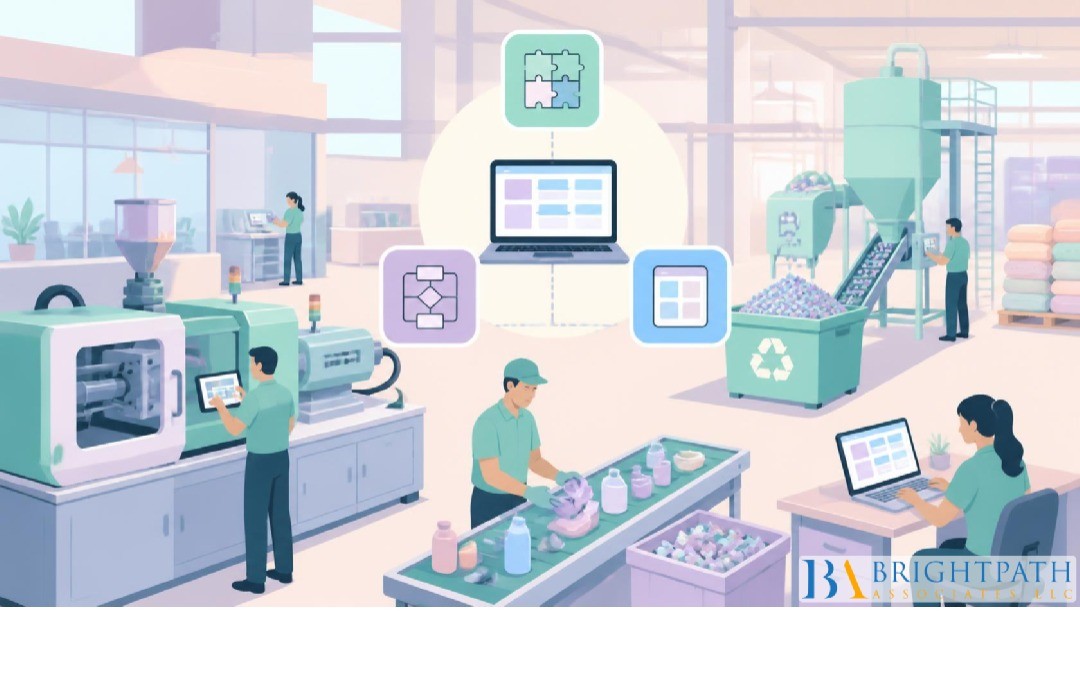
For plastics manufacturers, scrap is more than a production nuisance. Every rejected part, defective batch, inconsistent component, or unusable material represents lost raw materials, machine time, labor, energy, and production capacity. When margins are under pressure, even modest improvements in scrap rates can have a meaningful effect on profitability.
The challenge is that many small and mid-sized manufacturers operate with a mixture of legacy equipment, manual processes, spreadsheets, and disconnected production systems. Investing in a large-scale digital transformation program may be financially or operationally difficult. This is where low-code technology can offer an alternative.
Low-code tools allow manufacturers to create applications, dashboards, workflows, and data connections with significantly less traditional programming. Instead of waiting for a lengthy enterprise software implementation, plastics companies can address specific operational problems and begin measuring results more quickly. The BrightPath Associates analysis, Reducing Scrap Rates for Immediate ROI, explores how practical digital tools can help manufacturers identify production problems and respond faster.
Why Low-Code Technology Is Attractive to SMBs
Large enterprise technology projects can require significant investment, specialized IT resources, extensive employee training, and long implementation cycles. Small and mid-sized plastics manufacturers may not have the budget or personnel for such projects.
Low-code platforms offer a more incremental approach. A company can begin with one production problem, develop a targeted solution, test it with employees, measure the results, and expand the application if it proves successful.
This approach reduces the risk associated with large technology investments. More importantly, it allows manufacturing leaders to focus technology spending on measurable operational problems rather than adopting technology simply because it is considered innovative.
Tool One: Digital Production and Scrap Tracking
One of the simplest low-code applications is a digital scrap-tracking system. Instead of relying on paper forms or spreadsheets, operators can enter defect information directly into a digital interface. Depending on the manufacturing environment, the application can record product type, production line, machine, shift, material batch, defect category, quantity rejected, and other relevant information.
This creates a centralized source of production-quality information. Managers can then analyze patterns that may otherwise remain hidden. For example, scrap may increase during particular shifts, after material changes, or when a specific machine operates under certain conditions. A digital system can make these relationships easier to identify.
Tool Two: Automated Quality Workflows
Quality management is another area where low-code applications can provide significant value. A manufacturer can create digital workflows that automatically route quality issues to the appropriate supervisor or engineering team.
When an operator records a defect that exceeds a predefined threshold, the system can initiate a review process. This can reduce the delay between identifying a problem and responding to it. In traditional environments, quality information may remain on a paper form until someone reviews it later. By that time, a machine may have produced hundreds or thousands of additional components.
Automated workflows shorten the feedback loop. The sooner production teams know that a process is drifting outside expected performance, the sooner they can investigate and potentially prevent additional scrap.
Tool Three: Real-Time Production Dashboards
A third practical application is the development of real-time production dashboards. Managers often need to understand several operational indicators simultaneously, including scrap rates, production volumes, downtime, cycle times, machine performance, and quality results.
A low-code dashboard can consolidate these metrics into a more accessible format. The goal is not to overwhelm managers with data. An effective dashboard should highlight the information that requires attention.
If scrap on a specific production line suddenly increases, managers should be able to recognize the deviation quickly and investigate. This can transform scrap management from a retrospective activity into a more proactive process.
Leadership and the Plastics Workforce
Technology adoption also changes the skills required within plastics manufacturing. Companies increasingly need professionals who understand production processes while also being comfortable with data, automation, digital workflows, and continuous improvement.
This is particularly important as manufacturers modernize without replacing their entire equipment base. Leaders must be able to connect shop-floor realities with broader digital strategies.
BrightPath Associates supports organizations across the Plastics Industry with executive recruitment solutions designed to help companies identify leadership talent across manufacturing, engineering, operations, supply chain, automation, technology, quality, and related functions.
Conclusion: Start Small, Measure Quickly, Scale Intelligently
Reducing scrap does not always require a multimillion-dollar manufacturing transformation. For many small and mid-sized plastics manufacturers, meaningful improvement can begin with better visibility, faster communication, and more disciplined data collection.
Low-code tools provide a practical way to address these needs. Digital scrap tracking can make production problems visible. Automated quality workflows can shorten response times. Real-time dashboards can help managers identify emerging issues before they become expensive problems.
As plastics manufacturing becomes increasingly connected, companies that combine experienced leadership with practical digital tools will be better positioned to improve quality, control costs, and compete effectively.
