Reducing OpEx Through Predictive Maintenance: Mid-Market Case Study
Author : Shawn Fisher | Published On : 16 Jul 2026
The metal and mining industry has always operated in a challenging environment where profitability depends on maximizing equipment availability, maintaining safe operations, and controlling costs. Whether extracting raw materials, processing ores, or manufacturing metal products, companies rely on heavy machinery that operates under demanding conditions. When critical assets fail unexpectedly, the consequences extend far beyond repair expenses. Production delays, safety risks, missed customer commitments, and rising maintenance costs can quickly reduce profitability.
As competition increases and operating expenses continue to rise, small and mid-sized mining and metals companies are seeking practical ways to improve efficiency without sacrificing reliability. One strategy that has gained significant momentum is predictive maintenance. Rather than waiting for equipment to fail or replacing components on a fixed schedule, predictive maintenance uses operational data to anticipate problems before they become costly breakdowns. This proactive approach enables organizations to reduce downtime, optimize maintenance spending, and improve overall operational performance.
Companies interested in broader trends shaping leadership, technology, and workforce development can explore the Mining and Metals Industry, where innovation continues to transform industrial operations. Traditional maintenance programs generally follow one of two approaches. Reactive maintenance addresses equipment only after it fails, often resulting in emergency repairs and unplanned production interruptions. Preventive maintenance schedules inspections and component replacements at predetermined intervals regardless of equipment condition. While preventive maintenance is more effective than reactive maintenance, it can still lead to unnecessary servicing or premature replacement of functioning parts.
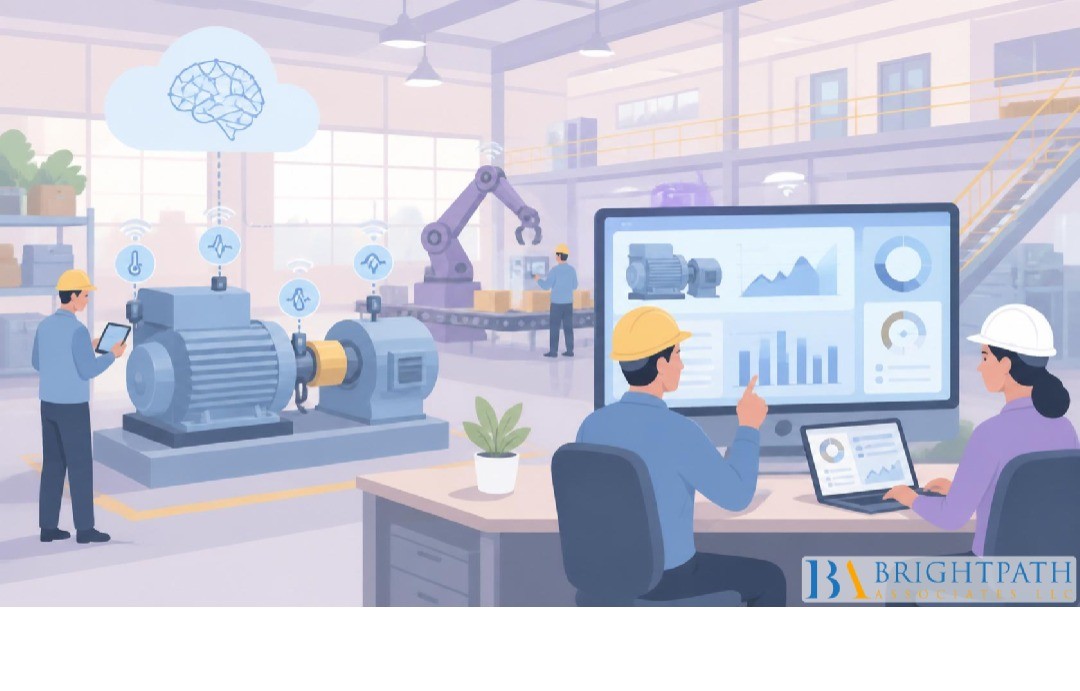
Predictive maintenance introduces a more intelligent strategy by monitoring equipment performance in real time. Modern sensors collect information such as vibration, temperature, pressure, lubrication quality, electrical performance, and operating conditions. Advanced analytics identify trends that indicate developing problems, allowing maintenance teams to intervene before failures occur. This approach minimizes unnecessary maintenance while significantly reducing unexpected downtime.
The financial benefits of predictive maintenance are substantial. Unplanned equipment failures often require overtime labor, expedited replacement parts, emergency contractor services, and production recovery efforts. In mining and metals operations, a single failure involving crushers, conveyors, furnaces, pumps, or processing equipment can disrupt multiple production stages. Predictive maintenance helps organizations avoid these costly disruptions by addressing issues during scheduled maintenance windows.
Improved equipment reliability also enhances production planning. Manufacturing schedules become more predictable when machinery operates consistently. Reliable operations support on-time customer deliveries, improve resource allocation, and reduce operational uncertainty. Greater predictability enables leadership teams to make better-informed business decisions while strengthening customer confidence.
Worker safety is another important advantage. Emergency repairs often require maintenance personnel to work under stressful conditions with limited preparation. By identifying equipment deterioration early, organizations reduce the need for urgent interventions and create safer working environments. Planned maintenance allows technicians to follow established safety procedures while minimizing exposure to unnecessary risks.
Digital transformation has accelerated the adoption of predictive maintenance across industrial sectors. Internet of Things (IoT) devices, cloud-based monitoring platforms, artificial intelligence, and machine learning technologies enable organizations to analyze vast amounts of equipment data efficiently. Even smaller companies can now implement scalable monitoring solutions that were once available only to large enterprises. These technologies provide maintenance teams with actionable insights rather than overwhelming them with raw operational data.
Successful implementation begins by identifying the most critical assets. Organizations should prioritize equipment whose failure would have the greatest impact on production, safety, or operating costs. Monitoring these assets first allows companies to demonstrate measurable results before expanding predictive maintenance programs throughout the facility.
Employee engagement remains essential for long-term success. Technology provides valuable information, but experienced maintenance professionals interpret data, diagnose root causes, and implement corrective actions. Investing in employee training ensures maintenance teams understand both the technology and the operational processes it supports. Combining technical expertise with advanced monitoring systems creates stronger maintenance programs than relying on technology alone.
Cross-functional collaboration further strengthens predictive maintenance initiatives. Maintenance, operations, engineering, production, finance, and executive leadership should work together to establish performance objectives, prioritize investments, and evaluate results. Shared accountability encourages continuous improvement while ensuring maintenance strategies align with broader business goals.
Data quality plays a crucial role in predictive maintenance effectiveness. Reliable sensors, consistent data collection, and accurate equipment records improve analytical accuracy and support better decision-making. Organizations should establish standardized procedures for data management while regularly validating monitoring systems to maintain confidence in predictive insights.
Predictive maintenance also contributes to sustainability initiatives. Efficient equipment typically consumes less energy, generates less waste, and operates with greater reliability. Extending asset life reduces unnecessary replacement while lowering the environmental impact associated with manufacturing and transporting new equipment. Companies increasingly recognize that operational efficiency and environmental responsibility often complement one another.
Supply chain resilience benefits as well. Unexpected equipment failures frequently disrupt material flow, inventory planning, and customer deliveries. Reliable machinery supports smoother production schedules while reducing dependence on emergency parts procurement. Strong operational stability improves supplier relationships and enhances customer satisfaction.
Leadership commitment is often the deciding factor in whether predictive maintenance programs succeed. Executives who view maintenance as a strategic investment rather than simply a cost center are more likely to allocate resources toward technology, employee development, and continuous improvement. This long-term perspective enables organizations to achieve sustainable operational gains rather than focusing solely on short-term cost reductions.
Equally important is attracting professionals who can manage modern industrial operations. Engineers, reliability specialists, maintenance managers, automation experts, data analysts, and operations leaders all contribute to successful predictive maintenance strategies. Organizations with experienced leadership teams are better positioned to integrate new technologies while maintaining operational excellence. Businesses seeking additional perspectives on maintenance optimization and operational efficiency can also review Reducing OpEx Through Predictive Maintenance. Exploring different approaches helps organizations evaluate how predictive strategies can support long-term operational and financial objectives.
The future of the metal and mining industry will increasingly depend on intelligent operations, data-driven decision-making, and resilient maintenance practices. Predictive maintenance is no longer reserved for the largest industrial organizations. It has become an accessible strategy that enables small and mid-sized businesses to improve equipment reliability, reduce operating expenses, strengthen workplace safety, and remain competitive in a rapidly evolving marketplace.
