Reducing Non-Potable Water Usage in Beverage Production
Author : Jimmy Patel | Published On : 27 Aug 2026
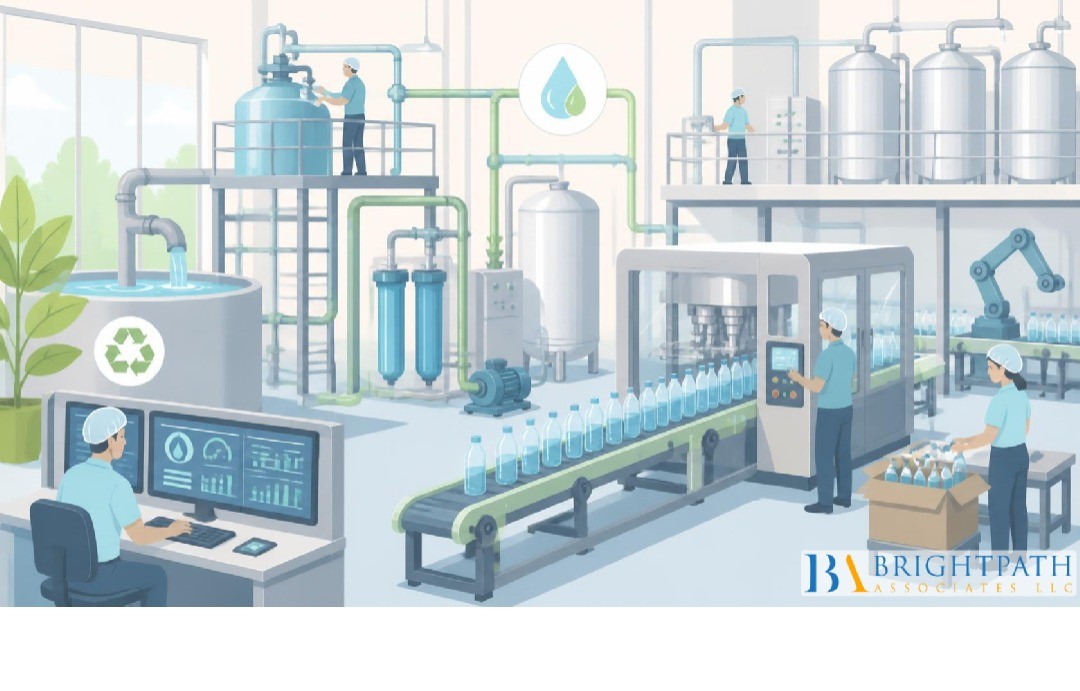
Water is one of the most important resources in beverage manufacturing, but it is also one of the areas where production facilities can experience significant operational inefficiencies. Cleaning processes, cooling systems, equipment maintenance, sanitation, utilities, and other plant activities can require substantial amounts of water that does not necessarily become part of the final beverage.
For beverage manufacturers, reducing this non-potable water usage is no longer simply an environmental initiative. It can also become an operational and financial priority. The challenge is finding ways to reduce consumption without compromising sanitation, equipment performance, product quality, or production schedules. This is where automation and data-driven manufacturing can make a meaningful difference.
Companies operating in the Industrial Automation Industry are increasingly helping manufacturers move toward more intelligent, measurable, and efficient production environments. For beverage producers, automation can provide the visibility and control needed to understand where water is being consumed and where unnecessary usage can be eliminated.
Why Non-Potable Water Consumption Deserves Attention
Manufacturing plants can consume water for activities such as equipment cleaning, floor washing, cooling, boiler operations, sanitation, and other utility functions. When these processes operate according to fixed schedules rather than actual production conditions, facilities may use more water than necessary.
For example, a cleaning cycle may run for a predetermined amount of time even when equipment becomes sufficiently clean sooner. Similarly, cooling systems may operate continuously when actual demand fluctuates throughout the production day.
These inefficiencies can remain difficult to identify when facilities lack detailed consumption data. The first step toward reducing water usage is therefore visibility.
Automation Turns Water Consumption Into Measurable Data
Modern industrial automation systems can connect sensors, meters, programmable logic controllers, supervisory control systems, and analytics platforms to provide real-time information about plant operations.
Water-flow meters can help identify how much water different processes consume. Pressure and temperature sensors can provide additional information about equipment conditions. Automated monitoring can then allow production teams to compare water consumption against production volumes and operating conditions.
Which production line is consuming the most water? Which cleaning cycle uses the greatest volume? Does consumption increase during particular shifts? Are there unexpected flow patterns when equipment is idle? Those answers can reveal opportunities that might otherwise remain hidden.
Smart Cleaning Can Reduce Waste
Cleaning-in-place, commonly known as CIP, is an important process in beverage manufacturing. Cleaning systems must meet strict hygiene requirements, but excessive cleaning can consume unnecessary water and chemicals.
Automation can help optimize cleaning cycles by monitoring process parameters and controlling when different stages begin and end. Rather than relying entirely on fixed time intervals, manufacturers can use data to understand whether a process has achieved its required cleaning conditions.
This does not mean reducing cleaning standards. Instead, the objective is to make cleaning more precise and repeatable. Automated valves, flow controls, sensors, and programmable systems can help ensure that water is delivered where it is needed and stopped when the relevant process is complete.
Leak Detection Can Deliver an Immediate Payoff
Water losses do not always come from major production processes. Small leaks can occur around pipes, valves, hoses, pumps, cooling systems, and other equipment. Individually, these leaks may appear insignificant. Collectively, they can represent substantial resource loss over time.
Automation can help identify abnormal flow patterns. If a facility normally consumes very little water during periods when production is stopped, but sensors detect continuous flow, the system can flag the anomaly for investigation.
This creates an opportunity for predictive maintenance. Instead of waiting for a visible leak or equipment failure, maintenance teams can investigate unusual consumption patterns before they become larger problems.
Data Can Help Identify the Best Conservation Opportunities
One of the biggest advantages of automated monitoring is that it allows manufacturers to prioritize. Not every process will offer the same water-saving potential.
A facility might discover that one production line consumes significantly more water per unit of output than another. Another facility might find that water consumption increases during changeovers or sanitation procedures.
Without measurement, management may attempt to reduce water usage across the entire plant. With detailed data, resources can be directed toward the processes with the greatest potential impact. This makes sustainability initiatives more practical because improvement efforts can be connected to measurable operational outcomes.
Leadership Must Treat Water Efficiency as an Operational Strategy
Reducing non-potable water consumption should not be treated solely as an environmental department initiative. Senior leadership can connect water efficiency to broader business objectives such as operating costs, resource resilience, regulatory preparedness, equipment reliability, and corporate sustainability.
Executives should ask whether the organization has sufficient visibility into water consumption and whether its automation infrastructure can support more intelligent resource management. It is to build a manufacturing environment where water consumption is measurable, controllable, and continuously improvable.
For a deeper look at strategies for reducing water use in beverage manufacturing, explore Reducing Non-Potable Water Usage in Beverage Production. Water efficiency illustrates a broader transformation occurring across industrial manufacturing.
Factories are moving away from systems based primarily on fixed schedules and manual observation toward environments where sensors, automation, analytics, and connected equipment provide continuous operational insight.
