Reactor Temperature Sensor Calibration in Petrochemical Manufacturing
Author : Ncqc laboratory | Published On : 26 Oct 2026
Temperature control is essential in petrochemical manufacturing, where reactions depend on defined conditions. Inaccurate readings can affect product quality and process efficiency. Reactor sensors help monitor conditions. Reactor temperature sensor calibration determines whether readings meet specified accuracy requirements.
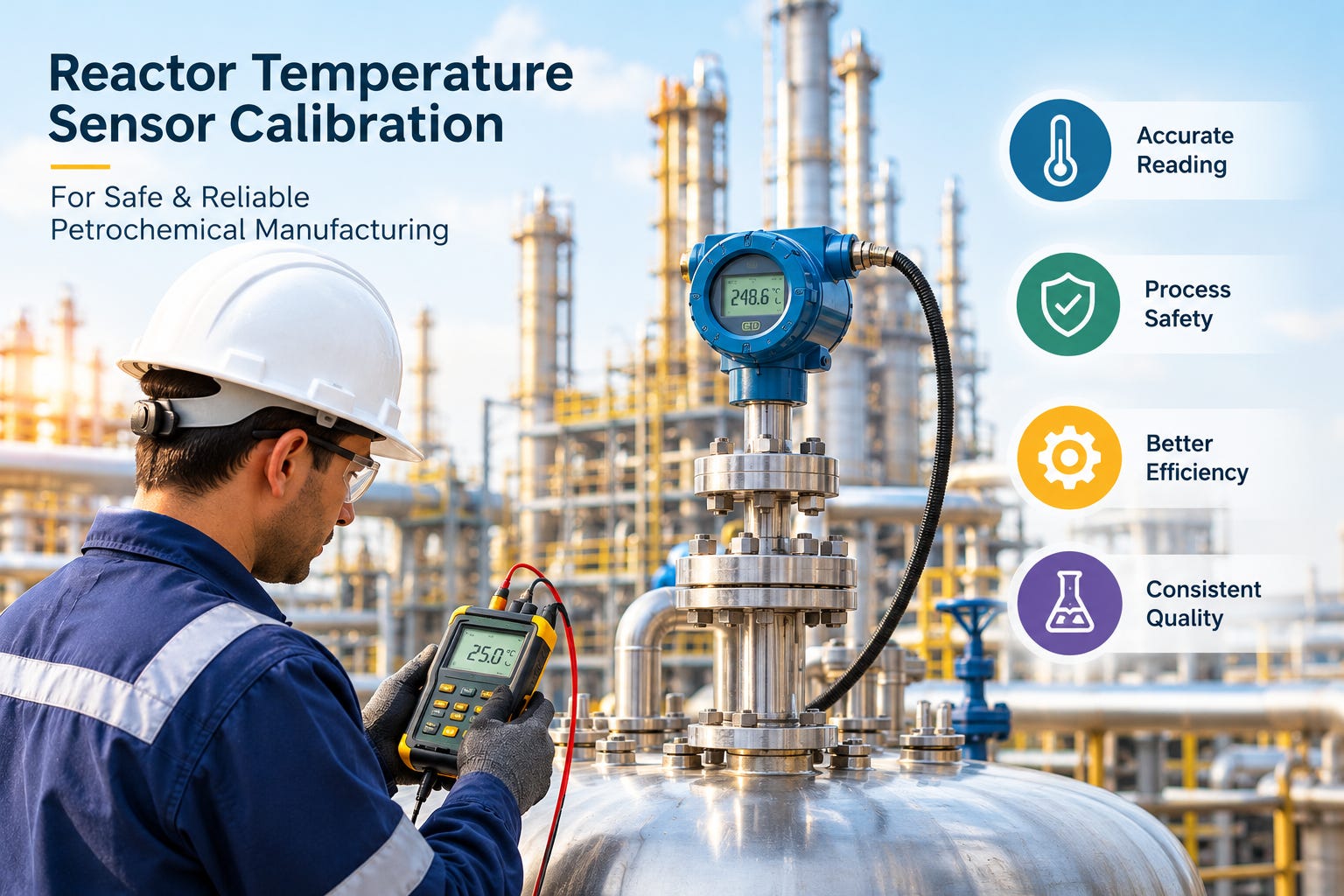
Types of Temperature Sensors Used in Petrochemical Reactors
Resistance temperature detectors (RTDs) are suitable for applications requiring stable and precise readings within their operating range, while thermocouples are commonly used in high-temperature reactor environments. The appropriate sensor depends on the process conditions and the required measurement range.
In petrochemical reactors, sensor positioning is equally important. Factors such as installation depth, thermowell design, and temperature differences within the reactor can affect the readings. Proper installation helps ensure that measurements represent the conditions at the intended monitoring point.
Why Reactor Temperature Sensor Calibration Matters
A sensor may indicate a temperature different from the actual temperature at the measurement point. This error can lead operators to make unsuitable process adjustments or may obscure changes in reaction conditions. Calibration compares the instrument indication with a suitable reference under defined conditions. Results help quantify measurement error and determine whether the sensor meets established acceptance criteria.
However, calibration alone does not guarantee safe operation. Appropriate process controls, alarms, interlocks, and independent protective systems must be designed, maintained, and tested according to the facility’s requirements.
Common Methods for Reactor Temperature Sensor Calibration
The petrochemical calibration process depends on the sensor type, operating temperature range, required accuracy, accessibility, and whether the instrument can be safely removed from the reactor.
· Comparison calibration: The sensor is compared with a suitable reference thermometer or temperature standard at selected points.
· Dry-block calibration: A controlled dry-block calibrator provides a temperature source for compatible sensors, with readings assessed against a reference.
· Temperature bath calibration: A stable bath may be suitable when the sensor and temperature range are compatible and adequate immersion and uniformity can be achieved.
· In-situ checks: Field checks can help assess installed instrumentation when removal is impractical. Their limitations should be documented, as they may not provide the same evidence as a complete calibration.
Records should include test conditions, reference equipment, uncertainty where applicable, and acceptance limits.
Sensor Calibration and Loop Testing
A reactor temperature measurement system may include a sensing element, connecting cables, a transmitter, and a control system. Calibrating the sensing element does not automatically verify the entire measurement chain. Sensor calibration compares the element with a reference; loop testing or functional checks assess signal transmission and associated components within the defined test scope.
Where measurements support control or protective functions, the procedure should identify which components require testing. Work on installed equipment must follow site safety procedures and account for process conditions and isolation requirements.
Responding to Calibration Results
If results fall outside specified limits, instrumentation personnel should investigate possible causes, including sensor degradation, wiring faults, transmitter configuration, or problems elsewhere in the measurement chain. Depending on the findings, adjustment, repair, replacement, or further testing may be needed.
The facility should also assess whether earlier readings could have affected product quality, process decisions, or compliance. Documenting the investigation and corrective action supports traceability and future maintenance planning.
Common Calibration Challenges in Petrochemical Plants
High temperatures, repeated thermal cycling, vibration, and corrosive surroundings can affect sensor performance. Access may be difficult when sensors are installed inside reactor assemblies, and removal may require planned shutdowns. Suitable reference equipment, trained personnel, and consistent test conditions are therefore important. The calibration method and any claims about accredited service scope should match the sensor type, temperature range, and work actually performed.
Conclusion
Accurate reactor temperature measurements are essential for maintaining product quality, process consistency, and operational reliability in petrochemical manufacturing. Regular performance checks, appropriate testing methods, and proper documentation help identify measurement deviations and support informed maintenance decisions. NCQC Laboratory provides calibration services to help industries maintain reliable measurement systems and support their quality requirements.
