Rapid Prototyping for SMEs: Competing with Industry Giants
Author : Daniel Sparks | Published On : 06 Aug 2026
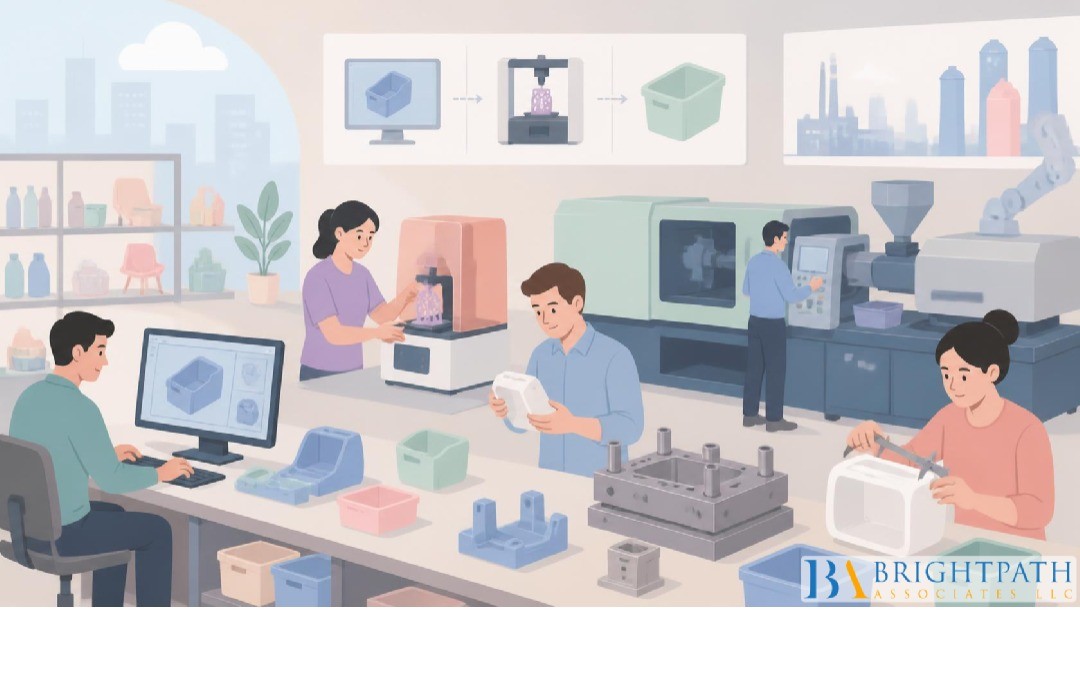
For decades, the plastics manufacturing industry has been dominated by large organizations with extensive production capabilities, global supply chains, and significant research and development budgets. Small and mid-sized enterprises (SMEs) often found themselves competing at a disadvantage, particularly when customers demanded shorter product development cycles, customized designs, and faster time-to-market. Today, however, rapid prototyping is changing that equation. Advances in additive manufacturing, digital design, simulation software, and agile product development have enabled smaller manufacturers to innovate faster, reduce development costs, and compete more effectively with much larger competitors.
Rapid prototyping is no longer viewed as a luxury reserved for multinational manufacturers. It has become a strategic business capability that enables SMEs to validate ideas, improve product quality, accelerate customer approvals, and reduce financial risks associated with traditional product development. Instead of investing heavily in tooling before validating a concept, manufacturers can test, refine, and improve designs through multiple iterations before committing to full-scale production.
Companies across the Plastics Industry are increasingly integrating rapid prototyping into their product development strategies to improve innovation while responding more effectively to changing customer expectations. As product lifecycles become shorter and customization becomes more common, the ability to develop products quickly has become a significant competitive advantage.
One of the greatest strengths of rapid prototyping is speed. Traditional product development often required weeks or months to produce physical samples for evaluation. Every design modification could introduce additional delays and expenses. Modern prototyping technologies allow manufacturers to transform digital concepts into functional prototypes within days or even hours. This accelerated development process enables engineering teams to identify design improvements early, minimizing costly changes later in production.
Rapid prototyping also enhances collaboration between manufacturers and customers. Instead of discussing design concepts through drawings alone, businesses can present physical prototypes that customers can evaluate, test, and provide feedback on. This collaborative approach reduces misunderstandings while increasing confidence that final products will meet performance expectations. Customers appreciate being involved throughout development, strengthening long-term business relationships built on transparency and responsiveness.
Customization has become another important driver of competitiveness. Customers increasingly seek products tailored to specific applications rather than standardized solutions. SMEs often excel at serving niche markets because they can respond more quickly to specialized requirements. Rapid prototyping supports this flexibility by enabling manufacturers to create customized product variations without disrupting broader production schedules. Whether developing specialized packaging components, industrial parts, or consumer products, rapid iteration helps organizations deliver solutions that closely match customer needs.
Product quality also benefits from iterative development. Early prototypes reveal potential design weaknesses, ergonomic concerns, material limitations, or manufacturing challenges before production begins. Engineering teams can optimize dimensions, material selection, functionality, and assembly methods through repeated testing. This process reduces defects while improving product reliability, ultimately enhancing customer satisfaction and reducing warranty costs.
Cost management represents another significant advantage. While prototyping involves initial investment, it often reduces overall development expenses by identifying problems before expensive tooling or production equipment is commissioned. Businesses avoid unnecessary redesigns, minimize material waste, and reduce the likelihood of manufacturing disruptions after product launch. For resource-conscious SMEs, controlling development costs creates opportunities to invest more confidently in future innovation.
Technology continues expanding the possibilities of rapid prototyping. Three-dimensional printing, computer-aided design (CAD), digital simulation, reverse engineering, and virtual testing allow manufacturers to evaluate multiple design alternatives efficiently. Digital workflows also improve communication between engineering, production, quality assurance, procurement, and customers, creating a more integrated product development process. These technologies enable organizations to make informed decisions based on measurable performance rather than assumptions.
Innovation becomes more accessible when experimentation carries lower risk. Engineers are more willing to explore creative ideas when prototypes can be produced quickly and affordably. This culture of experimentation encourages continuous improvement while supporting the development of differentiated products that help SMEs compete in crowded markets. Rather than relying solely on incremental improvements, organizations can pursue more ambitious innovations with greater confidence.
Supply chain flexibility has become increasingly valuable as manufacturers navigate fluctuating demand and material availability. Rapid prototyping enables businesses to evaluate alternative materials, redesign components for easier sourcing, and respond more quickly to customer requests. This adaptability strengthens operational resilience while reducing dependence on lengthy external development cycles.
Another benefit is improved communication across departments. Product development often requires collaboration among engineering, manufacturing, quality assurance, marketing, sales, and procurement teams. Physical prototypes provide a common reference point, making it easier to identify challenges, discuss improvements, and align expectations before production begins. Better communication reduces project delays while improving overall efficiency.
As digital manufacturing capabilities continue evolving, workforce skills have become an equally important competitive factor. Manufacturers increasingly require professionals with expertise in product design, additive manufacturing, materials science, automation, quality management, and digital engineering. Recruiting individuals who combine technical knowledge with problem-solving abilities helps organizations maximize the value of rapid prototyping technologies while supporting long-term innovation. Companies that invest in both advanced technology and skilled talent create stronger foundations for sustainable growth.
Leadership also plays a critical role in successful product innovation. Executives must foster an environment where experimentation, collaboration, and continuous learning are encouraged. Rather than viewing rapid prototyping as a standalone engineering activity, forward-thinking organizations integrate it into broader business strategies that emphasize customer responsiveness, operational excellence, and market agility. This strategic mindset enables businesses to respond confidently to changing market conditions while maintaining high standards of quality and efficiency.
Businesses interested in learning more about innovation strategies for smaller manufacturers can also explore Rapid Prototyping for SMEs Industry Giants, which provides additional perspectives on how agile product development supports long-term competitiveness.
Ultimately, rapid prototyping has become much more than a product development tool. It is a strategic capability that enables SMEs to innovate faster, improve product quality, strengthen customer collaboration, and compete effectively against larger organizations. As customer expectations continue evolving and product lifecycles become increasingly compressed, businesses that embrace agile development processes will be better positioned to capture new opportunities while maintaining operational flexibility.
