PTFE Micronized Powder for Coatings, Lubricants and Engineering Plastics
Author : Jade Chemicals | Published On : 16 Nov 2026
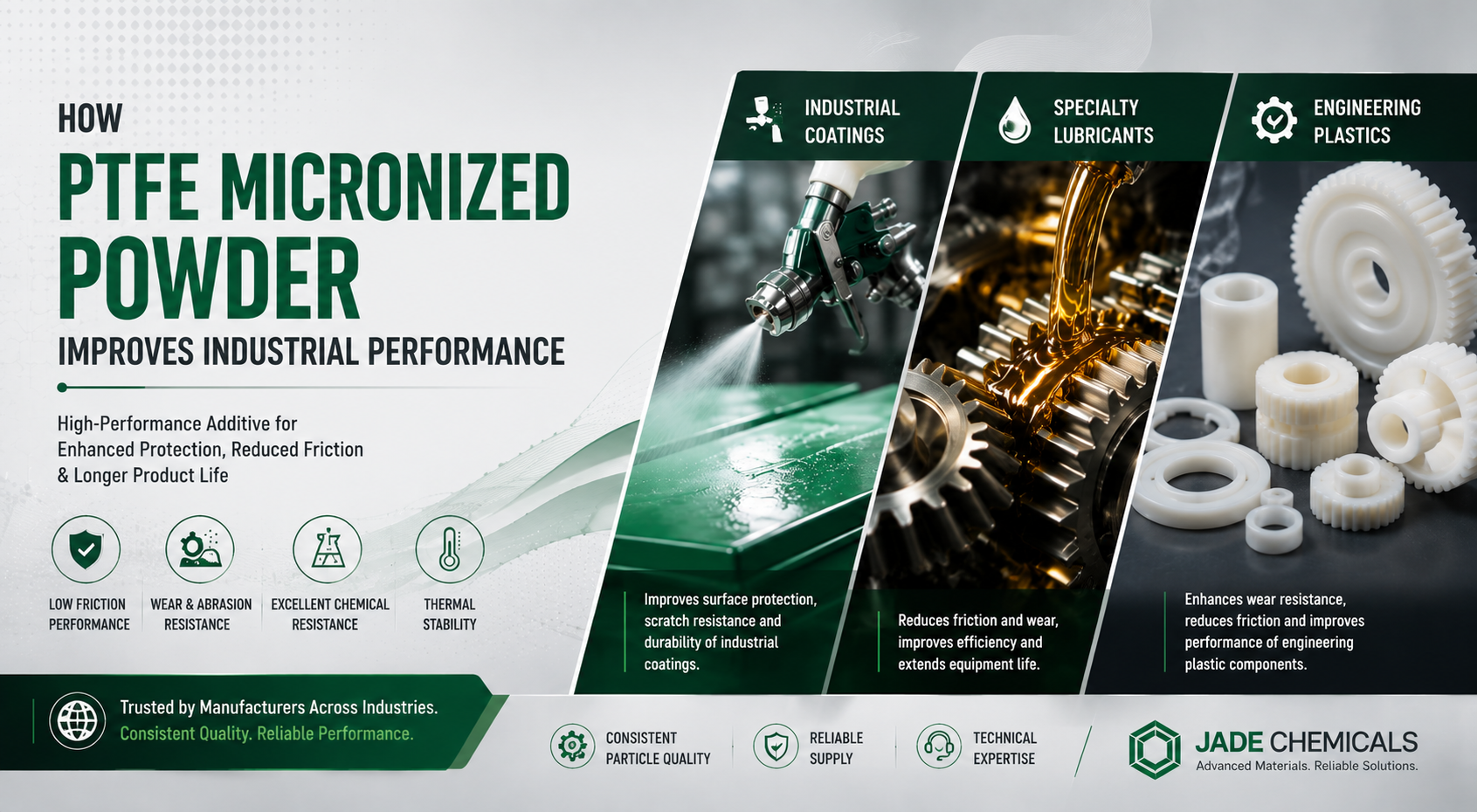
A coating manufacturer, a lubricant formulator and a producer of plastic components may all consider PTFE micronized powder. Each business needs the material to perform a different role. Surface slip may matter in one formulation, while friction and wear behaviour are priorities in another.
PTFE micronized powder is a finely divided form of polytetrafluoroethylene used as an additive in selected formulations. Choosing a suitable grade requires attention to the complete product, processing method and intended application.
Its Role in Industrial Coatings
Industrial coatings often need to provide more than an attractive finish. Manufacturers may also seek particular surface properties, including slip, release behaviour or resistance to rubbing.
PTFE micropowders can be evaluated as additives for these purposes. Their effect depends on particle characteristics, concentration, binder compatibility and how the coating forms.
A useful trial should examine both application and finished-film behaviour. Check whether the formulation mixes consistently, applies evenly and retains its other required properties. An improvement in one characteristic should be assessed alongside changes elsewhere in the coating.
Use in Specialty Lubricant Formulations
PTFE is also used as a solid lubricant ingredient in certain oils, greases and other lubrication products. Its suitability depends on the surrounding formulation and the conditions at the contact surface.
Adding powder to an existing lubricant is a formulation change. It requires compatibility assessment and testing rather than an assumption that more solid material will improve performance.
Manufacturers researching Industrial Machinery Lubrication in India should describe the equipment, operating conditions and existing lubrication method when discussing options. This helps distinguish a raw-material requirement from a need for a finished lubricant.
A broader understanding of dry lubricant types and applications can also help place PTFE within the available material choices.
Applications in Engineering Plastics
PTFE additives can be considered in selected engineering plastic compounds where friction and wear behaviour are relevant. Such compounds may be evaluated for sliding components, bushings or gears.
The finished component’s properties depend on the base polymer, additive loading, processing conditions and part design. The presence of PTFE alone does not establish a particular service life or load capability.
Assess the actual compound and component against their intended duty. Mechanical properties, dimensional requirements and processing behaviour should be reviewed alongside sliding performance.
Choosing a Grade for Evaluation
Begin with an application brief that identifies the base material, preparation process and desired property. Include relevant operating conditions and any existing specifications.
Request technical information for the proposed grade, including available particle data and recommended uses. Confirm that the material is intended for the planned process rather than treating different PTFE product forms as interchangeable.
When sourcing specialty lubrication chemicals, keep the grade designation, sample identification and supporting documents together. Clear records make comparisons and repeat purchasing easier to manage.
Moving From Samples to Routine Use
Establish acceptance criteria before testing. Record ingredient quantities, preparation conditions and observations from the finished coating, lubricant or component.
Where practical, change one variable at a time. This helps identify which adjustment influenced the result and provides a stronger basis for further development.
For product enquiries, contact Jade Chemicals with the application, required quantity and relevant specifications. A clear brief helps focus the discussion on PTFE micronized powder options suitable for evaluation.
