Prefabricated Data Centers in India: Faster Capacity for Growing Businesses
Author : NPOD Data Center Solutions | Published On : 23 Sep 2026
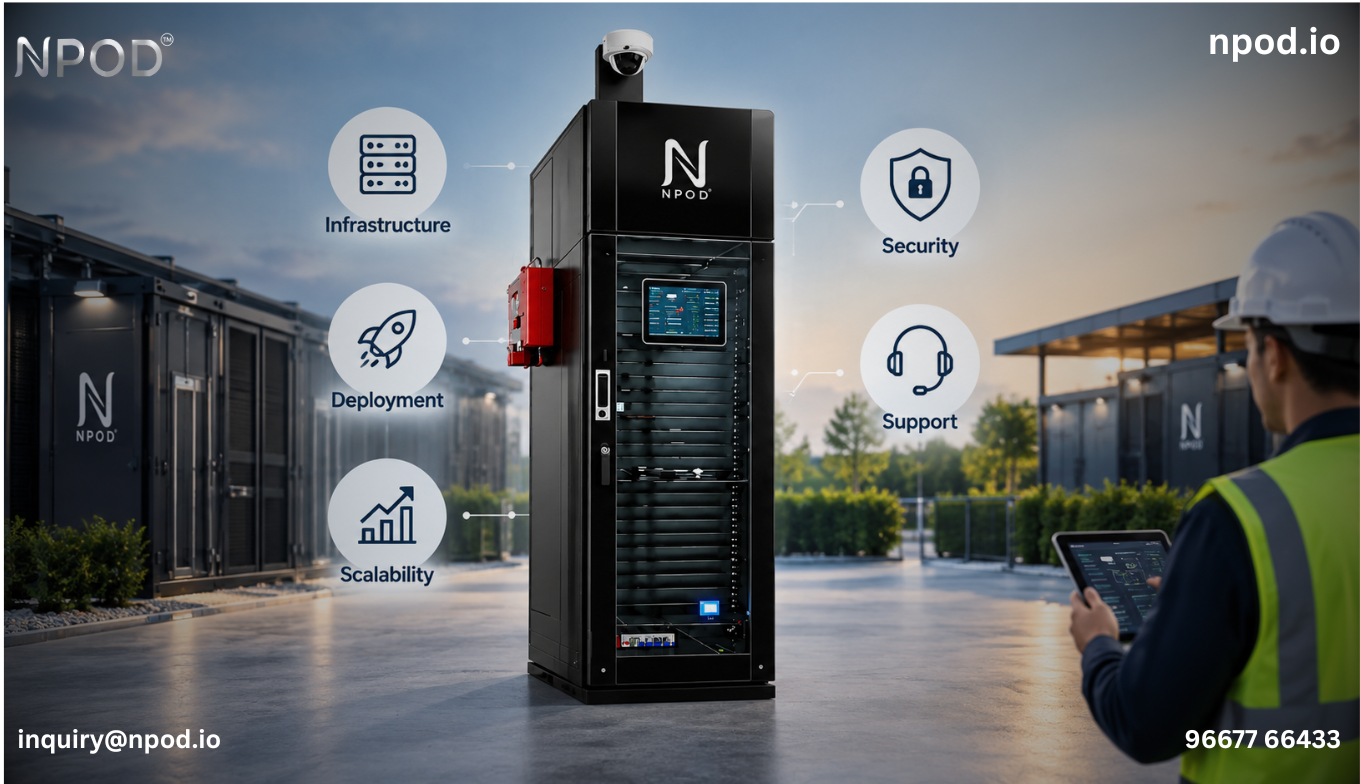
Business growth increasingly depends on how quickly IT infrastructure can keep pace with new applications, rising data volumes, connected devices, and distributed operations. Yet expanding a conventional data center can involve extensive site preparation, construction, power and cooling work, equipment installation, and commissioning.
For organizations that need additional computing capacity without waiting through a lengthy infrastructure project, prefabricated data centers in India offer an alternative deployment model. Instead of treating the data center entirely as a construction project, businesses can use an integrated infrastructure environment designed around their operational requirements.
When IT Capacity Becomes a Business Constraint
A company may have its applications, servers, and networking requirements defined, but its existing server room or facility may not have enough space, power, cooling capacity, or room for future expansion.
Building another conventional facility is not always practical. It can require substantial construction work and coordination between multiple infrastructure teams.
This becomes particularly relevant for:
- Growing enterprise IT environments
- Manufacturing facilities adding connected systems
- Branch and remote locations
- Edge computing deployments
- Healthcare and financial services environments
- Businesses expanding their digital operations
A prefabricated approach can help address these requirements by bringing critical data center components together within an integrated deployment model.
What a Prefabricated Data Center Provides
A prefabricated data center is more than a collection of server racks. It can combine the supporting systems required to operate IT equipment within a controlled environment.
Depending on the configuration, this can include:
- IT racks and equipment enclosures
- UPS and power distribution
- Precision cooling
- Environmental monitoring
- Physical access control
- Fire detection and suppression
- Network infrastructure
- Data center infrastructure management (DCIM)
The main advantage is that these elements can be planned as one environment rather than being treated as completely separate infrastructure projects.
For businesses evaluating prefabricated data centers in India, this integrated model can make it easier to align physical infrastructure with workload requirements, deployment timelines, and future capacity plans.
Faster Capacity Without Building a Larger Facility
One reason businesses consider prefabricated infrastructure is the ability to add capacity without expanding a conventional building to the same extent.
Factory-assembled and tested components can reduce the amount of infrastructure work required at the deployment location. This can be useful when an organization has a defined IT requirement but limited space or a demanding deployment schedule.
The objective is not simply to install servers faster. The supporting environment also needs to provide stable power, appropriate cooling, physical security, and operational visibility.
That makes prefabricated infrastructure relevant for organizations looking to move from an infrastructure requirement to an operational IT environment with fewer on-site dependencies.
Power and Cooling Still Determine Performance
Adding rack space alone does not create usable data center capacity.
As server density increases, power distribution and heat management become increasingly important. A suitable prefabricated data center therefore needs to account for the expected IT load rather than treating power and cooling as afterthoughts.
Solutions such as those offered by NPOD can bring elements including UPS systems, power distribution, precision cooling, airflow management, and environmental monitoring into a coordinated infrastructure environment.
For businesses planning additional capacity, this means the infrastructure can be designed around actual workload requirements, rack density, environmental conditions, and expected expansion.
Where Prefabricated Infrastructure Makes Business Sense
The value of a prefabricated data center becomes especially apparent when IT infrastructure needs to be deployed outside a conventional central facility.
Manufacturing
Factories increasingly depend on automation, connected equipment, production applications, and real-time data. Locating computing resources closer to production operations can support these workloads while keeping critical infrastructure within the facility.
Enterprise Campuses
Large organizations may need additional IT capacity without undertaking a major building expansion. A modular deployment can provide a dedicated environment for new workloads while existing infrastructure continues operating.
Edge Computing
Some applications require computing resources closer to users, devices, or data sources. Modular and prefabricated infrastructure can support edge locations where constructing a traditional data center may not be practical.
Remote and Branch Locations
Remote offices, industrial sites, and distributed operations can have limited access to conventional data center facilities. A self-contained infrastructure environment can provide the power, cooling, security, and monitoring needed to operate IT equipment at these locations.
Monitoring Becomes Part of the Infrastructure
Once IT equipment is deployed, operations teams still need visibility into the environment.
A modern prefabricated deployment can incorporate DCIM and environmental monitoring to provide information about power, temperature, equipment status, and infrastructure performance.
This matters because infrastructure problems are not always caused by the servers themselves. Power anomalies, cooling issues, temperature changes, or unauthorized physical access can also affect IT operations.
Integrated monitoring gives teams a way to identify these conditions earlier and manage the infrastructure more effectively.
For a business deploying infrastructure across multiple locations, centralized visibility can become particularly valuable because IT teams may not be physically present at every site.
Scaling Capacity as Requirements Change
Business workloads rarely remain static. A company may initially need a limited amount of computing capacity and later require additional racks, power, or cooling as applications and data volumes increase.
This is where modular infrastructure can provide an alternative to designing one oversized facility from the beginning.
Instead of committing all capacity upfront, organizations can plan infrastructure around current requirements while considering how additional modules or capacity could fit into their longer-term deployment strategy.
This approach can be useful for businesses managing distributed IT environments, edge locations, or facilities where physical space is constrained.
What Businesses Should Consider Before Deployment
The decision to use prefabricated infrastructure should begin with the workload rather than the equipment.
Organizations should understand their expected IT load, rack density, power requirements, cooling demand, physical location, security requirements, connectivity needs, and future expansion plans.
The deployment environment also matters. A solution intended for a manufacturing facility may have different requirements from one supporting a corporate campus or an edge computing location.
Infrastructure providers such as NPOD approach prefabricated data center deployment around these practical requirements, allowing organizations to consider power, cooling, IT equipment, security, monitoring, and deployment conditions as part of the overall solution.
The goal is to create an infrastructure environment that works operationally, not simply to deploy a prefabricated unit.
Conclusion
Growing IT requirements do not always require a larger conventional data center. For businesses that need additional capacity at enterprise campuses, factories, branch locations, or edge environments, a prefabricated data center can provide a structured path from infrastructure planning to deployment.
By bringing power, cooling, racks, security, and monitoring together within a modular environment, businesses can address immediate capacity requirements while keeping future expansion in view.
For companies evaluating prefabricated data centers in India, the important question is not simply how quickly a unit can be installed. It is whether the solution can provide the power, cooling, security, monitoring, capacity, and scalability required by the workloads it will support.
FAQs
What is a prefabricated data center?
A prefabricated data center is an integrated IT infrastructure solution assembled and prepared before deployment, combining systems such as racks, power, cooling, security, and monitoring.
Are prefabricated data centers suitable for businesses in India?
They can support enterprise campuses, manufacturing facilities, healthcare, financial services, edge computing, branch offices, and remote deployments where additional or distributed IT capacity is required.
Can a prefabricated data center be expanded later?
Many modular designs can accommodate future expansion. The practical approach depends on the initial configuration, available space, power capacity, cooling requirements, and anticipated workload growth.
