Prefabricated Data Centers: A Practical Approach to Growing IT Infrastructure
Author : NPOD Data Center Solutions | Published On : 12 Oct 2026
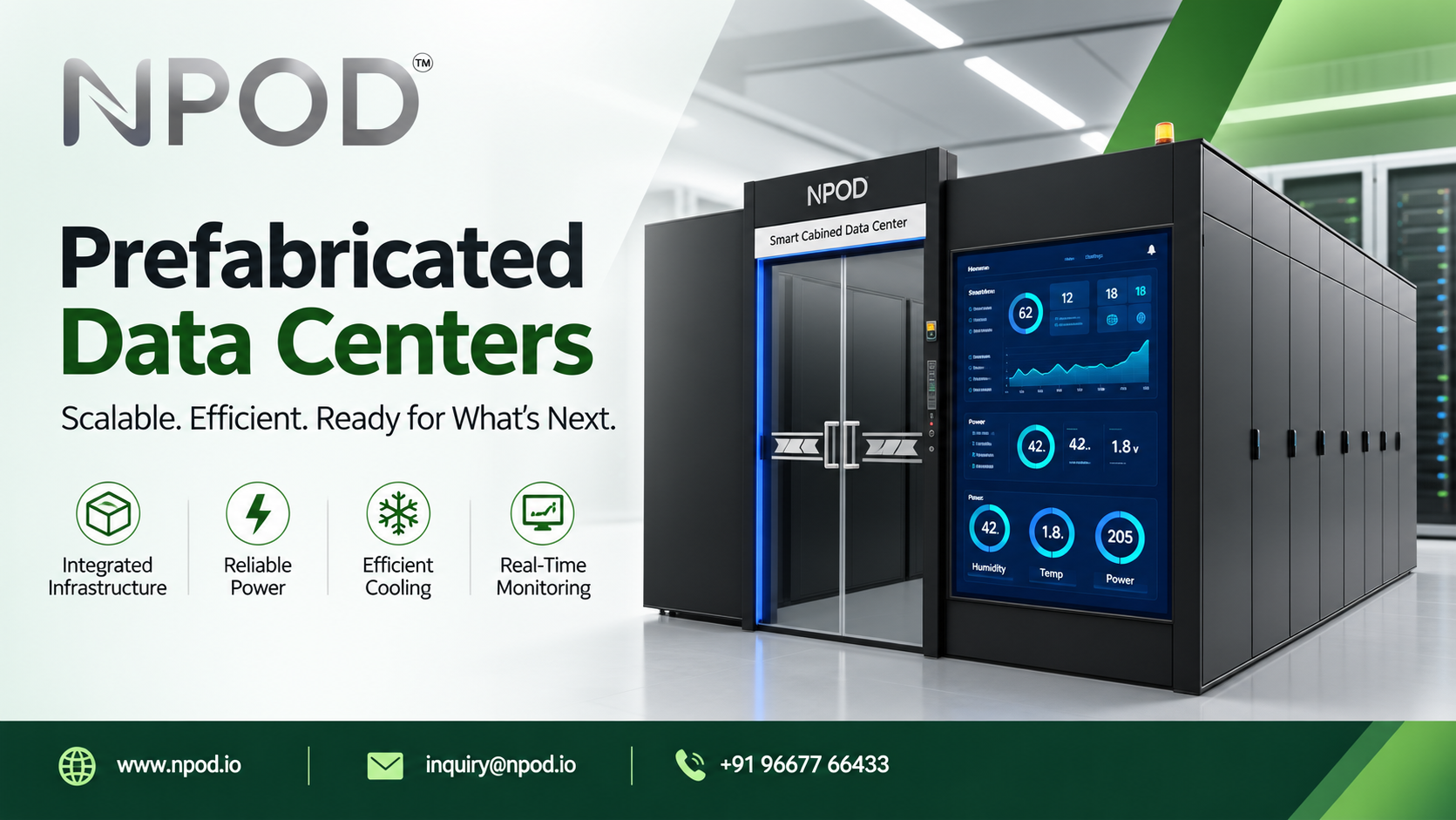
As businesses expand, their IT infrastructure often needs to grow with them. New applications, additional users and changing workloads can increase demand for computing capacity. Prefabricated data centers offer an alternative way to add infrastructure without treating every expansion as a conventional construction project.
Instead of assembling every component separately at the deployment site, a prefabricated setup brings selected infrastructure systems together through a planned, factory-integrated design. This approach can help businesses coordinate equipment, power, cooling and monitoring around their operational requirements.
However, the right solution depends on more than the physical enclosure. Businesses need to understand where the infrastructure will operate, what workloads it must support and how it will fit into their existing IT environment.
Why Businesses Look Beyond Traditional Data Center Expansion
Expanding a conventional data center can involve several connected tasks. The organization may need additional floor space, electrical upgrades, cooling changes and modifications to its network infrastructure.
These requirements can make expansion difficult when the existing facility has limited capacity or when the business needs infrastructure at a different location.
For example, a manufacturing company may need additional computing resources near its production operations. A growing enterprise may want a dedicated environment for a new application. Another organization may need to establish IT infrastructure at a regional facility without building a complete data center from the ground up.
Each situation has different requirements, but the underlying challenge is similar: the infrastructure must be prepared to support the workload reliably.
A prefabricated approach gives businesses another option to evaluate when planning these projects.
What Does a Prefabricated Data Center Include?
A prefabricated data center is designed around an integrated set of infrastructure components. The exact configuration varies by project, but it may include:
-
IT racks and equipment space: An organized environment for servers, storage and networking hardware.
-
Power distribution: Electrical infrastructure designed around the expected equipment load.
-
UPS and backup power options: Systems selected according to the required level of power protection.
-
Cooling infrastructure: Equipment designed to remove heat generated by the installed IT systems.
-
Monitoring: Tools that provide visibility into relevant environmental and equipment conditions.
-
Physical protection: Enclosure and access-control options appropriate for the deployment site.
These components need to work together. A rack layout that accommodates the equipment is not enough if the available power or cooling capacity cannot support it.
The design should therefore begin with the intended workload and the site's operating conditions.
Where Can Prefabricated Data Centers Be Used?
The flexibility of this infrastructure model makes it worth considering across several types of projects.
Enterprise IT Expansion
An organization may need additional capacity for business applications, internal systems or growing data requirements. A prefabricated deployment can be evaluated when extending the existing facility is difficult or when a separate infrastructure environment is preferred.
Manufacturing and Industrial Sites
Industrial operations increasingly depend on connected equipment and digital applications. Some workloads may benefit from computing resources located closer to the production environment.
A dedicated infrastructure setup can provide an organized space for IT equipment, provided the design accounts for factors such as temperature, dust, vibration, electrical supply and maintenance access.
Regional and Distributed Locations
Businesses operating across several locations may need infrastructure beyond their primary data center. A prefabricated solution can be considered for selected regional facilities where local computing requirements justify a dedicated deployment.
The design still needs to account for network connectivity, remote monitoring and the people responsible for maintaining the equipment.
New Infrastructure Projects
Organizations establishing a new IT environment may prefer an integrated infrastructure approach when they want the supporting systems planned together. The suitability of this option depends on the project schedule, site readiness, equipment requirements and total cost.
What Should Businesses Evaluate Before Choosing One?
Before selecting a prefabricated data center, businesses should assess several practical factors.
Power availability: Calculate the expected IT load and determine whether the site can provide the required electrical capacity. Backup arrangements should reflect the workload's availability needs.
Cooling requirements: Review the heat output of the planned equipment and the environmental conditions at the installation site. Cooling capacity must match the actual configuration.
Network integration: Identify how the new environment will connect to existing applications, storage, security systems and external networks.
Site readiness: Check the installation area, transport access, supporting surface, utility connections and space required for maintenance.
Future capacity: Consider whether the infrastructure can accommodate additional equipment or whether future growth would require another deployment.
Operational support: Establish who will monitor the environment, respond to alerts and maintain critical components after installation.
These checks help businesses compare infrastructure options using their actual requirements rather than relying on assumptions about size or deployment speed.
Is Prefabricated Infrastructure Always the Better Choice?
Not necessarily.
An existing data center with sufficient power, cooling and space may be easier to expand through a conventional upgrade. Cloud services or colocation may also be more suitable for certain workloads, depending on cost, control and operational requirements.
Prefabricated infrastructure is most relevant when an integrated deployment offers a practical advantage for the specific project. Businesses should compare the full scope of each option, including site preparation, installation, ongoing operation and future expansion.
NPOD provides prefabricated data center infrastructure for organizations evaluating integrated IT deployment options. Businesses can review the available solution and assess its suitability against their equipment, site conditions and planned capacity.
Conclusion
Growing IT requirements do not always call for a larger conventional data center. Depending on the project, an integrated prefabricated setup can offer another way to organize computing infrastructure across enterprise, industrial and distributed environments.
The decision should start with the workload, followed by an assessment of power, cooling, connectivity, site readiness and ongoing support. When these factors align with the proposed design, prefabricated infrastructure can become a practical option for planned IT expansion.
Frequently Asked Questions
What is a prefabricated data center?
It is a data center solution in which selected infrastructure components are integrated into a prepared design before deployment at the intended site. The configuration depends on the project's requirements.
Are prefabricated data centers suitable for industrial environments?
They can be suitable when the design accounts for local environmental conditions, power supply, cooling, connectivity and maintenance requirements.
Can a prefabricated data center be expanded later?
Expansion may be possible depending on the original design, available site capacity, power and cooling limits and the compatibility of additional equipment.
