Predictive Maintenance for Legacy Equipment: Startup’s Guide
Author : Jimmy Patel | Published On : 03 Sep 2026
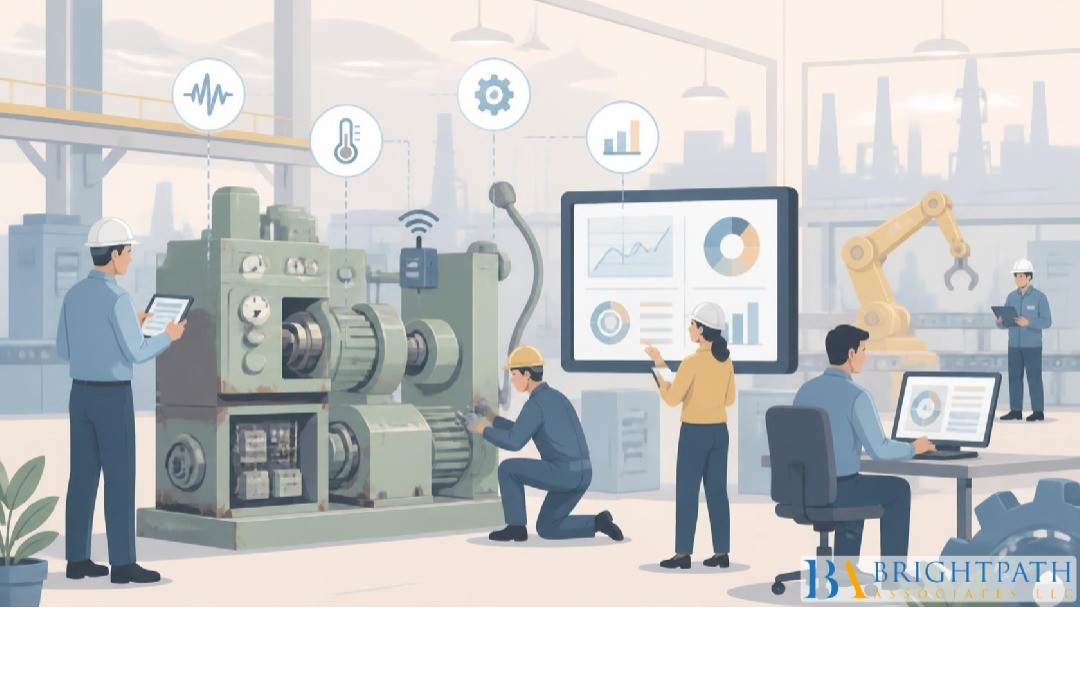
A young company may have ambitious plans for automation, smart manufacturing, and digital transformation, yet its production floor may depend on equipment that is decades old. Refurbished machines, inherited machinery, older production lines, and second-hand equipment can provide an affordable path into manufacturing—but they also introduce a difficult operational question:
The answer increasingly involves predictive maintenance. Rather than replacing every legacy machine with expensive new equipment, startups can use sensors, connectivity, analytics, industrial software, and automation technologies to understand how existing machinery is performing. This approach can turn older assets into productive components of a more connected manufacturing environment.
Why Legacy Equipment Creates a Unique Risk
Older machinery is not necessarily unreliable. Many industrial machines were built to operate for decades and can continue producing value when properly maintained. The challenge is that legacy equipment often lacks the digital capabilities found in modern machinery.
A newer machine may provide built-in sensors, remote diagnostics, connected controllers, automated alerts, and detailed performance data. An older machine may depend on physical gauges, operator observations, maintenance logs, and periodic inspections.
A machine can gradually develop abnormal vibration, temperature changes, pressure fluctuations, electrical issues, or mechanical wear without producing an obvious warning. By the time the problem becomes visible, the resulting failure may already be expensive.
Predictive Maintenance Does Not Require a New Factory
One of the most important advantages for startups is that predictive maintenance does not necessarily require a complete factory modernization. External sensors can be installed on existing equipment to monitor variables such as vibration, temperature, pressure, motor performance, electrical characteristics, and operating cycles.
This creates a gradual modernization pathway. A company can begin with one critical machine rather than attempting to digitize an entire facility. If the project demonstrates measurable value, additional equipment can be connected over time.
This incremental model can be particularly attractive to startups because capital must be carefully allocated among equipment, hiring, product development, inventory, marketing, and customer acquisition. Modernization becomes an investment that can scale alongside the business.
Start With the Machines That Matter Most
Not every machine requires the same level of monitoring. A startup should first identify equipment where failure would create the greatest operational consequences. If a single compressor, CNC machine, conveyor, hydraulic system, motor, or production cell represents a major bottleneck, that asset may be an ideal starting point for predictive maintenance.
The goal is not to collect data simply because technology makes it possible. The goal is to collect information that supports better business decisions. If monitoring one machine can help reduce unplanned downtime, improve maintenance scheduling, or prevent expensive emergency repairs, the technology has a measurable purpose.
This business-first approach can prevent startups from spending heavily on digital infrastructure that produces impressive dashboards but little operational value.
Connecting Older Machines to Modern Systems
Legacy machinery often becomes more useful when it is connected to modern industrial automation infrastructure. Technologies such as industrial gateways, wireless sensors, programmable logic controllers, supervisory control and data acquisition systems, and cloud-connected platforms can provide older machines with capabilities they did not originally possess.
For example, an existing PLC may continue controlling a machine while additional hardware collects performance information. In other situations, upgrading the controller may make more sense. The right decision depends on several factors, including equipment criticality, remaining useful life, replacement costs, safety requirements, available spare parts, and future production plans.
The broader Industrial Automation Industry is increasingly built around this combination of automation, IIoT, AI-driven analytics, robotics, control systems, and smart manufacturing. For startups, the lesson is important: modernization does not always mean replacement.
SCADA and Historical Data Can Reveal Hidden Patterns
Predictive maintenance becomes more effective when companies build a historical record of machine behavior. SCADA systems can help centralize information from sensors and controllers, giving operators and maintenance teams greater visibility into equipment conditions, alarms, trends, and operational changes.
Over time, historical information can establish a baseline for normal machine behavior. Suppose a motor typically operates within a particular temperature range. If that temperature gradually begins increasing, the change may warrant investigation before the motor experiences a catastrophic failure.
The same principle can apply to vibration, pressure, electrical consumption, operating cycles, and other measurable characteristics. The value lies not in one isolated reading but in identifying meaningful changes over time.
Legacy Machinery Can Become a Strategic Asset
The future of manufacturing will not eliminate legacy equipment overnight. Economic realities, long equipment lifecycles, specialized machinery, and capital constraints mean older assets will remain part of production environments for years.
The difference is that legacy machinery no longer has to remain technologically isolated. With sensors, automation platforms, industrial analytics, SCADA, upgraded controls, machine vision, robotics, and connected systems, startups can gradually bring older equipment into modern manufacturing environments.
The original BrightPath article, Predictive Maintenance for Legacy Equipment, explores this modernization strategy in greater depth and examines how startups can approach predictive maintenance without immediately replacing their existing machinery.
The Real Competitive Advantage Is Reliability
For manufacturing startups, innovation is important—but reliability determines whether innovation can be delivered consistently. A brilliant product cannot compensate indefinitely for production interruptions, missed orders, or unpredictable equipment costs.
Predictive maintenance provides startups with an opportunity to make existing assets more visible, more manageable, and potentially more productive. The organizations that approach legacy machinery strategically may discover that modernization does not require abandoning the past. Instead, it can involve connecting existing assets to the technologies of the future.
