Power Tools Market Innovations Transform Cordless Performance, Smart Connectivity, Safety, and User
Author : Minakshi Shukla | Published On : 17 Aug 2026
Introduction
Power tools are evolving rapidly as construction, manufacturing, automotive repair, woodworking, maintenance, landscaping, and home improvement industries demand greater productivity and flexibility. Traditional corded equipment remains important, but cordless platforms, brushless motors, advanced batteries, digital controls, connected features, and ergonomic designs are changing how users select and operate tools.
The power tools market innovations landscape increasingly focuses on improving performance while reducing weight, extending battery runtime, strengthening safety, simplifying maintenance, and enabling better equipment management. Manufacturers are also exploring sustainable materials, intelligent controls, and digital services to create more value throughout the product lifecycle.
Advanced Cordless Platforms
Cordless technology remains one of the most important areas of innovation.
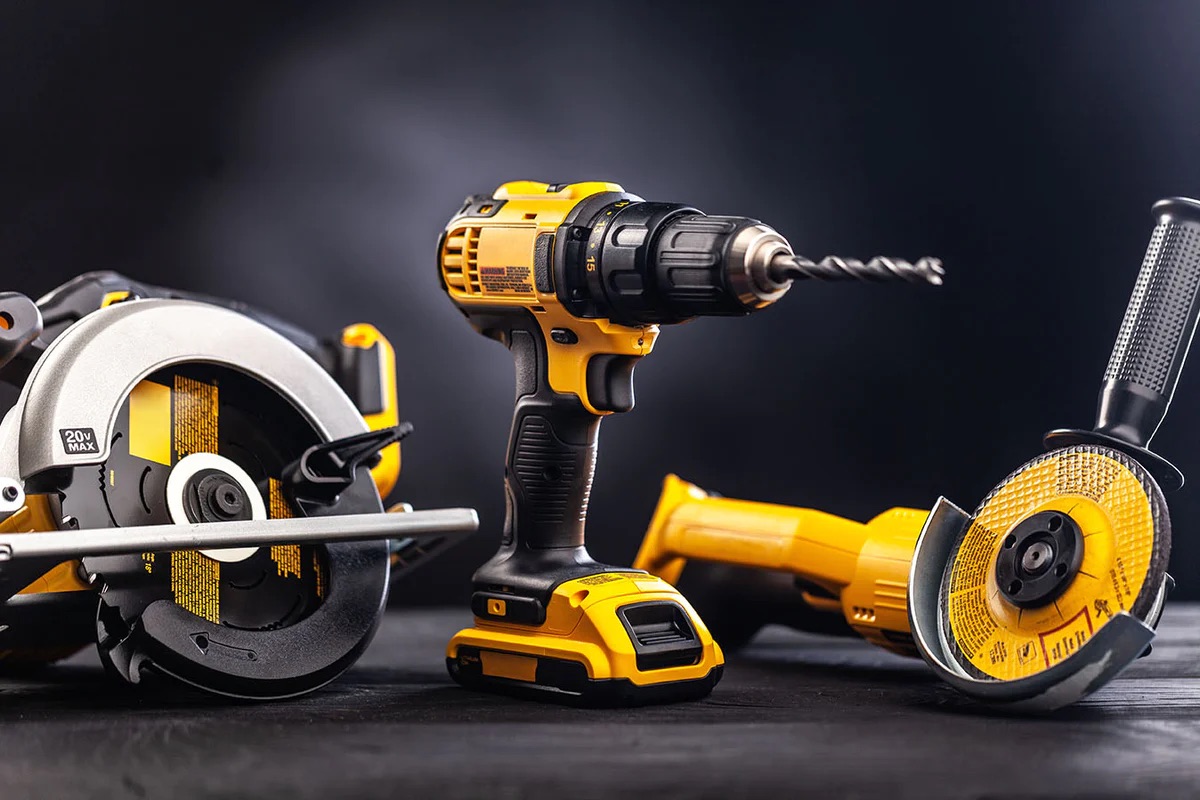
Modern battery-powered tools provide greater mobility because users do not need to remain near electrical outlets or manage extension cords. This is particularly valuable on construction sites, industrial facilities, workshops, and maintenance locations.
Manufacturers are expanding cordless product families so that a single battery platform can operate drills, impact drivers, saws, grinders, sanders, and other tools.
This approach allows users to share batteries and chargers across multiple products, reducing equipment complexity and encouraging broader adoption of cordless ecosystems.
High-Efficiency Brushless Motors
Brushless motor technology is becoming increasingly important in professional and premium tools.
These motors eliminate traditional brushes, reducing mechanical wear and improving efficiency.
Electronic controls allow manufacturers to optimize motor speed and torque for specific applications.
Improved efficiency can extend battery runtime, while reduced wear can support longer operating life.
Brushless technology is particularly valuable for high-performance cordless equipment, where efficient energy use directly affects productivity.
Next-Generation Battery Technology
Battery innovation is central to the future of cordless power tools.
Users increasingly expect batteries that provide longer runtime, faster charging, lower weight, and reliable performance under demanding conditions.
Manufacturers are improving cell design, battery management systems, thermal control, and charging technologies.
Advanced battery packs can deliver higher power without requiring excessive increases in size or weight.
Improved thermal management can also help maintain battery performance during intensive applications.
Faster Charging Systems
Charging speed has become an important consideration for professional users.
Long charging periods can interrupt workflow when only a limited number of battery packs are available.
Manufacturers are therefore developing faster chargers and improved charging systems.
Smart charging technologies can monitor battery temperature, voltage, and charging status to optimize charging behavior.
Some systems can also prioritize batteries based on operational requirements.
These innovations can reduce downtime and improve the practical value of cordless equipment.
Intelligent Battery Management
Modern battery systems increasingly include electronic monitoring.
Battery management technology can track temperature, charge level, operating conditions, and battery health.
This information can help protect cells from overheating, excessive discharge, or inappropriate charging conditions.
Advanced systems can also provide users with information about remaining runtime and battery condition.
Such capabilities improve reliability while supporting longer battery life.
Connected Power Tools
Digital connectivity is creating a new category of smart power tools.
Connected equipment can communicate with smartphones, tablets, cloud platforms, and fleet-management systems.
Users can access information about tool status, battery condition, usage, and maintenance.
Professional companies can use connected systems to manage large tool fleets across multiple job sites.
This can improve asset visibility, reduce losses, and support better equipment allocation.
Tool Tracking and Fleet Management
Tool tracking is becoming increasingly relevant for professional organizations.
Large construction companies and contractors may operate hundreds or thousands of tools across different locations.
Connected identification and tracking systems can help managers determine where equipment is located and who is using it.
Digital fleet platforms can also maintain records of inspections, maintenance, and usage.
These capabilities can reduce administrative work and improve asset utilization.
Predictive Maintenance
Power tool innovation is increasingly moving toward predictive maintenance.
Sensors can monitor operating conditions and identify abnormal behavior.
Data from connected equipment can potentially help identify excessive vibration, unusual motor performance, battery degradation, or other warning signs.
Instead of relying entirely on fixed maintenance schedules, users can make decisions based on actual equipment conditions.
This can reduce unexpected failures and improve tool availability.
Enhanced Safety Technologies
Safety remains a major innovation priority.
Modern tools increasingly incorporate electronic brakes, overload protection, anti-kickback systems, trigger controls, guards, and intelligent shutdown mechanisms.
Some advanced systems can detect unusual operating conditions and respond quickly.
Safety technologies can reduce risks while allowing tools to deliver higher levels of performance.
Manufacturers are also improving user instructions and digital training resources to promote safer operation.
Ergonomic Innovation
Ergonomics is becoming increasingly important as professional workers use power tools for extended periods.
Manufacturers are developing lighter housings, improved grips, balanced tool designs, reduced vibration, and optimized trigger positions.
Battery placement can also be adjusted to improve weight distribution.
Reducing vibration and tool weight can help improve user comfort and productivity.
The challenge is maintaining durability and power while reducing physical strain.
Compact High-Performance Designs
Miniaturization is another important trend.
Advances in motors, electronics, batteries, and materials allow manufacturers to produce smaller tools without sacrificing substantial performance.
Compact tools are particularly useful for work in confined areas.
Electricians, installers, automotive technicians, maintenance workers, and construction professionals can benefit from smaller equipment that provides sufficient power for demanding applications.
Digital Controls and Customization
Electronic controls are giving users greater control over tool performance.
Some advanced tools allow users to select operating modes, adjust speed, control torque, or customize trigger response.
Application-specific settings can improve precision and reduce the risk of overdriving fasteners or damaging materials.
Digital controls also allow manufacturers to update or refine tool functions through software.
Sustainable Product Development
Sustainability is becoming an increasingly important part of product innovation.
Manufacturers are exploring recyclable materials, longer-lasting components, repairable designs, reduced packaging, and more efficient production processes.
Battery recycling is another important area.
Designing tools for longer service life can reduce replacement frequency and minimize material waste.
Sustainability initiatives can also help manufacturers respond to changing customer expectations.
Improved Accessories and Consumables
Innovation is not limited to power tools themselves.
Drill bits, saw blades, grinding discs, sanding products, fasteners, and other accessories are also evolving.
Improved materials and specialized designs can increase cutting speed, durability, precision, and efficiency.
Accessories optimized for specific tools can help users achieve better results while reducing replacement frequency.
Artificial Intelligence and Advanced Analytics
Artificial intelligence could become increasingly relevant to connected power tools.
Data collected from sensors can potentially be analyzed to identify usage patterns, maintenance needs, battery performance, and abnormal operating conditions.
AI-assisted systems could provide recommendations based on application requirements or equipment behavior.
Over time, these capabilities could transform power tools from standalone mechanical devices into intelligent equipment platforms.
Digital Training and User Support
Manufacturers are increasingly using digital platforms to improve customer support.
Mobile applications can provide operating instructions, maintenance reminders, troubleshooting information, and product documentation.
Interactive training can help users understand appropriate tool settings and safety procedures.
Digital support can be especially valuable for complex professional equipment.
Future Innovation Direction
Future innovation is likely to focus on deeper integration between hardware, batteries, software, connectivity, and services.
Cordless platforms may become more powerful while becoming lighter and more efficient.
Smart batteries could provide more detailed health information, while connected tools could communicate with broader workplace management systems.
AI-based diagnostics, improved safety systems, sustainable materials, and modular product architectures may further reshape the industry.
Conclusion
The power tools market innovations landscape is moving toward equipment that is more powerful, efficient, connected, safe, ergonomic, and adaptable.
Advanced cordless platforms, brushless motors, next-generation batteries, fast charging, intelligent battery management, connected tools, predictive maintenance, and digital fleet management are changing professional workflows.
At the same time, manufacturers are focusing on compact designs, improved ergonomics, sustainable materials, advanced safety features, and intelligent controls.
Companies that successfully combine mechanical performance with digital capabilities can create stronger value for users across construction, manufacturing, automotive, maintenance, and home improvement.
As technology continues to advance, power tools are increasingly becoming intelligent productivity platforms rather than simple mechanical equipment.
