Post-Growth Era: Prioritizing Farm Unit Economics Over Raw Acreage
Author : Alex Turner | Published On : 13 Aug 2026
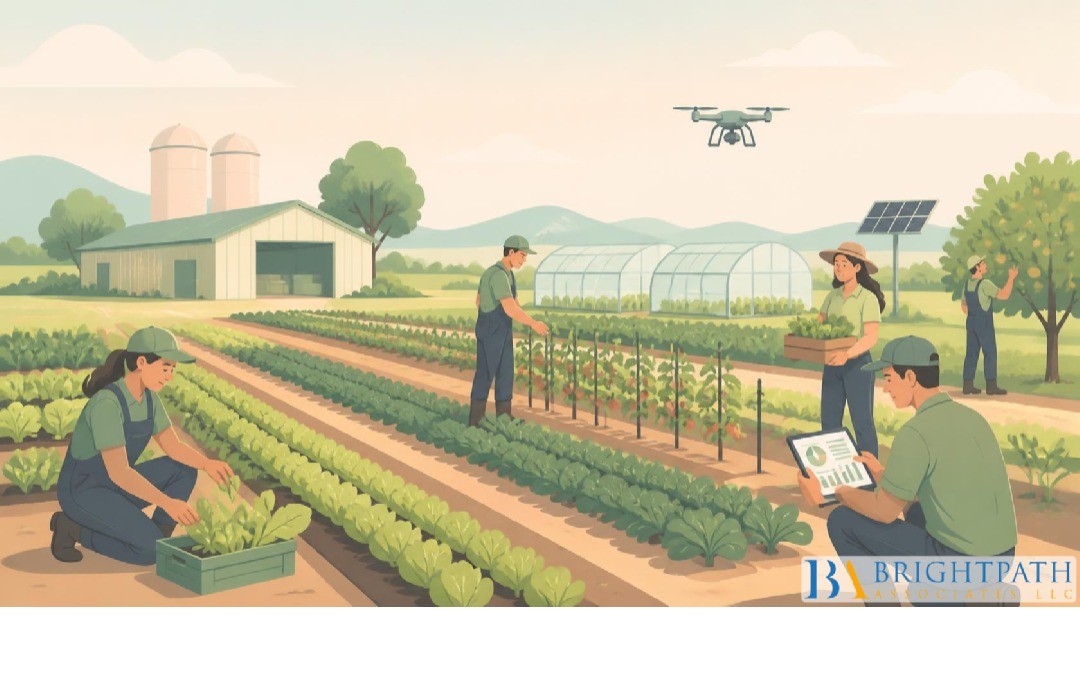
For generations, agricultural growth has often been associated with one straightforward measure: acreage. More land meant greater production potential, larger equipment fleets, and the ability to generate higher volumes of agricultural output. But the economics of modern farming are challenging that assumption. Rising input costs, labor constraints, water scarcity, climate volatility, equipment expenses, and changing market conditions are making raw acreage a less reliable indicator of business strength.
For farms and agribusinesses, that shift has important implications. Growth is increasingly about improving margins, productivity, resource efficiency, resilience, and return on investment rather than simply acquiring more land. This evolution is particularly relevant to the U.S. agricultural sector, where operational complexity continues to increase and business leaders must balance profitability with long-term sustainability.
Why Acreage Alone Is No Longer Enough
Land remains one of agriculture's most important assets, but acreage does not automatically translate into profitability. An additional acre requires seeds, fertilizer, crop protection, water, labor, machinery, fuel, maintenance, storage, transportation, and management. If the revenue generated by that acre does not sufficiently exceed its associated costs, expansion can actually weaken the economics of the business.
This is why farm operators are increasingly examining production at a more granular level. Instead of evaluating the farm as a single financial unit, managers can analyze individual fields, crop varieties, production blocks, livestock units, or greenhouse operations.
The goal is to determine which parts of the operation create the strongest returns and which consume resources without producing sufficient economic value. This approach transforms growth from an acreage strategy into a unit economics strategy.
Technology Is Making Farm-Level Economics More Visible
The evolution of agricultural technology is helping farm leaders make this transition. Precision equipment, satellite imagery, connected sensors, GPS-guided machinery, automated irrigation, weather monitoring, and digital platforms can provide detailed information about field performance.
This data can reveal differences that traditional farm accounting may overlook. Two fields with the same acreage may have significantly different yields, input requirements, water consumption, or profitability. Understanding those differences gives managers the ability to allocate resources more strategically.
Precision Agriculture and the Economics of Every Acre
Precision agriculture is particularly valuable in a post-growth environment because it enables farmers to move away from blanket assumptions. Variable-rate application, yield mapping, soil monitoring, and GPS-enabled equipment allow inputs to be adjusted according to actual field conditions. The economic question is not simply whether technology increases yield. The more important question is whether the additional yield or quality justifies the additional cost.
For example, applying more fertilizer may increase production in one area while producing little incremental value in another. Similarly, additional irrigation may improve output under certain conditions but deliver limited economic benefit elsewhere. This level of analysis can help farmers optimize the relationship between inputs and returns rather than pursuing maximum production at any cost.
Sustainable Farming and Long-Term Profitability
The focus on unit economics also strengthens the business case for sustainable farming. Soil degradation, water inefficiency, excessive chemical use, and poor resource management can create costs that become increasingly difficult to absorb over time. Practices that protect soil health, improve water efficiency, reduce unnecessary inputs, and strengthen resilience can support both environmental and financial objectives.
Sustainability should therefore not be viewed solely as a compliance requirement or branding exercise. When implemented strategically, it can improve operating efficiency and protect the productive capacity of the farm. This creates an important connection between sustainability and profitability: the resources that support agricultural production today must remain productive enough to support future operations.
The Human Factor Behind Farm Transformation
Technology and data can improve agricultural decision-making, but people remain responsible for interpreting information and implementing change. Farmers need leaders who can understand agronomy, finance, technology, sustainability, operations, and workforce management simultaneously.
As farming becomes more sophisticated, the traditional distinction between agricultural management and technology leadership is becoming less relevant. Modern farm executives increasingly need to understand data-driven operations and digital transformation.
BrightPath Associates supports agricultural organizations seeking leadership and specialized professionals across the farming value chain. Its Agriculture & Farming Industry are designed to help organizations identify professionals across farm operations, agronomy, supply chain, technology, sustainability, finance, and related functions.
Conclusion
The transition toward farm unit economics represents a significant change in agricultural strategy. Acreage will remain important, but it can no longer serve as the sole measure of progress. In a more challenging economic and environmental environment, farmers and agribusiness leaders need to understand the true contribution of every production unit.
Precision agriculture, digital farming, farm management software, automation, and advanced analytics can provide the information needed to make those decisions. Sustainable practices can protect long-term productivity, while strategic leadership can ensure that technology and capital are deployed effectively.
For a deeper discussion of how agricultural businesses can move beyond acreage-based thinking, explore BrightPath Associates' Prioritizing Farm Unit Economics Over Raw Acreage article. Ultimately, the next chapter of agricultural growth will be defined by better economics, not simply bigger footprints. For farm owners, agribusiness executives, and talent leaders, the opportunity is to rethink what growth means and build organizations capable of creating more value from every resource they control.
