Pico RU Picosecond Laser: A Comprehensive Analysis-From Underlying Physical Mechanisms to Exceptiona
Author : Globalzhitui lyy | Published On : 24 Apr 2026
Introduction
Nowadays, there’s a soaring global demand for skin pigment management, like tattoo removal and pigment spot lightening, driven by aesthetic or psychological needs. People want efficient, safe, non-invasive beautification solutions. Traditional nanosecond lasers fall short in handling complex pigment issues and ensuring safety.
Picosecond technology is a game-changer, breaking free from nanosecond lasers’ limits and becoming the “gold standard” in non-invasive skin beautification. This shift is clear in the market: the global pico laser device market (for medical aesthetics) was about USD 223.1 million in 2022 and is projected to exceed USD 392.9 million by 2030 with a ~7.4% CAGR, reflecting rising demand.(Source: https://www.grandviewresearch.com/industry-analysis/picosecond-lasers-market-report)
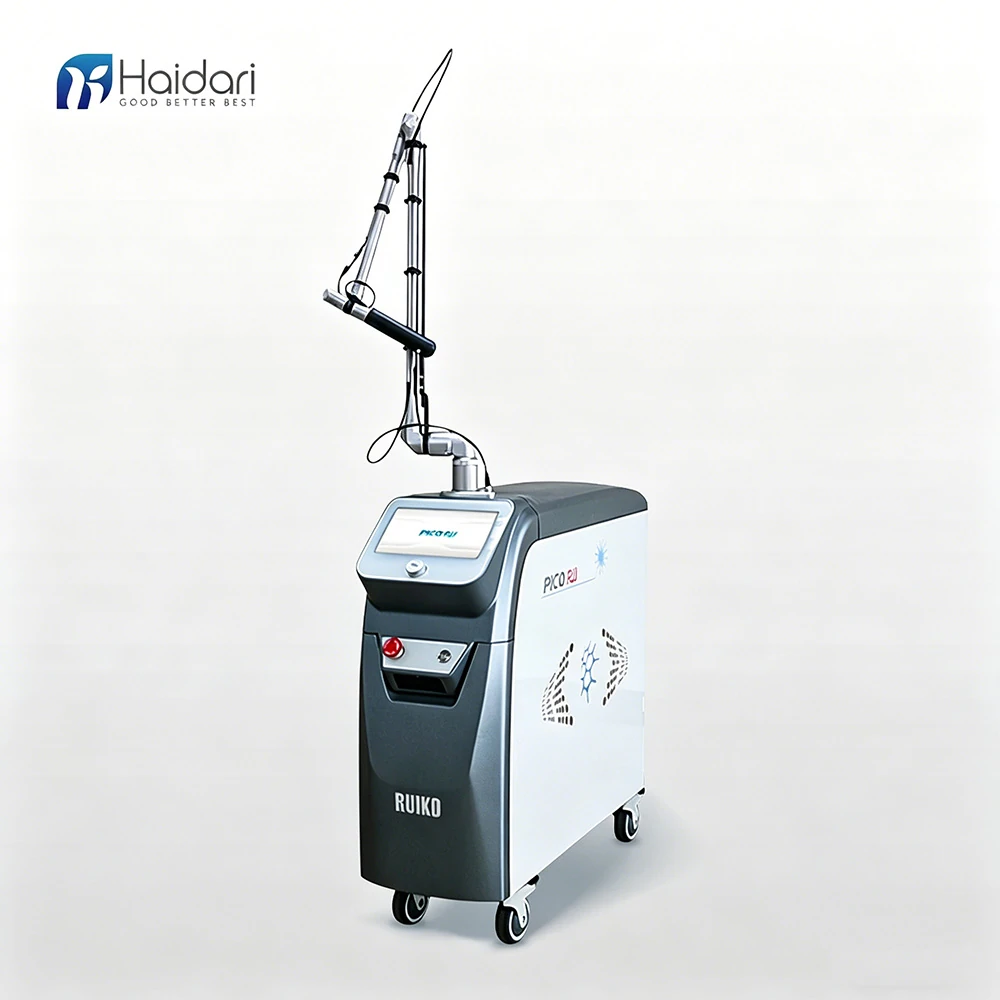
The “Optical Physics” Behind Picosecond Lasers
This section will delve into the scientific principles behind picosecond lasers, establishing professionalism and authority for readers by explaining the underlying logic.
Crossing Time Scales
- Physical Definition: In the realm of time units, 1 picosecond (ps) = 10⁻¹²seconds. This is an extremely short time concept. In comparison, the pulse width of Pico RU is nearly a thousand times shorter than that of traditional nanosecond lasers (10⁻⁹ s). Such a short time scale gives picosecond lasers unique properties in terms of energy release and interaction with tissues.
- Thermal Relaxation Time (TRT) Theory: Thermal relaxation time refers to the time required for a tissue to dissipate heat to its surroundings and return to its initial temperature after absorbing energy. When the pulse width of a picosecond laser is shorter than the thermal relaxation time of the target tissue (such as melanin), energy can be fully released before heat diffuses to the surrounding areas. It’s like delivering a precise blow to the enemy before they can react, thus achieving the goal of precisely shattering melanin particles while minimizing thermal damage to the surrounding normal tissues.
Photoacoustic Effect vs. Photothermal Effect
- Mechanism Differentiation: Traditional lasers mainly rely on heat conduction to destroy target tissues. When laser light irradiates tissues, the tissues absorb laser energy and convert it into heat energy. Through heat conduction, the temperature of the target tissues rises, leading to their destruction. However, this method is prone to causing thermal damage to the surrounding normal tissues while destroying the target tissues. In contrast, the Pico RU pico laser device is entirely different. It generates shockwaves through instantaneous high power and uses the photoacoustic effect to pulverize pigment particles. This mechanism avoids the extensive influence on surrounding tissues during heat conduction, enabling more precise treatment.
- Metabolic Principle: Under the action of the photoacoustic effect, pigment particles are shattered into a “dust-like” state, rather than a “gravel-like” state as with traditional lasers. These fine dust-like particles have a larger specific surface area, significantly enhancing the clearance efficiency of the human lymphatic system. The lymphatic system, like the body’s “cleaners,” can expel these pulverized pigment particles more quickly, thus achieving better pigment clearance results.
LIOB Principle (Honeycomb Lens Technology)
Popularizing “Laser-Induced Optical Breakdown (LIOB)”: LIOB is a unique physical phenomenon. The honeycomb lens technology equipped with Pico RU can generate micro-cavities in the dermis without damaging the epidermis. These micro-cavities are like tiny “bombs” that induce collagen regeneration (Skin Remodeling) through physical stress. Collagen is an essential component of the skin, maintaining its elasticity and firmness. As we age, collagen gradually depletes, leading to skin sagging and wrinkles. The LIOB effect can stimulate collagen regeneration, improve skin texture, and make the skin firmer and smoother.
Objective Parameter Comparison of Laser-Tissue Interactions
| Comparison Dimension | Traditional Q-Switched Laser (Nanosecond) | Pico RU Laser (Picosecond) | Technical/Biological Mechanism Analysis |
| Pulse Width | 10⁻⁹ seconds (Nanosecond) | 10⁻¹²seconds (Picosecond) | Determines the relationship between energy release speed and the thermal relaxation time (TRT) of the target tissue |
| Energy Conversion Mode | Mainly Photothermal Effect | Mainly Photoacoustic/Photomechanical Effect | As the pulse width shortens, the proportion of light energy converted into mechanical pressure waves increases significantly |
| Physical Form of Pigment Fragmentation | Gravel-like/Granular | Fine Dust-like | The geometric size of the fragmented particles directly affects the phagocytosis rate of macrophages |
| Thermal Spread Range | Heat conducts to surrounding target tissue relatively obviously | Energy is highly confined within the target tissue | The risk of tissue thermal damage is positively correlated with pulse duration |
| Clinical Application Characteristics | Focuses on high-contrast pigment absorption | Covers pigment treatment and dermal vacuole effect (LIOB) | The extremely short pulse width can induce skin remodeling without relying on pigment |
Mapping of Pico RU Core Technical Specifications to Clinical Functions
This section aligns the specific hardware parameters of Pico RU with clinical needs, demonstrating its professional-grade positioning and enabling readers to understand the advantages and value of this device in clinical applications.
Core Technical Specifications of Pico RU Laser
| Key Parameter | Specification | Technical Significance |
| Pulse Width | 600ps-800ps | Ensures energy release is faster than TRT, achieving physical shattering and maximizing control of thermal diffusion |
| Standard Wavelengths | 1064nm / 532nm | Dual-wavelength coverage. 1064nm targets deep pigments and black tattoos; 532nm targets epidermal layer pigments |
| Single Pulse Energy | Up to 2000 mJ | Extremely high peak power ensures sufficient physical destructive force for stubborn, large pigment particles |
| Beam Profile | Top-Hat Output | Energy is evenly distributed within the spot area, avoiding tissue burns and pigmentation risks caused by central hotspots |
| Frequency | 1-10 Hz (Adjustable) | Determines operational efficiency. High frequency supports rapid sliding treatments, significantly shortening clinical procedure time |
| Transmission System | 7-Joint Imported Light Guide Arm | Mechanical structure ensures high stability and low attenuation in laser energy transmission, providing extremely high positioning accuracy |
Analysis of Clinical Application Scenarios
1. Stubborn Tattoo Removal
In the field of tattoo removal, traditional lasers often struggle to handle colored residues and deep tattoo particles. This is because different colors of tattoo pigments have different absorption wavelengths for lasers, and deep tattoo particles are difficult to be fully reached and pulverized by the energy of traditional lasers due to their deep location. Pico RU, with its dual-wavelength design and extremely high peak power, can select the appropriate wavelength for treatment according to different colors of tattoo pigments. Meanwhile, its extremely short pulse width and high energy can penetrate deep into the skin and shatter stubborn tattoo particles into fine dust-like particles, which are easier to be cleared by the human lymphatic system, thus effectively handling colored residues and deep tattoo particles that traditional lasers cannot reach.
2. Pigmentation Management
For melasma and other heat-sensitive pigment spots, traditional laser treatments are prone to causing adverse reactions such as post-inflammatory hyperpigmentation (PIH) because the thermal effect can stimulate the activity of melanocytes, leading to increased pigmentation. Pico RU, on the other hand, utilizes the photoacoustic effect to convert energy into mechanical force rather than heat energy. While pulverizing pigment particles, it reduces thermal damage to the surrounding tissues and the stimulation of melanocytes. Therefore, it can safely lighten heat-sensitive pigment spots such as melasma, providing patients with a safer and more effective treatment plan. Pico RU has demonstrated excellent performance and advantages in treating melasma with picosecond lasers (picosure laser for melasma).
3. Skin Texture Improvement
Combined with the honeycomb lens mode, Pico RU can improve pore size, fine lines, and dull complexion without causing downtime. The LIOB effect generated by the honeycomb lens can stimulate collagen regeneration in the dermis, enhancing the skin’s elasticity and firmness, thereby improving pore enlargement and fine lines. At the same time, the photoacoustic effect of the picosecond laser can remove aged cuticles and pigmentation on the skin surface, making the skin complexion more even and bright. This non-invasive treatment method allows patients to quickly resume normal life and work after treatment without a long recovery period.
Key Factors for Evaluating the True Performance of Picosecond Devices
1. True Physical Properties of Pulse Width
In the market, there are some devices labeled as “picosecond” but actually do not have a pulse width that reaches the true picosecond level. These devices rely on marketing names to attract consumers. The key to distinguishing between “true picosecond” devices and those merely using marketing names lies in whether the pulse width is below 1000ps. Only when the pulse width truly reaches the picosecond level can the photoacoustic effect be achieved, enabling efficient and safe pigment clearance and skin improvement. Therefore, when purchasing a picosecond device, it is essential to pay attention to the true physical properties of its pulse width.
2. Energy Density and Thermal Management
An industrial-grade cooling system is crucial for maintaining energy constancy during long-term, high-frequency operations. In clinical treatments, long-term and high-frequency laser operations are often required to shorten treatment time and improve work efficiency. If the device’s cooling system is not powerful enough, it will cause the device to heat up, resulting in unstable energy output, affecting treatment effectiveness, and even potentially harming the patient. Therefore, choosing a picosecond device with an industrial-grade cooling system can ensure the constancy of energy during long-term, high-frequency operations, improving treatment safety and effectiveness.
3. Technical Training Support
Professional parameter settings significantly contribute to clinical results. The parameter settings of picosecond laser devices are very complex, and different pigment problems and skin types require different parameter combinations. Improper parameter settings may lead to poor treatment effectiveness or even adverse reactions. Therefore, it is crucial to choose a pico laser machine factory that provides comprehensive technical training support. Professional technical training enables operators to master the parameter settings and operation skills of the device proficiently, develop personalized treatment plans according to the patient’s specific situation, and thus improve clinical treatment effectiveness.
Frequently Asked Questions (FAQ)
Q 1: Will the skin become thinner after picosecond treatment?
A: No. According to the LIOB mechanism, picosecond lasers induce the reorganization of collagen and elastic fibers in the dermis through physical pressure. Collagen and elastic fibers are essential components for maintaining skin thickness and elasticity. Their reorganization can objectively help increase the skin’s firmness, making the skin thicker and more elastic rather than thinner.
Q 2: Why does picosecond treatment usually not require a long downtime?
A: Because its energy is released extremely quickly, and optical energy is mainly converted into mechanical force rather than heat energy. Traditional laser treatments have obvious thermal effects, which can cause a certain degree of damage to the epidermal barrier, leading to postoperative symptoms such as redness and pain and requiring a relatively long recovery time. In contrast, picosecond lasers provide better protection for the epidermal barrier, and postoperative redness usually subsides within 24 hours. Patients can quickly resume normal life and work without a long downtime.
Q 3: Is Pico RU suitable for dark skin types?
A: Yes. Due to its extremely short thermal residence time, Pico RU significantly reduces the risk of post-inflammatory hyperpigmentation (PIH) commonly seen in Fitzpatrick types IV-VI skin. People with dark skin types have more active melanocytes, and traditional laser treatments are prone to stimulating melanocytes, leading to the occurrence of PIH. The photoacoustic effect of Pico RU reduces thermal damage to the surrounding tissues and the stimulation of melanocytes, making it more suitable for people with dark skin types.
Conclusion
Pico RU, with its technological leap from photothermal to photoacoustic effects, combined with high-specification hardware such as a 7-joint light guide arm and top-hat output, not only improves pigment clearance efficiency but also reshapes the safety boundaries of laser beauty. It has demonstrated excellent performance and advantages in clinical application scenarios such as stubborn tattoo removal, pigmentation management, and skin texture improvement, providing patients with a safer, more effective, and convenient skin beautification solution.
If you want to learn more about the clinical specifications of Pico RU or consult the pico laser manufacturer Haidari Beauty expert team for customized solutions, don’t hesitate to take action now!
