pH Meter Calibration: How It Works and Why It Matters
Author : Ncqc laboratory | Published On : 29 Oct 2026
Accurate pH measurement is essential in laboratory testing, water quality monitoring, chemical analysis, and industrial processes. A pH meter determines whether a solution is acidic, neutral, or alkaline. However, electrode ageing, contamination, and temperature changes can affect its readings over time. Proper calibration helps maintain measurement accuracy and supports reliable testing and quality control.
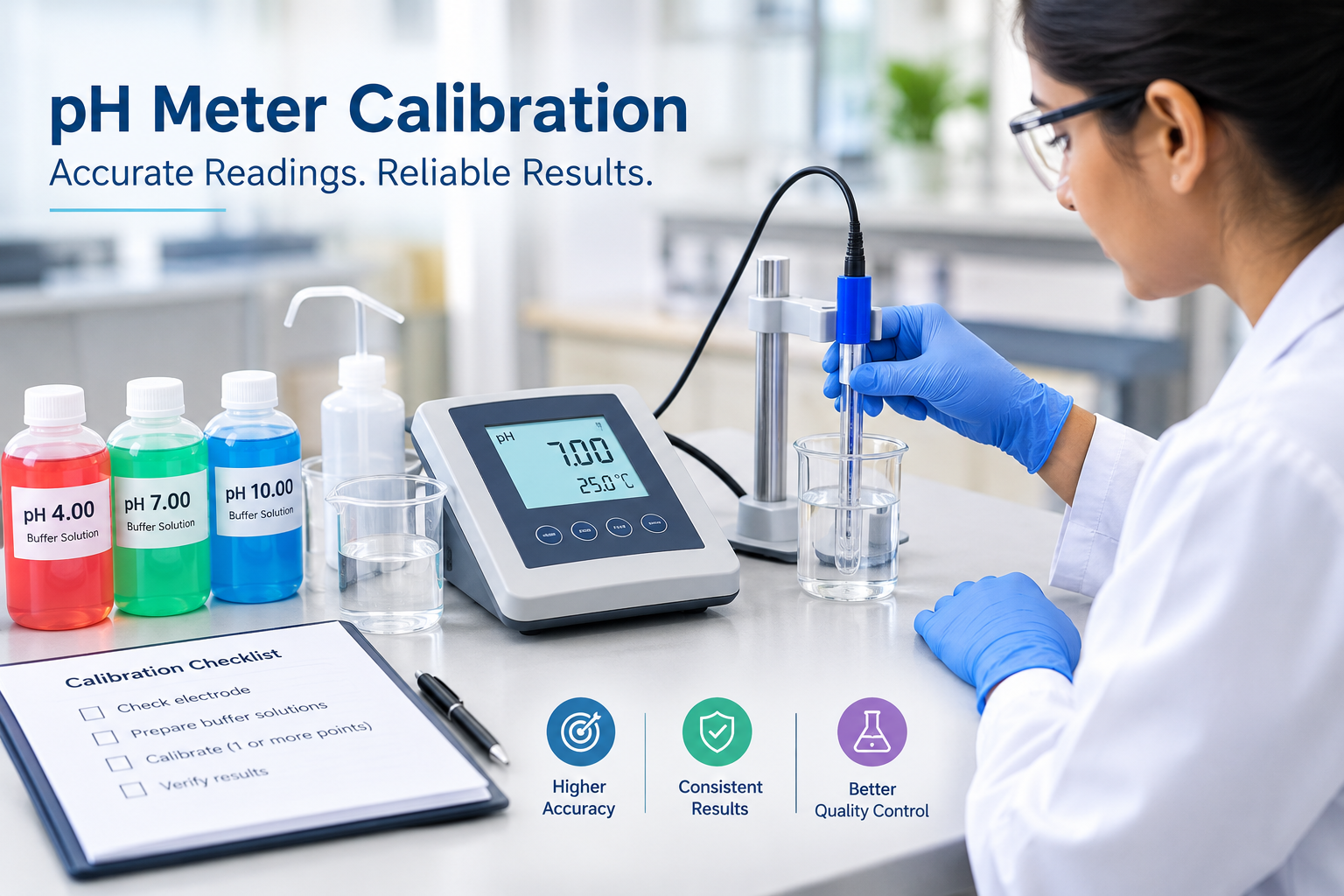
What Is pH Meter Calibration?
pH meter calibration is the process of establishing or adjusting an instrument's response using standard buffer solutions with known pH values. These solutions provide reference points that help the meter measure the pH of unknown samples accurately.
The selection of buffer solutions depends on the expected pH range of the samples, the instrument's capabilities, and the manufacturer's recommendations. Regular calibration also helps identify changes in electrode performance that may affect measurement reliability.
How Does pH Meter Calibration Work?
The calibration process involves several steps to establish an appropriate response from the meter and its electrode.
1. Prepare the equipment: Inspect the electrode for visible damage and ensure that suitable, unexpired buffer solutions are available.
2. Rinse the electrode: Rinse it with distilled or deionized water to remove residues. Gently blot excess moisture with a clean tissue without rubbing the sensing surface.
3. Calibrate with a standard buffer: Immerse the electrode in a suitable buffer solution and follow the instrument's calibration instructions. Allow the reading to stabilize before confirming the calibration point.
4. Use additional buffer solutions: Select further buffers according to the expected pH range of the samples. Multi-point calibration helps establish the instrument's response across the required measurement range. Rinse the electrode between solutions to minimize cross-contamination.
5. Check the calibration results: Review the calibration status and electrode slope, if available. Confirm that the results meet the instrument's acceptance criteria before measuring samples.
Temperature, buffer handling, and electrode condition can influence calibration results. Following the manufacturer's instructions helps reduce avoidable errors.
Why Is pH Meter Calibration Important?
Calibration helps ensure that pH readings are suitable for their intended purpose. It offers several practical benefits:
· Improved accuracy: Helps identify and correct measurement deviations.
· Consistent results: Supports repeatable measurements across tests and working shifts.
· Reliable quality control: Helps laboratories and industries make informed decisions based on dependable data.
· Reduced testing errors: Helps identify potential instrument or electrode problems before they affect results.
· Better documentation: Supports laboratory quality procedures and applicable measurement requirements.
Professional calibration services can help verify instrument performance and support reliable measurements in laboratory and industrial applications.
How Often Should a pH Meter Be Calibrated?
Calibration frequency depends on the manufacturer's recommendations, sample characteristics, testing frequency, and required measurement accuracy. Some applications require calibration before use or at the beginning of each testing session, while others follow documented schedules based on risk and instrument performance.
Calibration may also be necessary when readings become inconsistent or after electrode maintenance or replacement, as appropriate. Following a documented schedule helps maintain confidence in measurement results.
Conclusion
Accurate pH measurements depend on proper calibration, suitable buffer solutions, and regular electrode maintenance. Following the recommended procedures helps maintain measurement reliability and identify potential instrument issues before they affect testing results.
Need professional calibration services? Contact our team today to discuss your laboratory's requirements and find a suitable solution for your measurement needs.
