Passenger vs. Utility Golf Carts: Which One Do You Need?
Author : destino kart | Published On : 11 Aug 2026
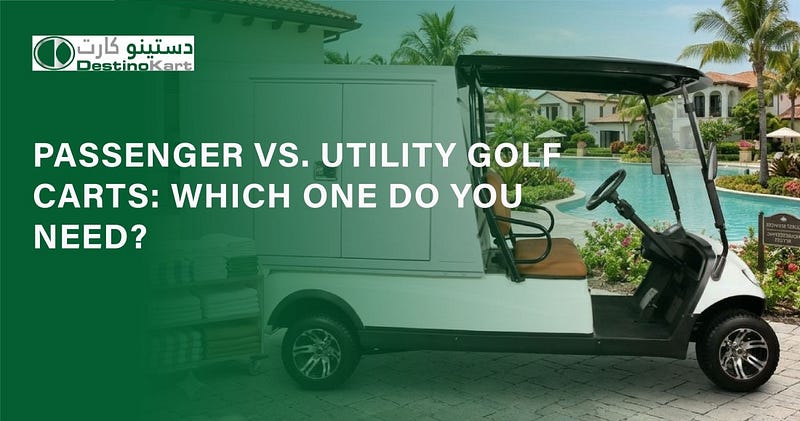
Golf carts have evolved far beyond the fairways. Today, they serve as efficient transportation and workhorse vehicles across gated communities, resorts, industrial complexes, and large properties. If you are in the market for one, the primary decision comes down to choosing between a Passenger Golf Cart and a Utility Golf Cart.
Understanding their distinct designs and capabilities is essential to making the right investment.
Passenger Golf Carts: Built for People Comfort
Passenger golf carts are engineered primarily to transport individuals efficiently, safely, and comfortably over short to medium distances.
• Seating Capacity: These models typically accommodate anywhere from 2 to 8 passengers, featuring forward-facing or rear-facing bench seats designed for a smooth ride.
• Comfort & Design: They prioritize rider amenities, often including ergonomic seating, cup holders, premium roofs, windshields, and integrated sound systems.
• Primary Use Cases: Ideal for neighborhood cruising, navigating large resorts, transporting guests at weddings or campuses, and traditional golfing.
• Street Legality: Many passenger carts can easily be upgraded to Low-Speed Vehicles (LSVs) by adding headlights, turn signals, mirrors, and seatbelts, making them street-legal on public roads with low-speed limits.
Utility Golf Carts: Engineered for Heavy Work
Utility golf carts sacrifice multi-passenger seating in favor of hauling power, rugged durability, and cargo capacity.
• Cargo Layout: They generally feature a 2-passenger front cabin, replacing the rear seating rows with a heavy-duty cargo bed, which is often equipped with manual or electric dump mechanisms.
• Towing & Payload Power: Built with heavy-duty suspensions, lifted chassis, and high-torque drivetrains, these vehicles are capable of carrying hundreds of pounds of cargo and towing trailers.
• Durability: They are frequently designed with scratch-resistant poly or aluminum beds, aggressive all-terrain tires, and rugged brush guards to withstand demanding work environments.• Primary Use Cases: Extensively used in facility maintenance, landscaping, agricultural work, construction sites, and hauling tools or heavy equipment across large properties.
Key Decision Factors: Which One Do You Need?
To determine the best fit for your specific requirements, evaluate your daily activities against these core operational differences:
• The People vs. Cargo Ratio: If your main goal is moving family, friends, or clients, opt for a passenger model. If your daily tasks involve moving soil, tools, wood, or debris, a utility bed is indispensable.
• Terrain Requirements: Utility carts often handle rugged, unpaved, or muddy terrain better out-of-the-box due to specialized suspensions and tires, whereas passenger carts favor paved or well-maintained pathways.
• Customization Flexibility: Passenger golf carts offer extensive aesthetic and comfort upgrades. Utility carts focus on functional attachments, such as tool racks, specialized ladder racks, and enclosed cargo boxes golf cart.
