Paperless Loading Dock: Integrating Mobile Tech for Freight Accuracy
Author : Jessica Hall | Published On : 12 Aug 2026
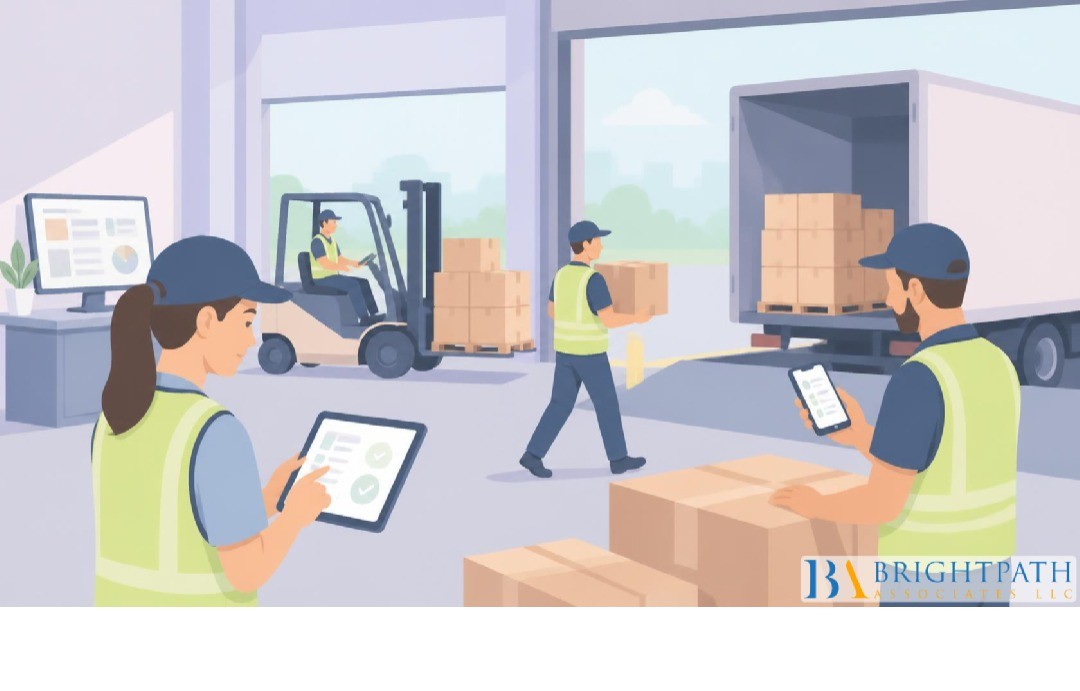
The loading dock is one of the most important control points in a modern supply chain. It connects warehouses, distribution centers, carriers, suppliers, and customers, yet many facilities still depend on paper documents, manual data entry, printed shipping labels, and verbal confirmations to manage freight movement. As shipment volumes increase and delivery expectations become more demanding, these traditional processes can create unnecessary delays, documentation errors, misplaced shipments, and discrepancies between physical freight and digital records. For companies operating in the Package and Freight Delivery Industry, transforming the loading dock into a connected digital environment can provide an important opportunity to improve accuracy, visibility, and operational efficiency.
A paperless loading dock is not simply about eliminating paperwork. It represents a broader transformation in how freight information is captured, verified, communicated, and stored. Smartphones, rugged handheld devices, tablets, barcode scanners, RFID systems, cloud platforms, and mobile warehouse applications can allow employees to capture shipment information directly at the point where freight is handled. Instead of writing information on a document and entering it into a computer later, workers can scan, verify, update, and confirm shipment details in real time. This creates a stronger connection between the physical movement of freight and the company's digital records.
Freight accuracy matters because a single shipping error can have consequences far beyond the loading dock. An incorrect item, quantity, destination, or carrier assignment can result in additional transportation expenses, delivery delays, customer complaints, returns, claims, and administrative work. Traditional loading processes often require employees to compare multiple documents, including bills of lading, packing lists, purchase orders, shipment labels, and carrier information. When the same information is repeatedly copied or manually entered, opportunities for human error increase. Mobile technology can reduce these risks by allowing employees to verify information digitally before freight leaves the facility.
The speed of modern logistics makes this capability even more valuable. Loading docks operate under significant time pressure, with trucks working against scheduled departure windows and distribution centers attempting to process increasingly large shipment volumes. When workers must search for paperwork, manually record information, or return to an office terminal to complete documentation, valuable time can be lost. A mobile workflow allows information to be captured where the physical task occurs. Employees can scan a shipment, verify quantities, confirm the appropriate trailer, and record exceptions without interrupting the loading process.
Barcode scanning is one of the simplest examples of this transformation. Instead of visually checking every label and manually entering shipment information, an employee can scan a barcode and allow the system to compare the physical shipment against the expected order. If the wrong product or shipment is detected, the system can potentially alert the employee before the freight leaves the facility. This is strategically important because correcting an error inside the warehouse is generally easier and less expensive than correcting it after the shipment has entered the transportation network.
The benefits extend beyond the warehouse itself. Freight brokers, carriers, transportation managers, and customers all depend on accurate shipment information. When freight details are incomplete or incorrect, brokers can face challenges assigning loads, communicating pickup requirements, confirming shipment details, and resolving discrepancies. Digital loading records can provide brokers and carriers with faster access to reliable operational information. Knowing when a shipment was loaded, what quantities were confirmed, and whether exceptions were identified can create a more transparent communication environment throughout the transportation network.
The loading dock can also become an important part of shipping optimization. Optimization is often associated with route planning, carrier selection, and transportation costs, but the physical loading process can have a significant influence on those outcomes. Poorly organized loading can create truck delays, inefficient trailer utilization, incorrect loading sequences, and unnecessary labor costs. Mobile systems can provide workers with real-time information about shipment priorities, loading requirements, and trailer assignments. When loading information is integrated with transportation systems, companies can better coordinate warehouse activities with scheduled departures.
The growth of e-commerce has made this challenge even more pressing. Distribution centers are handling high shipment volumes while customers increasingly expect faster delivery, accurate tracking, and reliable order fulfillment. At high volumes, even a small percentage of errors can translate into a substantial number of incorrect shipments. Standardized mobile workflows can help organizations manage this complexity by automating verification and creating consistent procedures across facilities. For companies operating multiple warehouses, a common digital process can also make it easier for management to compare performance and identify operational differences.
Another important benefit is the reduction of administrative work. Paper-based operations generate hidden labor costs because employees may spend considerable time printing documents, filing paperwork, searching for records, correcting handwritten information, and transferring data between systems. Digital records are easier to search, share, and analyze, while automated data capture reduces repetitive entry. In high-volume facilities, even small reductions in administrative tasks can accumulate into meaningful productivity gains. Employees can spend more time on activities that require judgment, physical coordination, problem-solving, and customer-focused decision-making.
However, technology implementation alone does not guarantee success. A paperless loading dock requires a workforce capable of using the technology correctly and consistently. Employees accustomed to paper-based processes may initially be uncomfortable with mobile systems. They need practical training, clear procedures, and an understanding of why accurate digital scanning and documentation matter. If employees bypass scanning procedures or treat digital verification as optional, the organization will not achieve the expected benefits. Change management should therefore be considered an essential component of the transformation rather than an afterthought.
The technology also needs to integrate with existing systems. A mobile loading application should ideally communicate with warehouse management systems, transportation management platforms, enterprise resource planning systems, and other relevant operational tools. Without integration, companies can simply replace paper with disconnected digital applications, creating another form of information fragmentation. The objective should be continuous information flow from order creation through warehouse processing, loading, transportation, delivery, and final confirmation.
This transformation also creates new talent requirements. Modern logistics organizations increasingly need professionals who understand warehouse operations while also possessing knowledge of technology, data analytics, automation, transportation management systems, cybersecurity, and digital transformation. Finding leaders who understand both the operational realities of logistics and the possibilities of emerging technology can be difficult. Companies implementing paperless loading docks should therefore consider workforce planning alongside their technology investments.
The original BrightPath article, Paperless Loading Dock for Freight Accuracy, explores how mobile technology can transform loading activities into a more connected and data-driven logistics process. Ultimately, the paperless loading dock represents much more than the replacement of paper forms with mobile screens. It is an opportunity to create a digital control point where physical freight movement and business information remain synchronized. When barcode scanning, mobile applications, cloud platforms, digital documentation, and real-time data work together, companies can improve shipment accuracy, reduce administrative work, increase visibility, and strengthen coordination with carriers and customers.
The companies that benefit most will be those that treat digitalization as an operational strategy rather than simply a technology project. They will measure outcomes such as shipment accuracy, loading times, documentation errors, detention costs, labor productivity, freight claims, and customer complaints. They will also invest in employee training and leadership capable of connecting technology with practical business objectives.
