Overload Protection Relays and Contactors: The Essential Pair for Reliable Motor Protection
Author : Bhavna Sharma | Published On : 24 Apr 2026
In any electrical system where motors are running, the combination of overload protection relays and contactors forms the basic building block of motor control and protection. These two devices work together in virtually every motor control circuit, from a simple water pump in a residential building to a complex drive system in an industrial plant. Understanding how they function individually and how they work together is essential knowledge for anyone involved in electrical installation, panel building, or industrial maintenance. They ensure safe operation, prevent equipment damage, reduce downtime, and improve overall system reliability and efficiency in demanding applications.
What Is a Contactor?
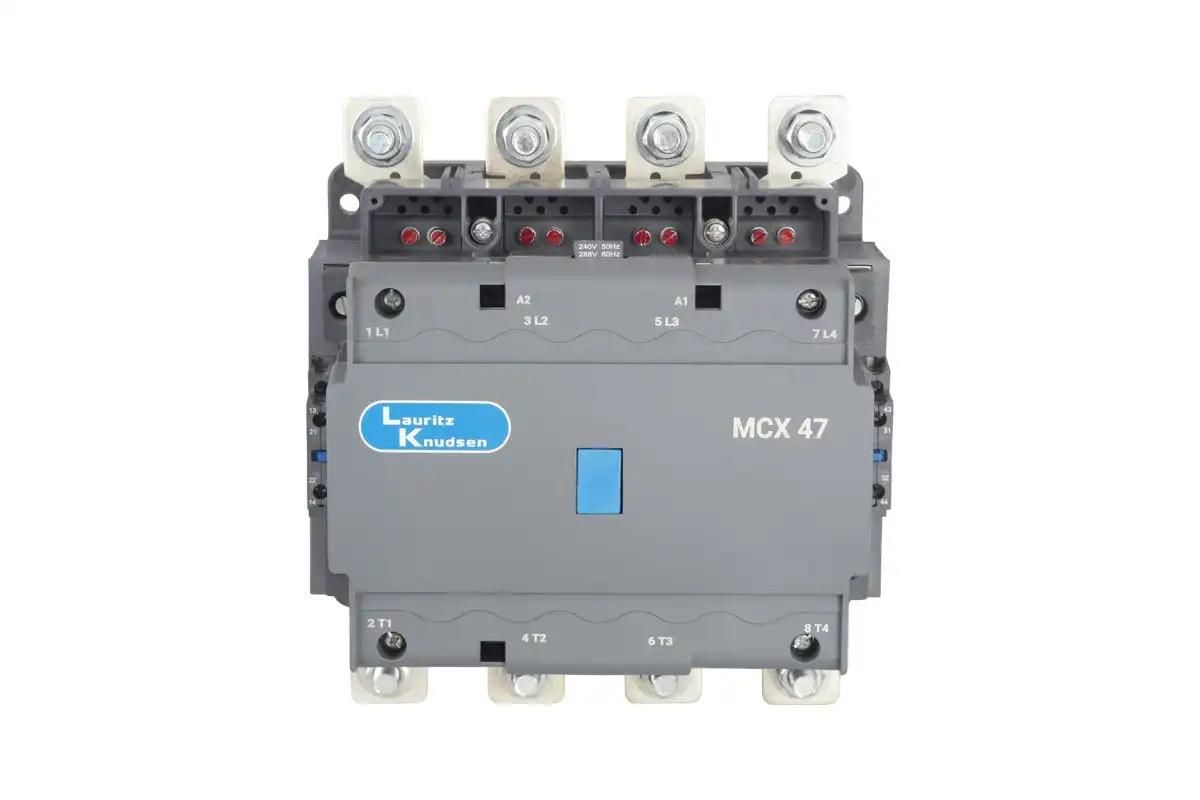
A contactor is an electrically operated switch designed to make and break electrical circuits under load. It consists of a set of main contacts that carry the motor current and are operated by an electromagnet, and a set of auxiliary contacts used in the control circuit. When the coil of the contactor is energized by applying a control voltage, the electromagnet pulls in the movable contact carrier, closing the main contacts and connecting the motor to the supply. When the coil is de-energized, a spring returns the contacts to the open position.
Contactors used in motor circuits are classified by their AC utilization categories, with AC-3 being the standard category for squirrel cage induction motors involving normal starting and switching off during running. AC-4 is a more demanding category for applications involving plugging and inching of motors where higher contact wear occurs.
Types of Contactors
Contactors are essential electrical switching devices used to control motors and other power loads safely and efficiently. Different types of contactors are designed for specific applications based on load requirements and operating conditions.
Standard power contactors are the most commonly used type, suitable for motor switching and general load control. They are available in a wide range of current ratings, from below 10A to several hundred amperes, making them versatile for both small and large electrical systems.
Reversing contactors are used when the direction of a motor needs to be changed. They consist of two contactors that are mechanically and electrically interlocked to prevent both from operating simultaneously. By swapping two phases, they allow safe forward and reverse operation of motors.
Star-delta contactors are used in motor starting applications to reduce starting current. This setup typically includes three contactors working together in a coordinated system to initially start the motor in star configuration and then switch to delta for normal operation.
Capacitor switching contactors are specially designed for power factor correction systems. They include damping resistors to control the high inrush current that occurs when capacitor banks are energized, ensuring safe and reliable operation.
What Is an Overload Protection Relay?
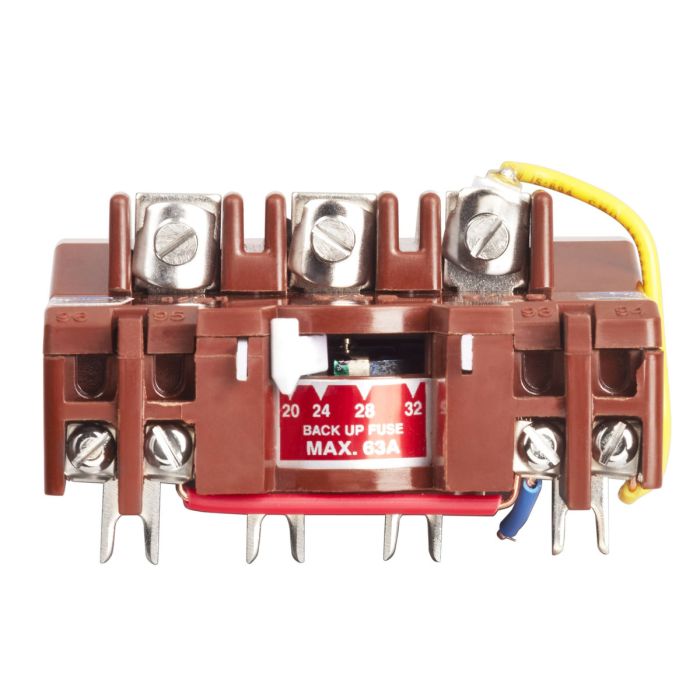
An overload protection relay monitors the current flowing to a motor and trips the circuit if the current exceeds the relay's set threshold for a sustained period. Overloads occur when a motor is required to produce more torque than it is rated for, causing it to draw more current. Sustained overcurrent heats the motor's winding insulation, progressively degrading it until the motor fails. Overload protection relays prevent this by disconnecting the motor before the temperature rise becomes damaging.
Thermal Overload Relays
Thermal overload relays use bimetal strips that deflect in response to heat generated by the motor current. When the current exceeds the relay's set point for a time defined by the inverse-time characteristic of the relay, the bimetal strips deflect sufficiently to trip the relay and break the control circuit. Thermal overload relays are simple, inexpensive, and reliable, making them the standard choice for most motor protection applications.
Electronic Overload Relays
Electronic overload relays use current transformers to measure the motor current electronically and calculate the thermal model of the motor. They offer greater accuracy, adjustable trip classes, phase failure detection, and often remote communication capability. They are preferred for larger, more valuable motors where precise protection and diagnostic capability justify the higher cost.
Coordinating Contactors and Overload Protection Relays
The contactor and overload protection relay must be correctly coordinated to provide reliable, safe motor protection. Key parameters to match include the current rating of the contactor to the motor's full load current, the overload relay setting range to encompass the motor's full load current, and the short circuit protection rating (the coordination type) between the fuse or MCB and the contactor-relay combination.
Type 1 coordination allows the starter to be unusable after a short circuit fault but protects persons from injury. Type 2 coordination requires that the starter remains operational after a fault, which demands closer matching of the upstream protection and the starter components. For industrial applications where process continuity matters, Type 2 coordination is generally preferred.
Why Component Quality Matters
The contactors and relays used in motor starters are safety-critical components. A contactor that fails to open under fault conditions, or an overload relay that has an inaccurate trip characteristic, can allow a motor to run into thermal destruction or allow a fault to escalate into a broader electrical failure. Sourcing from trusted manufacturers with verified specifications is non-negotiable for any application where equipment value or personal safety is a concern.
Lauritz Knudsen Electrical & Automation's SmartShop stocks a comprehensive range of contactors and relays including MNX, ML, MCX, and MO C series contactors, along with thermal overload relays, all from Lauritz Knudsen Electrical & Automation's product portfolio. Genuine products with competitive pricing and fast delivery make Lauritz Knudsen SmartShop a reliable procurement source for panel builders and industrial maintenance teams across India.
Conclusion
Overload protection relays and contactors are the fundamental components of motor protection and control. Selecting and coordinating them correctly, building starter panels from genuine quality components, and sourcing from verified suppliers are the foundations of reliable industrial electrical engineering. For the complete range of contactors and relays needed for any motor control application, Lauritz Knudsen Electrical & Automation's SmartShop provides genuine, well-specified products with the support of one of India's most experienced electrical manufacturers.
