Overcoming AI Trust Gap in Traditional Wood Processing
Author : Kabir Pathan | Published On : 30 Sep 2026
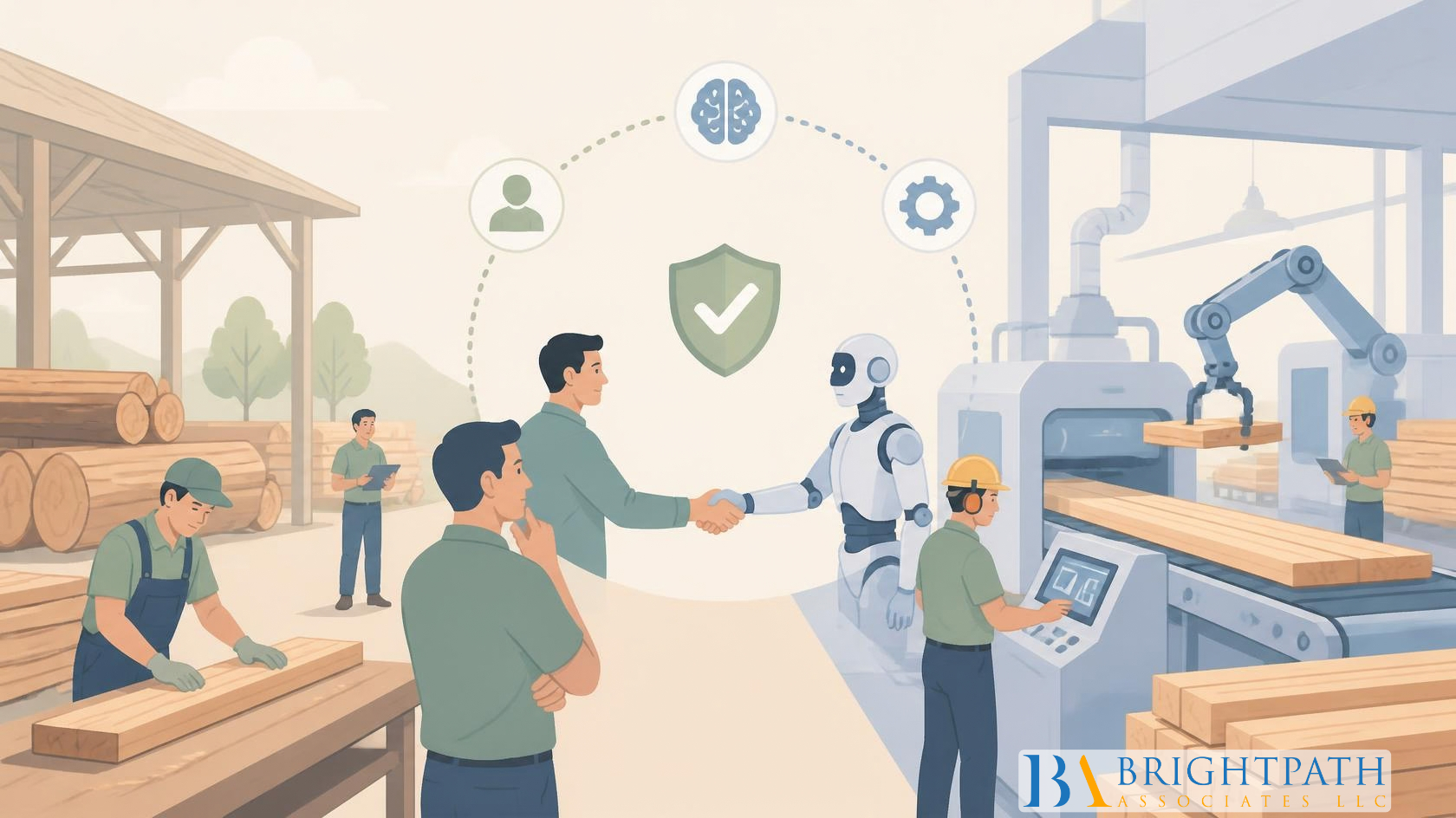
Artificial intelligence is changing how industrial companies approach productivity, quality control, maintenance, resource utilization, and decision-making. For traditional wood processing businesses, however, adopting AI is not simply a matter of purchasing new technology. It is a transformation that affects established workflows, employee responsibilities, operational judgment, and the way decisions are made on the production floor.
The wood processing industry presents a particularly interesting challenge for AI adoption. Unlike highly standardized manufacturing environments, wood is a naturally variable material. Differences in species, moisture, density, dimensions, knots, cracks, and other characteristics can influence everything from cutting decisions to finished-product quality. As a result, experienced employees often rely on years of practical knowledge to make decisions that may be difficult to capture in conventional datasets.
This creates what can be described as an AI trust gap: the hesitation that occurs when employees and managers are asked to trust algorithmic recommendations in situations where human experience has traditionally been the primary source of judgment.
Why AI Trust Matters in Wood Processing
AI systems can analyze enormous quantities of production data, identify patterns, detect anomalies, and generate recommendations faster than humans can. Computer vision can assist with timber inspection, predictive analytics can identify potential equipment problems, and intelligent production systems can support decisions around cutting, scheduling, and quality control.
Imagine an AI system recommending a particular cutting pattern while an experienced operator believes another approach would produce better results. If the employee cannot understand why the system reached its conclusion, skepticism is likely to follow.
The issue is therefore not necessarily resistance to innovation. In many cases, employees simply need to understand how the technology works, what information it considers, where its limitations exist, and when human intervention is still required.
Combining Technology With Operational Experience
Successful AI adoption should not position technology and employees as competing forces. Instead, businesses can design systems in which AI handles data-intensive analysis while experienced professionals contribute contextual knowledge and final judgment.
For example, an AI-powered vision system could identify potential defects in lumber and flag them for review. Rather than completely removing human involvement, the technology can allow an experienced employee to verify the classification and provide feedback when the system is incorrect.
Over time, this creates a valuable feedback loop. Employees become more familiar with the technology, while the organization gains opportunities to improve the system's performance. This approach also recognizes an important reality: decades of operational experience represent an asset. Digital transformation should capture and enhance that knowledge rather than treating it as obsolete.
Data Quality Is the Foundation of AI Adoption
Another major factor influencing trust is data quality. Traditional wood processing facilities may have information spread across production equipment, spreadsheets, maintenance records, manual logs, enterprise systems, and other sources. If these datasets are inconsistent or incomplete, AI-generated recommendations may not be reliable.
Before implementing sophisticated AI applications, companies should therefore examine their data infrastructure. Sensors need appropriate calibration, production information should be recorded consistently, and historical records may need to be cleaned and standardized.
Reliable data does more than improve algorithms. It also gives employees greater confidence that technology is making recommendations based on measurable operational information rather than unexplained assumptions.
For companies operating across the broader Paper & Forest Products Industry, this principle applies beyond sawmills. Similar challenges can emerge in pulp and paper manufacturing, recycling operations, engineered wood production, packaging, and other resource-intensive environments.
Building a Culture of Human-AI Collaboration
Organizations need a culture in which employees are encouraged to question systems, report errors, provide feedback, and participate in implementation. AI should not be treated as infallible. Even advanced systems can make mistakes, particularly when they encounter conditions that differ from their training data.
A trustworthy AI environment is one where mistakes can be identified, investigated, corrected, and used to improve future performance. This is particularly important in industries where safety, quality, material variability, and operational experience remain central to business performance. For a deeper discussion of the challenges involved, explore Overcoming AI Trust Gap in Traditional Wood Processing.
Conclusion: The Future Is Collaboration, Not Replacement
AI has the potential to reshape traditional wood processing, but successful adoption will depend on much more than software, sensors, and algorithms.
Companies need reliable data, transparent systems, workforce training, thoughtful implementation strategies, and leaders capable of managing technological and organizational change. Most importantly, employees need to understand how AI can support their expertise rather than simply replace it.
The companies that approach digital transformation as a collaboration between people and intelligent systems can create a stronger foundation for innovation, productivity, sustainability, and long-term resilience.
If your company is preparing for digital transformation and needs leadership capable of bridging operational expertise with emerging technology, BrightPath Associates LLC can help identify specialized talent for the Paper & Forest Products Industry.
