Optimizing Greenhouse Climate Control: Integrating IoT for Margin Expansion
Author : Alex Turner | Published On : 17 Jul 2026
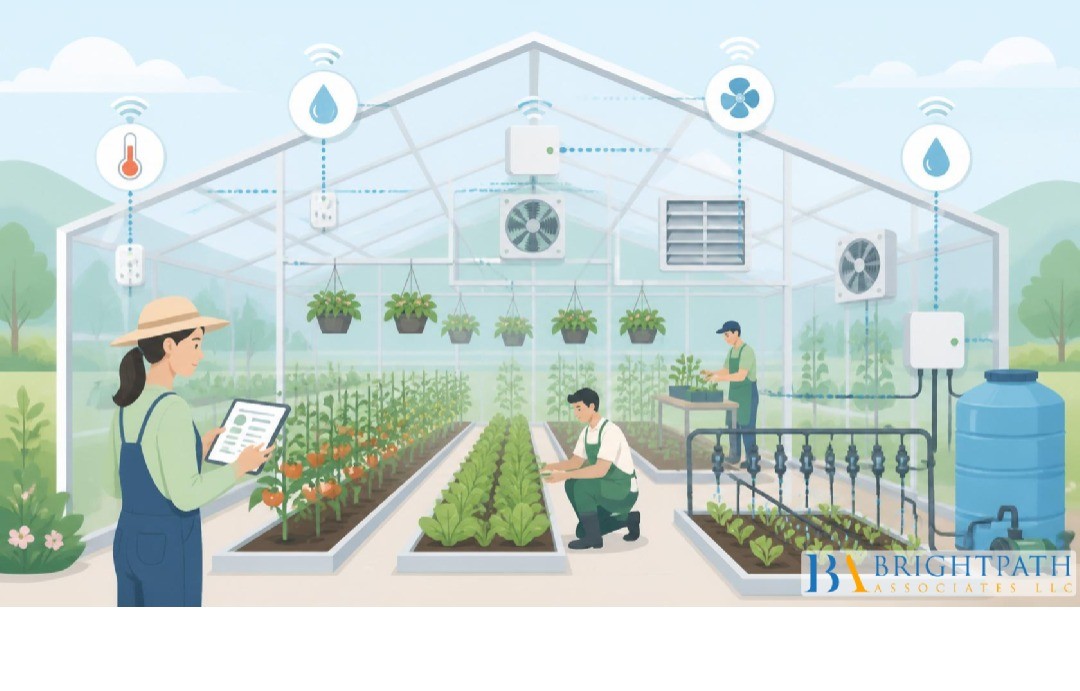
Modern agriculture is undergoing a remarkable transformation as farmers seek innovative ways to produce more food while managing rising costs, labor shortages, and changing climate conditions. Greenhouse farming has become an increasingly attractive solution because it provides growers with greater control over environmental conditions, allowing for consistent crop production throughout the year. However, maintaining the ideal climate inside a greenhouse requires careful monitoring and timely decision-making.
For many small and mid-sized farming businesses, achieving optimal growing conditions while controlling operational expenses has become a significant challenge. Fortunately, advances in Internet of Things (IoT) technology are making greenhouse management smarter, more efficient, and more profitable. Connected sensors, automated climate controls, and real-time analytics enable growers to optimize every aspect of the growing environment while reducing waste and improving crop quality.
Businesses seeking insights into agricultural innovation, leadership, and workforce development can explore the Farming Industry, where technology continues to transform modern agricultural operations.
The Changing Landscape of Greenhouse Farming
Consumer demand for high-quality fruits, vegetables, herbs, and specialty crops continues to grow. At the same time, producers must contend with unpredictable weather, increasing utility costs, water conservation requirements, and labor availability.
Traditional greenhouse management often depends on manual inspections and operator experience. While experienced growers possess valuable knowledge, manual monitoring can delay responses to changing environmental conditions. Even minor fluctuations in temperature or humidity can affect plant growth, product quality, and overall yields. Smart greenhouse technologies help bridge this gap by providing continuous visibility into environmental conditions.
Understanding IoT in Greenhouse Operations
The Internet of Things refers to a network of connected devices that collect, transmit, and analyze information in real time. Within greenhouse operations, IoT systems monitor key variables such as temperature, humidity, carbon dioxide levels, soil moisture, light intensity, irrigation performance, and ventilation.
Instead of manually checking these conditions throughout the day, growers receive accurate information continuously through centralized dashboards or mobile applications. Alerts notify operators whenever conditions move outside acceptable ranges, allowing immediate corrective action. This level of visibility supports better operational decisions while reducing the likelihood of crop losses.
Climate Control Improves Crop Consistency
Every crop has unique environmental requirements that influence growth, flowering, fruit development, and harvest quality. IoT-enabled climate control systems automatically adjust ventilation, heating, cooling, shading, irrigation, and humidity management based on sensor readings rather than fixed schedules. This dynamic approach helps maintain stable growing conditions despite changing outdoor weather.
Consistent environmental control promotes healthier plants, improves crop uniformity, and reduces production variability across growing cycles.
Leadership Drives Successful Technology Adoption
Technology alone does not transform agricultural businesses. Successful greenhouse modernization requires experienced leadership capable of evaluating investment opportunities, managing organizational change, developing employee skills, and aligning technology initiatives with business objectives.
Operations managers, production supervisors, agricultural engineers, and executive leadership all play important roles in ensuring IoT investments generate measurable returns. Organizations that combine innovative technology with capable leadership are better positioned to achieve sustainable long-term growth.
Preparing for the Future of Agriculture
Agriculture will continue evolving through advances in artificial intelligence, predictive analytics, robotics, autonomous equipment, and precision farming technologies. Mid-sized farming businesses that begin adopting connected technologies today will be better prepared to compete as customer expectations, environmental regulations, and market conditions continue to change.
Digital transformation should be viewed as an ongoing journey rather than a one-time project. Incremental improvements often produce meaningful financial and operational benefits over time. Readers interested in exploring additional perspectives on connected agriculture and greenhouse innovation can also review Optimizing Greenhouse Climate Control Through IoT Innovation as part of their broader research into modern farming technologies.
Conclusion
Smart greenhouse management demonstrates that technology and agriculture can work together to improve productivity, sustainability, and profitability. By combining IoT-enabled monitoring, automated climate control, predictive maintenance, efficient irrigation, and data-driven decision-making, small and mid-sized farming businesses can strengthen operational performance while reducing resource consumption.
