NVIDIA Ada RTX 6000: Features, Performance, and Professional GPU Workloads
Author : 10petabyte 10PB | Published On : 11 Nov 2026
Modern professional applications increasingly rely on graphics processing units to handle complex calculations, advanced visualization, artificial intelligence, and demanding rendering workloads. From engineering simulations to 3D content creation, businesses need computing resources that can support large projects while maintaining reliable performance. The NVIDIA RTX 6000 Ada Generation is designed for professional environments where graphics performance, computational capability, and memory capacity are important.
Understanding the nvidia ada rtx 6000 can help developers, designers, engineers, and organizations determine whether this GPU is suitable for their computing requirements. Its capabilities make it relevant to several professional workloads, including visualization, AI development, and graphics-intensive applications.
What Is the NVIDIA RTX 6000 Ada Generation?
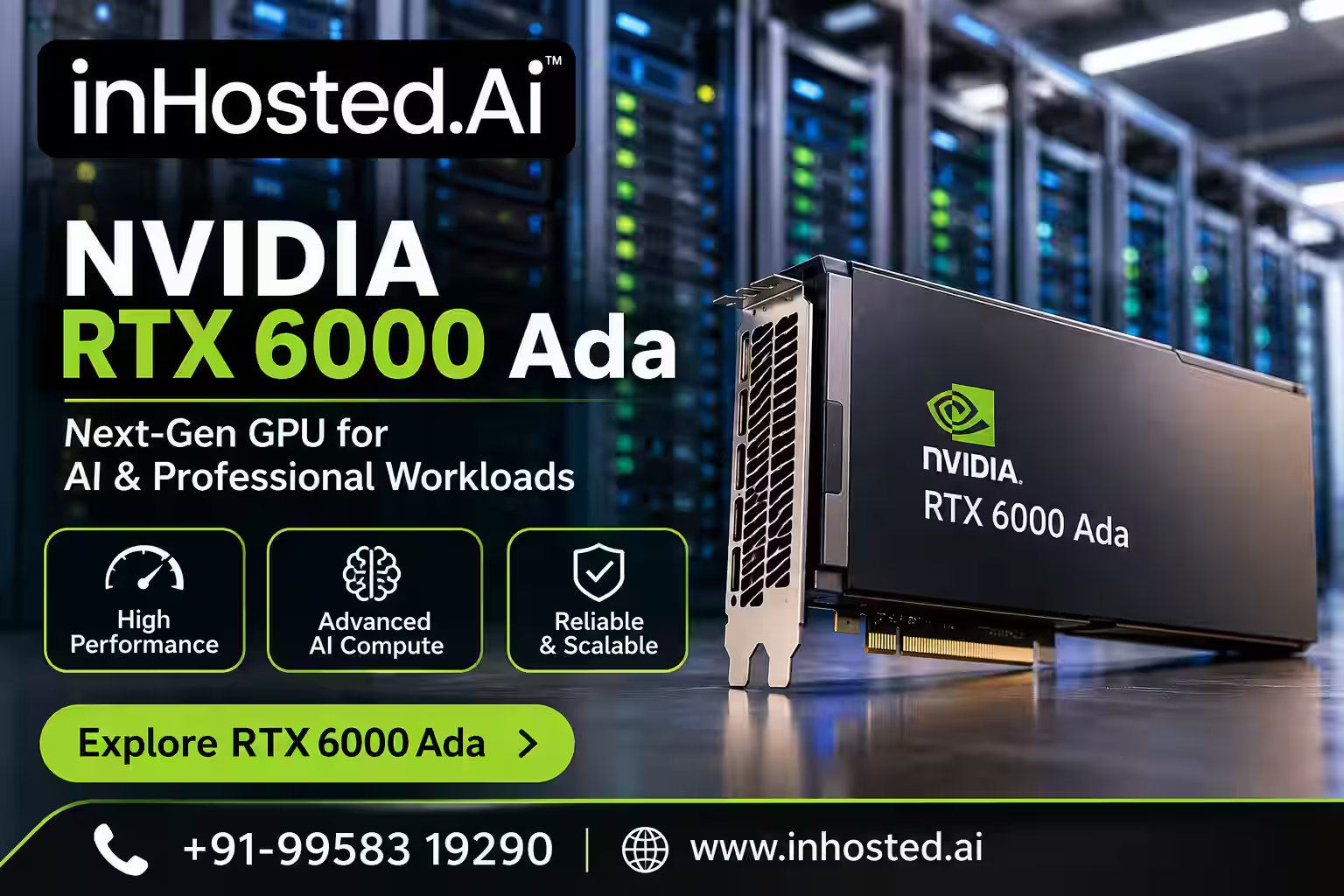
The NVIDIA RTX 6000 Ada Generation is a professional workstation GPU built on NVIDIA's Ada Lovelace architecture. It is intended for demanding professional applications rather than everyday display tasks alone.
Professional graphics cards are used in environments where workloads can involve complex models, high-resolution assets, detailed scenes, and large datasets. These tasks may require substantial GPU memory and specialized hardware for graphics processing, ray tracing, and AI-related operations.
The RTX 6000 Ada Generation combines these capabilities in a professional GPU platform. Depending on the software and workload, it can support advanced visualization, accelerated rendering, engineering workflows, and machine-learning development.
Key Features and Capabilities
1. Professional Graphics Performance
Professional design applications often involve detailed 3D models, large scenes, and high-resolution visual assets. A capable GPU can help improve viewport responsiveness and reduce waiting time during graphics-intensive tasks.
The RTX 6000 Ada Generation is designed to support demanding professional graphics workloads. Architects, product designers, visual-effects artists, and engineers may benefit when their applications are optimized to use its GPU resources.
Actual performance depends on the software, project complexity, system configuration, and workload.
2. Advanced Ray Tracing
Ray tracing helps simulate how light interacts with objects and surfaces. It can produce realistic reflections, shadows, lighting, and material effects in supported applications.
These capabilities are valuable for architectural visualization, product rendering, animation, and other applications where visual accuracy matters. Hardware-accelerated ray tracing can help supported software process complex scenes more efficiently.
For professional users, the benefits depend on how extensively their rendering tools use ray-tracing features.
3. AI Acceleration
Artificial intelligence is increasingly integrated into creative software, research environments, and business applications. GPU acceleration can help process supported AI operations, including inference and certain model-development workloads.
The RTX 6000 Ada Generation includes dedicated hardware for AI-related processing. This can be useful for applications that take advantage of compatible GPU acceleration libraries and frameworks.
However, AI performance is influenced by several factors, including model size, memory requirements, precision settings, software optimization, and the number of concurrent workloads. Organizations should evaluate their intended applications before selecting hardware.
4. High-Capacity GPU Memory
Memory capacity is an important consideration for professional GPU workloads. Large 3D scenes, detailed textures, complex simulations, and AI models can require substantial memory.
The RTX 6000 Ada Generation provides 48 GB of GDDR6 ECC memory. This capacity can be helpful for workloads that need to keep large assets or datasets accessible to the GPU.
ECC memory also helps detect and correct certain memory errors, making it a relevant feature for professional environments where data integrity matters.
The amount of memory required will depend on the application's workload. A smaller project may not need the same capacity as a large visualization scene or a demanding AI task.
Applications of the NVIDIA RTX 6000 Ada
Architecture and Engineering
Architectural and engineering teams work with detailed models, complex assemblies, and visualization tools. Professional GPU acceleration can help improve interactive workflows and support demanding visualization tasks.
The RTX 6000 Ada Generation may be suitable for professionals working with supported computer-aided design, digital prototyping, and engineering visualization software.
3D Rendering and Animation
Rendering projects can involve complex lighting, detailed textures, and numerous objects. GPU-accelerated rendering can help reduce processing time when the selected rendering engine supports the hardware.
Studios and independent creators can evaluate the GPU for product visualization, animation, digital environments, and visual-effects production.
Artificial Intelligence Development
Developers may use GPU resources to test AI applications, run inference workloads, and work with compatible machine-learning frameworks. Memory capacity and supported acceleration features are particularly important when evaluating AI hardware.
Before choosing a GPU, teams should check framework compatibility, model requirements, and expected performance under their intended workload.
Scientific and Technical Computing
Some scientific and technical applications can use GPU acceleration to process calculations or visualize complex datasets. The benefits depend on whether the application is designed to take advantage of GPU computing.
Organizations should benchmark their specific workloads rather than relying only on general hardware specifications.
What to Consider Before Choosing This GPU
Selecting a professional GPU involves more than comparing specifications. Buyers should consider the software they use, the size of their projects, their performance requirements, and their available infrastructure.
Important considerations include:
-
Application compatibility: Confirm that the required software supports the GPU and its relevant features.
-
Memory requirements: Estimate the memory needed for current projects and expected future workloads.
-
Performance expectations: Use workload-specific benchmarks where possible.
-
System requirements: Check power, cooling, connectivity, and platform compatibility.
-
Deployment model: Decide whether a local workstation, remote workstation, or GPU-enabled cloud environment is the most practical option.
-
Budget: Compare the overall cost of ownership, including hardware, maintenance, and infrastructure expenses.
For teams that do not want to purchase and maintain dedicated hardware, hosted GPU infrastructure may be worth evaluating. Availability, configuration, pricing, and performance should be confirmed with the provider before deployment.
You can explore the GPU information and available details on InHosted.ai's RTX 6000 Ada page.
Is the NVIDIA RTX 6000 Ada Right for Your Workload?
The RTX 6000 Ada Generation is designed for professional environments that need substantial graphics capability, GPU memory, and acceleration for supported workloads. It may be appropriate for teams involved in advanced visualization, rendering, engineering, and AI-related development.
Nevertheless, the best GPU depends on the task. Some users may benefit from a professional workstation card, while others may find a different GPU configuration more appropriate for their software, budget, and computing requirements.
A practical evaluation should begin with the applications being used, the size of the projects being processed, and the performance targets that need to be achieved. Testing representative workloads can provide a more reliable basis for making a purchasing or deployment decision.
Conclusion
The NVIDIA RTX 6000 Ada Generation is a professional GPU designed to support demanding graphics and computing applications. Its Ada Lovelace architecture, ray-tracing capabilities, AI acceleration features, and 48 GB of ECC memory make it relevant to a range of professional workloads.
When evaluating the nvidia ada rtx 6000, organizations should look beyond headline specifications and consider application compatibility, workload performance, memory needs, and total deployment cost. A careful assessment can help professionals choose a GPU solution that fits their actual technical and business requirements.
Frequently Asked Questions
1. What is the NVIDIA RTX 6000 Ada Generation used for?
It is a professional GPU designed for workloads such as 3D rendering, advanced visualization, engineering applications, and supported AI computing tasks.
2. How much memory does the RTX 6000 Ada have?
The RTX 6000 Ada Generation includes 48 GB of GDDR6 ECC memory.
3. Can the RTX 6000 Ada support AI workloads?
Yes. It supports GPU-accelerated AI workloads when the selected frameworks, software, and models are compatible with its hardware capabilities.
4. Is the RTX 6000 Ada suitable for professional rendering?
It is designed for demanding professional graphics and rendering environments. Actual results depend on the rendering engine, project complexity, and software configuration.
5. What should buyers check before choosing the RTX 6000 Ada?
Buyers should review software compatibility, memory requirements, performance benchmarks, system requirements, and total cost before making a decision.
