New Face of Environmental Permitting: Leveraging AI for Faster Approval
Author : Ellen Gomes | Published On : 24 Aug 2026
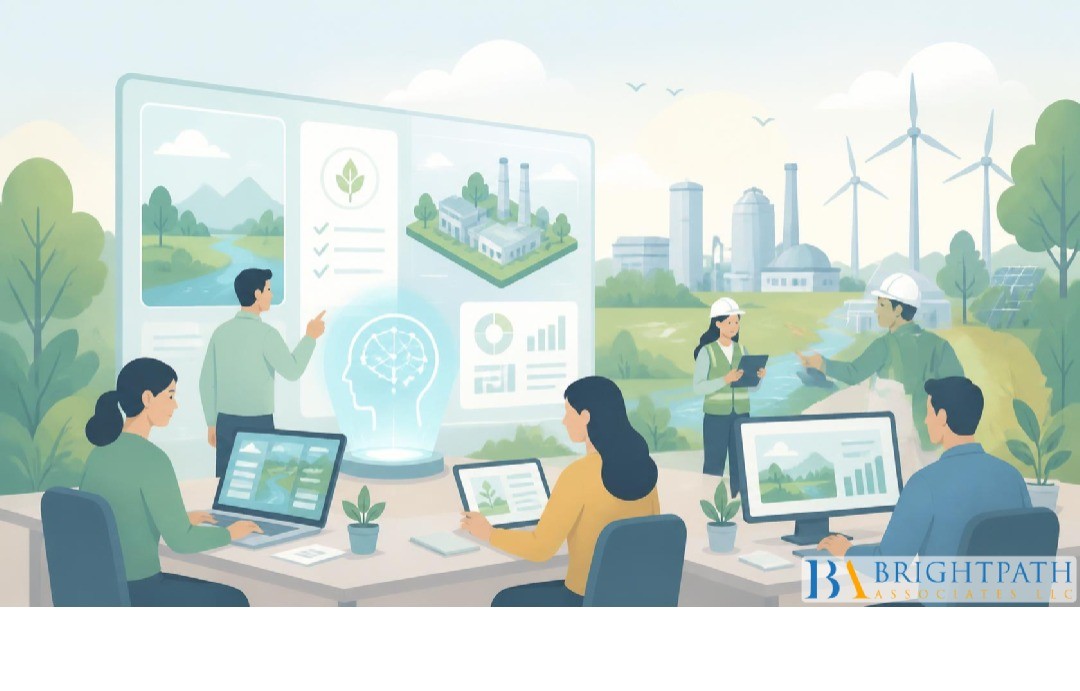
Environmental permitting has traditionally been associated with lengthy documentation, complex regulatory requirements, multiple reviews, and considerable uncertainty around timelines. For companies operating in environmental services, infrastructure, construction, energy, manufacturing, and related sectors, permitting delays can create a ripple effect that extends far beyond compliance. Projects may face postponed construction, increased carrying costs, delayed revenue, and strained relationships with stakeholders.
AI cannot eliminate environmental regulations or replace regulatory judgment. However, it can help organizations process information faster, identify potential issues earlier, organize complex documentation, and improve the quality of permit submissions. The result could be a new model of environmental permitting in which technology supports faster and more informed decisions while maintaining regulatory rigor.
For companies operating in the Environmental Services Industry, understanding this transformation could become increasingly important as clients demand greater speed, transparency, and predictability.
Why Environmental Permitting Has Become a Strategic Issue
Permitting is often viewed primarily as a compliance requirement. Yet for businesses, it can also be a significant project-management variable. A delayed permit can affect construction schedules, equipment procurement, financing arrangements, labor planning, contractor availability, and customer commitments. When multiple permits are required, delays in one area can create a domino effect across the entire project.
The challenge is that environmental permitting often involves large quantities of information. Technical reports, environmental assessments, site information, historical records, maps, monitoring data, regulatory references, and supporting documentation may all need to be reviewed.
Human expertise remains essential, but manually processing every piece of information can consume significant time. This is where AI creates an interesting opportunity.
AI Can Help Process Complex Information Faster
One of the most promising applications of artificial intelligence is information processing. AI-powered systems can potentially organize large volumes of documents, identify relevant information, compare requirements, flag inconsistencies, and help professionals locate missing documentation.
Instead of spending hours searching through hundreds of pages, an environmental professional could use technology to quickly identify specific sections, potential compliance gaps, or areas requiring additional investigation.
The objective is not to allow an algorithm to make the final regulatory decision. Rather, AI can help professionals spend less time on repetitive information-processing tasks and more time on interpretation, technical judgment, stakeholder communication, and problem-solving. That distinction is critical.
Better Preparation Could Mean Faster Approvals
Many permitting delays do not necessarily result from the complexity of regulations alone. In some cases, incomplete information, inconsistent documentation, or unresolved issues can create additional review cycles.
AI could help organizations identify these weaknesses before submitting an application. Imagine a system reviewing a draft submission and identifying that a required environmental assessment appears incomplete, certain data points do not align, or supporting documentation is missing.
A project team can investigate those issues before the application reaches a regulator. That could reduce avoidable back-and-forth communication and potentially shorten the overall approval process. The broader lesson is that faster permitting may begin with better preparation rather than simply faster regulatory review.
AI Does Not Replace Environmental Expertise
Environmental permitting involves interpretation, context, judgment, communication, and accountability. Regulations can interact with site-specific conditions, local requirements, community concerns, ecological considerations, and project characteristics.
An AI system can identify patterns or summarize information, but experienced professionals must determine what those findings mean in the real world. The most effective organizations will likely combine technology with human expertise.
AI can handle repetitive analysis and information management while environmental scientists, permitting specialists, engineers, project managers, and regulatory experts focus on decisions requiring professional judgment.
The New Permitting Workflow
The integration of AI could fundamentally change the permitting workflow. Instead of beginning with a large collection of documents that professionals must manually review, organizations could build more structured digital processes.
Project information could be collected in standardized formats. AI systems could identify relevant regulatory requirements. Documentation could be checked for completeness. Potential conflicts could be highlighted. Teams could receive alerts when additional information is required.
This creates a more proactive approach to permitting. Rather than discovering problems late in the process, project teams can identify them earlier. The BrightPath Associates perspective on leveraging AI for faster environmental permitting highlights the broader shift toward using artificial intelligence to streamline permitting-related processes while supporting more efficient decision-making.
The Future Is Human Expertise Plus Artificial Intelligence
AI is unlikely to make environmental permitting effortless. Regulations will remain complex, environmental impacts will require careful evaluation, and regulatory decisions will continue to demand accountability.
But AI can potentially remove some of the repetitive work surrounding the permitting process. That creates an opportunity for environmental professionals to focus more heavily on the work machines cannot easily replace: interpretation, judgment, communication, stakeholder management, strategy, and responsible decision-making.
