Network Attached Storage Device for Modern Business Storage Needs
Author : 10petabyte 10PB | Published On : 08 Oct 2026
Businesses are generating more digital information than ever. Everyday operations involve documents, spreadsheets, presentations, customer records, images, videos, project files, reports, and many other types of digital content. As this information grows, simply adding storage to individual computers is not always the most practical way to manage it.
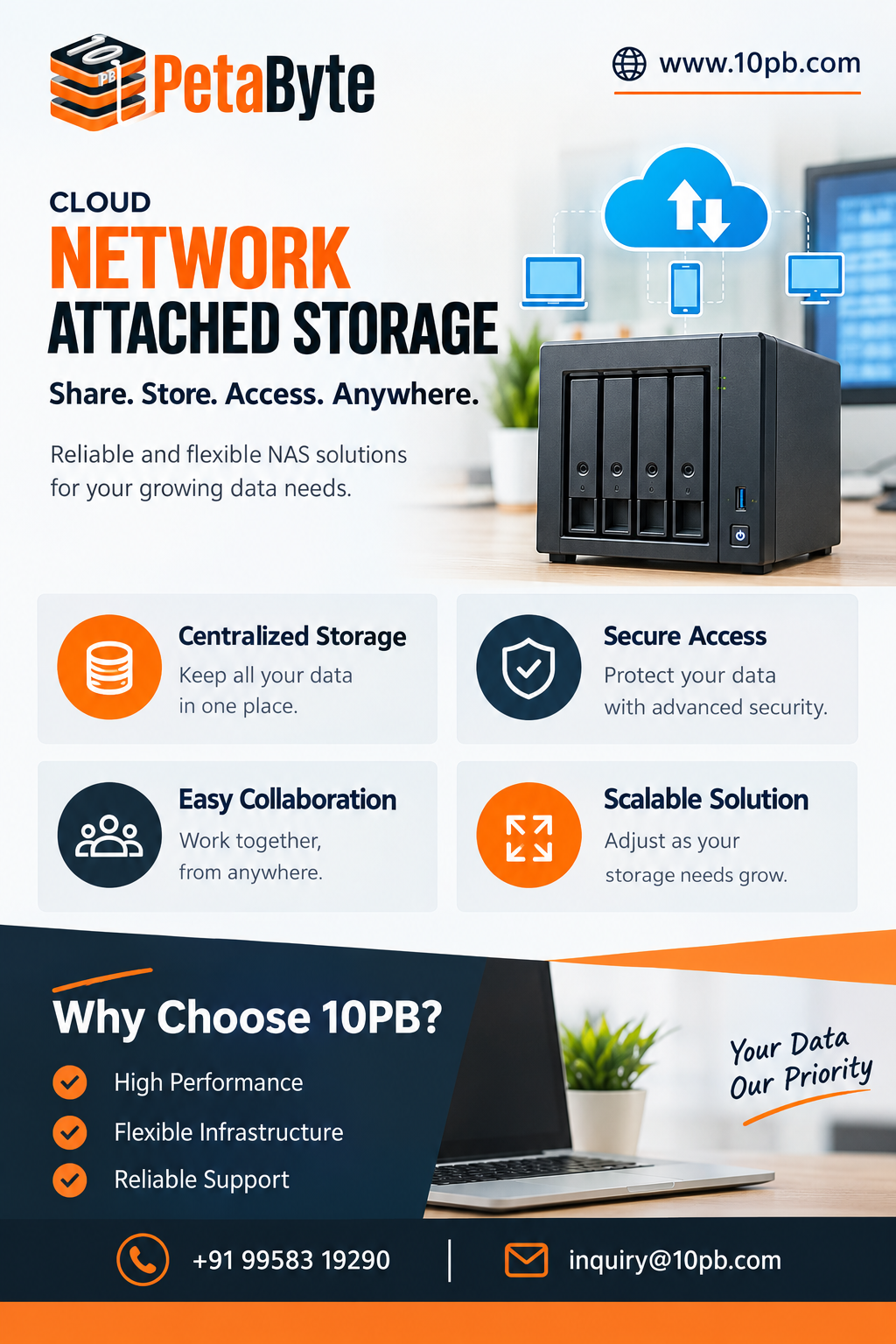
A Network Attached Storage Device can provide a centralized approach to storing and accessing business information. Instead of keeping important shared files across multiple employee devices, organizations can create a common storage environment connected to their network.
This approach can make it easier to organize information, share files between teams, and establish consistent storage practices.
Understanding the Need for Centralized Storage
Scattered files can become a problem surprisingly quickly.
Consider a growing business where every employee maintains their own collection of documents. Some files may be stored on laptops, others on external drives, while additional copies may be exchanged through email. When someone needs a particular document, they may have to contact several people just to locate it.
There is also the possibility of using an outdated version.
Centralized storage gives an organization a defined location for shared information. Teams can establish folders according to their projects, departments, customers, or business functions.
This does not eliminate the need for good file management, but it provides a stronger foundation for it.
Simplifying Team File Sharing
Collaboration is an important part of modern business operations. Different teams frequently need access to the same resources.
For example, a sales team may need product presentations, while a marketing team may require images and campaign materials. A project team may need technical documents that are maintained by another department.
A Network Attached Storage Device can provide a shared location for these resources. Authorized users can access the relevant folders without repeatedly transferring the same files between computers.
This can be particularly useful when teams work with larger files that are inconvenient to send as email attachments.
Creating Organized Departmental Storage
One of the simplest ways to improve business storage is to establish a logical structure.
An organization might create separate areas for:
-
Finance
-
Human resources
-
Marketing
-
Sales
-
Operations
-
Projects
-
Customer resources
-
Company-wide documents
-
Archives
The exact arrangement will vary according to the organization.
The goal is to make information easy to locate while ensuring that sensitive data is only accessible to appropriate users.
Consistent naming conventions can further improve organization. Employees should be encouraged to follow the same basic rules when creating folders and saving files.
Managing Access More Carefully
Centralized storage can also support more structured access management.
Business information often has different levels of sensitivity. A public brochure does not need the same restrictions as payroll information or confidential customer documents.
By organizing users and permissions, administrators can limit access to specific folders or resources according to job responsibilities.
This can help reduce accidental exposure of information and make it easier to manage shared storage.
Permissions should not be treated as a one-time setup. As employees join teams, change responsibilities, or leave the organization, their access should be reviewed and updated.
Planning for Growing Storage Requirements
Businesses should think beyond their current storage consumption.
Data growth can come from many sources. New employees create more documents, marketing teams produce more media, projects generate larger archives, and organizations may retain records for longer periods.
Without planning, storage capacity can eventually become a limitation.
Organizations can monitor current usage and estimate future requirements before selecting or expanding their storage environment. They can also categorize data based on how frequently it is accessed and how long it needs to be retained.
This type of planning makes it easier to decide what should remain readily available and what can be archived.
Supporting Backup and Recovery
Centralized storage can play an important role in a backup strategy, but storage itself should not be considered a complete backup solution.
If important information exists in only one location, it can still be vulnerable to hardware failure, accidental deletion, security incidents, or other unexpected events.
Businesses should therefore establish a separate backup and recovery plan.
Important information may need additional copies stored in different locations. Retention periods can be defined, and recovery procedures can be tested regularly.
Testing matters because a backup that cannot be restored when required does not provide much practical protection.
Supporting Remote Teams
The modern workplace is increasingly flexible. Employees may work from home, branch offices, or other locations while still needing access to common business resources.
Network storage can support these workflows when remote access is configured appropriately.
Security should remain a priority. Organizations need to consider authentication, permissions, encryption, network controls, and monitoring before allowing external access to internal storage.
The objective should be to provide convenient access while maintaining appropriate protection for business information.
Storage Performance Also Matters
Businesses sometimes focus entirely on capacity when evaluating storage.
However, the amount of available space is only one factor.
Performance can become important when multiple users access large files simultaneously. Creative teams working with high-resolution media, for example, may have different requirements from an office primarily storing text documents.
Organizations should therefore consider their actual workloads before selecting storage infrastructure.
Other factors may include availability, scalability, user count, backup requirements, security controls, and administration.
Making Storage Easier to Manage
The value of centralized storage becomes clearer when it is combined with good organizational practices.
Employees should understand where files belong. Teams should avoid unnecessary duplicate copies. Outdated information should be archived according to company policies. Important files should be backed up consistently.
These habits help prevent storage environments from becoming cluttered over time.
A well-organized system can also make onboarding easier. New employees can quickly understand where shared resources are located instead of depending on individual colleagues to send files.
A Practical Foundation for Data Management
Digital information is now closely connected to everyday business operations. Losing access to important files can interrupt workflows, delay projects, and create unnecessary pressure on employees.
A Network Attached Storage Device can provide a practical foundation for centralizing business information and creating more consistent file-management processes.
The best configuration depends on the organization. A small business may have different requirements from a design agency, educational institution, or enterprise with large amounts of data.
Before implementing a storage strategy, organizations should evaluate their current workloads, expected growth, number of users, security requirements, backup needs, and access patterns.
When these factors are considered together, centralized storage can become more than simply a place to keep files. It can support collaboration, organization, controlled access, and a more structured approach to managing business data.
As data volumes continue to increase, having a clear storage strategy becomes increasingly important. Businesses that plan their storage environment carefully can create systems that are easier to use today and better prepared for future requirements.
